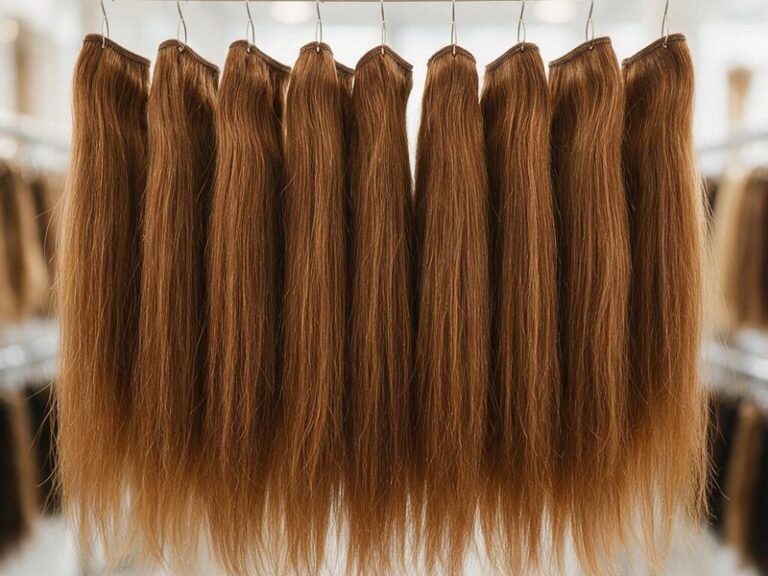
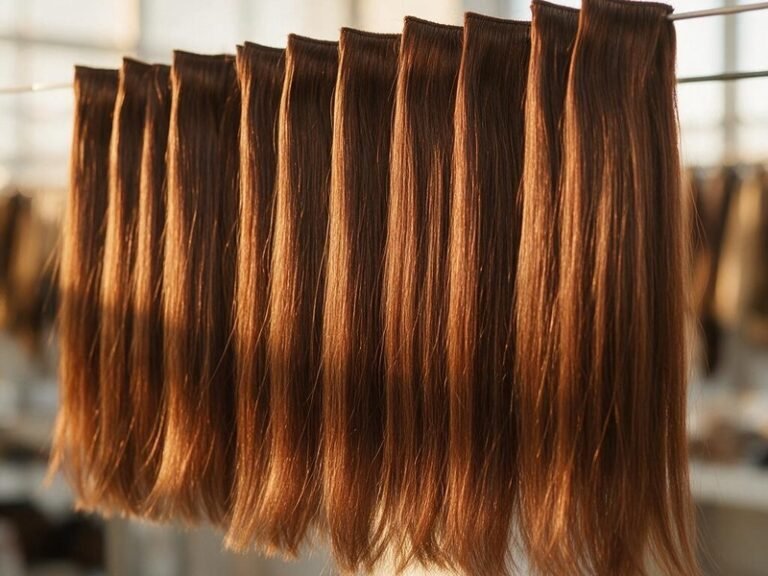
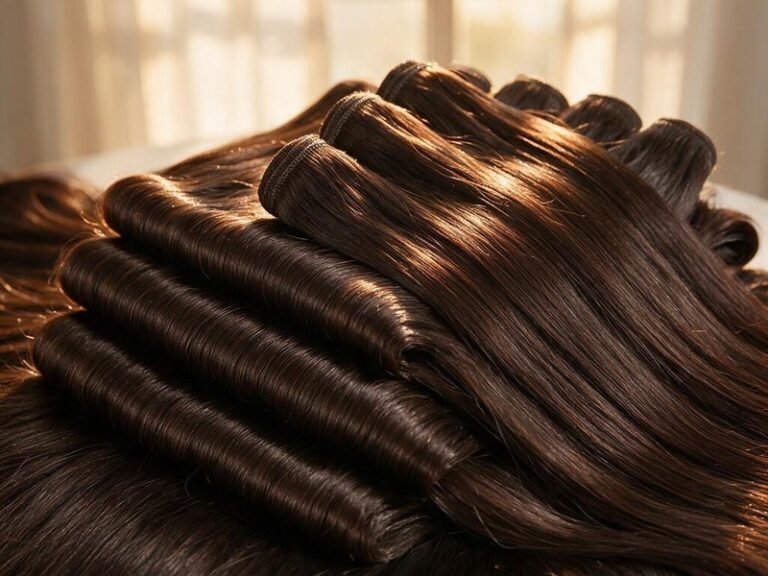
How to Check Tape-In Hair Quality Before Buying
To check tape-in hair quality before buying, order samples, confirm it is cuticle-aligned human hair—meaning strands run root to tip—inspect tabs and gram weight, then wash and comb one piece. Photos show color and pattern, not shedding, tangling, silicone, or tape failure.
Start with a sample order, not a photo
We see buyers order 200 tape-in pieces—the thin wefts bonded in sandwiches around natural hair—from the cheapest listing, then receive dry hair, sliding tabs, or thin ends. Order two or three sample lengths first and note the price per 50 grams. Most packs have 20 pieces weighing 1.5 to 2.5 grams each, or about 30 to 50 grams; a full install usually needs four to six packs. When comparing tape-in hair extensions, ask whether stock is the same batch and the lead time, often 7 to 14 days for stock colors. A supplier that refuses samples or forces a high MOQ (minimum order quantity) before you touch the hair is a red flag.
What does good tape-in hair actually feel like?
Cuticle aligned means the hair’s outer scales all run root to tip, so strands don’t rub against each other and tangle. Remy hair is human hair kept in that same root-to-tip direction; virgin hair means it has not been permed, dyed, or otherwise chemically processed. Run your fingers downward: good hair feels smooth and weighty, with slight resistance if you brush upward against the cuticle. If it is unbelievably slick and glossy out of the bag, it may have a silicone coating that washes off and leaves dry tangles. This human hair quality guide explains smell, burn tests, and strand checks if you want a broader test.
Wash one piece before you commit
Wash one sample in warm water with a clarifying shampoo, keeping the adhesive tab dry if you are only testing the hair. Rinse until clear, don’t pile it up, and let it air dry on a towel. Good hair stays soft, keeps its texture, and combs through easily from ends to root. Strong chemical smell, color bleeding, sudden frizz, or matted ends point to overprocessing or heavy coating.
How do you check tape-in tabs and shedding?
- Peel the backing halfway; adhesive should be even and tacky, not dry, lumpy, or oozing.
- Press tabs together for ten seconds; good tape holds without leaving glue on your fingers.
- Give five slow comb strokes from ends to tab; a few stray hairs are normal, a clump is not.
- Confirm each piece is 1.5 to 2.5 grams, because tiny tabs and thin strands won’t cover a client’s head.
- Ask if pieces can be re-taped later; four to eight weeks per clean install is normal.
Is virgin tape-in hair always worth the price?
No, not for every buyer. Virgin hair costs more, colors more predictably, and can be reused, but its shade range is limited. A good Remy tape-in is often the better value for common browns, blondes, highlights, or pre-styled waves. If a 20-inch, 50-gram pack is far cheaper than every other sample, expect thin ends, mixed hair, or weak tabs. Pay up when clients reuse or color the hair; don’t pay just because a listing says “virgin.”
FAQ
How many tape-in packs do I need for a full head?
Most clients need four to six 20-piece packs, depending on natural thickness and existing length. Fine hair may need four, while short or thick hair often needs six or more.
Can I color tape-in hair to match a client?
Cuticle-aligned human hair can usually be toned or dyed, but avoid lifting and keep color off the tab. Test one sample first, because batches can take color differently.
Test every sample the same way instead of choosing from a price list alone. You can shop all hair extensions and review our frequently asked questions before deciding which lengths to sample.
Send Us Your Hair Inquiry
Need bulk pricing, samples, or a private-label quote? Fill in the form and our team will get back to you within one business day.