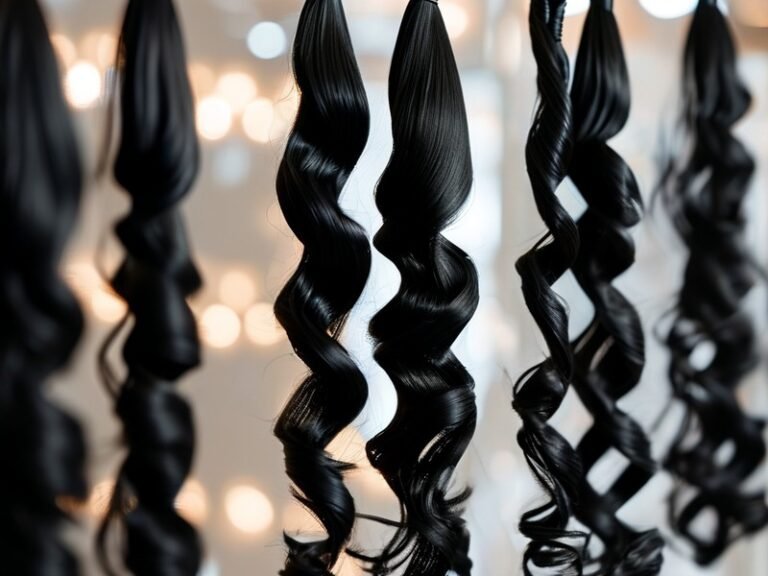
Double Drawn Hair: What to Check Before Your First Bulk Order
Double drawn hair is worth buying when you need fuller ends, consistent bundles, and fewer thin pieces, but the first bulk order can go wrong if you only compare price per inch. The short version: verify donor hair quality, actual thickness from root to tip, cuticle direction, length accuracy, moisture level, and factory consistency before you commit to a large wholesale purchase.
In this guide, “bulk hair” means loose human hair sold without a weft, often used for braiding, knotting, repairs, custom wigs, or making extensions. Double drawn hair has been sorted so shorter hairs are removed and replaced or arranged with longer hairs, giving a thicker look from top to bottom than standard single drawn hair.
What Exactly Is Double Drawn Hair, and Why Do Buyers Pay More?
Standard single drawn hair naturally contains a mix of long and short strands from one donor group. If you hold a single drawn bundle up, the top may be full while the ends taper noticeably. Double drawn hair goes through extra sorting to make the strand-length distribution more even, so the bundle feels thick near the band and still has weight near the ends.
Buyers usually pay more because the process uses more hair and more hand sorting. A factory may need more raw material to produce one thick 100-gram bundle than it needs for a standard bundle. That is especially true in lengths 20 inches and longer, where full ends are harder to produce without overprocessing or blending thinner hair into the batch.
Be careful with the wording. Some suppliers call anything with thick ends “double drawn,” even if it is merely trimmed, layered, or mixed with low-grade fillers. Ask for the strand-length percentage by bundle, not just a marketing label. For example, a serious supplier should be able to explain how much hair reaches the full marked length and how much falls 2, 4, or 6 inches shorter.
True double drawn does not mean every strand is the same length. If every strand were exactly equal, the finished style would look blocky and unnatural. It means the shorter hairs are reduced and controlled, leaving enough density through the body and ends while keeping a natural fall.
Is the Hair Raw, Virgin, Remy, or Simply Processed Human Hair?
These terms are often mixed together in wholesale listings, and that confusion can create expensive returns. Raw hair usually means unprocessed donor hair with no perm, silicone bath, dye, or aggressive steam texture. Virgin hair generally means hair that has not been chemically colored or permed, although it may still go through washing, sorting, and steam styling. Remy hair means the cuticles are kept mostly in the same root-to-tip direction; cuticle aligned means the same thing but is often used as a stronger quality claim.
For double drawn orders, Remy or cuticle aligned stock matters because thick bundles with mixed cuticle directions tangle more obviously. A non-Remy bundle may feel soft in the showroom because of silicone, but after a few washes the cuticles can catch against each other. Your clients may complain about matting even if the hair looked good at delivery.
Ask whether the double drawn sorting is done before or after chemical processing. Hair that is sorted while cuticles are still intact usually has a better chance of remaining tangle-resistant. Hair that is collected, mixed, acid-treated, heavily coated, and then called double drawn may look full but can become dry after washing.
If your market sells premium raw or virgin hair, do not assume double drawn automatically fits that product line. Some double drawn hair is steamed, dyed, or texture-matched to create uniform body wave, straight, deep wave, or curly patterns. That can be excellent hair, but it should be sold honestly as processed or textured human hair rather than raw donor hair.
How Do You Verify Real Thickness Instead of Pretty Product Photos?
The fastest check is weight plus an end-density test. Ask for the exact gram weight per bundle or per bulk pack. Common bundle weights are 100 grams or 3.5 ounces, but some factories use 95 grams, 110 grams, or uneven weights by length. Compare price using cost per 100 grams and cost per usable inch, not only the advertised length.
Then ask the supplier to comb the sample, secure it near the top, and photograph or video it hanging straight. A trustworthy salesperson can show the band, middle, and ends on a measuring board. You want to see whether the bottom has a healthy, even amount of hair or whether a few long strands create the illusion of length while most hair stops short.
- Gram weight: Confirm whether each bundle is 100 g, 110 g, or another weight before comparing quotes.
- Length accuracy: Measure stretched length for wavy and curly hair, because shrinkage can make 22-inch curly hair look like 18 inches.
- End fullness: Run your fingers downward and inspect the last 2 to 3 inches for thin tails, split short hairs, or fillers.
- Return hairs: Ask what percentage of strands are 2, 4, or 6 inches shorter than the marked length.
- Texture consistency: Compare two samples from the same length to spot mixed curl patterns or strand coarseness.
- Wet test: Shampoo the sample twice to see whether it tangles, sheds, frizzes, or loses softness after silicone washes out.
- Bulk-to-bulk match: Order samples from two separate production dates if possible, because first-piece samples can be better than mass stock.
Which Hair Texture and Origin Claims Matter Most?
Origin claims are easy to overstate in wholesale hair sales. Chinese, Indian, Burmese, Vietnamese, Brazilian, Malaysian, and regional labels can describe actual donor sources, factory processing styles, or simply market names. What you can verify is more useful: donor processing level, strand coarseness, curl pattern, natural color range, density, and whether the cuticles run in one direction.
For a first double drawn bulk order, pick textures that fit your actual client base rather than chasing a trendy origin name. Fine straight hair may look silky but can become stringy if the end density is weak. Coarser natural textures may support fuller styles and hold curls well, but they can feel too thick for clients expecting a soft luxury straight look.
If you buy bulk hair for braiding or boho styles, test how the strands behave after sealing, dipping, or prolonged wear. Loose bulk hair has no weft, so short cut hairs, flyaways, and dry ends matter more than they would in a sewn bundle. If you plan to make tape-ins, closures, frontals, wigs, or k-tip extensions, you also need hair that can survive sewing, taping, ventilating, or keratin bonding without excessive shedding.
A closure is a small lace or silk piece with hair ventilation in one section, usually 4×4 inches, while a frontal runs across the front hairline, commonly 13×4 inches. Density is the amount of hair ventilated into a wig or lace piece, usually described as 130%, 150%, 180%, or similar. A weft is the stitched track used for sew-in bundles; a tape-in is a sandwich-style extension attached with adhesive tabs, and a k-tip is a small keratin-bonded strand installed with heat. If your bulk hair later becomes any of these products, consistency from batch to batch is just as important as the initial sample.
What Should Your Sample Order Prove Before You Buy Bulk?
Do not place a large first order from one attractive photo. Start with samples in two or three lengths, ideally the exact textures and colors you plan to resell. For most buyers, a reasonable first test is one 16-inch, one 20-inch, and one 24-inch sample in the same texture, because those lengths reveal whether the factory can keep ends full as hair gets longer.
Wash the samples yourself with a gentle sulfate-free shampoo and conditioner. Let one air dry and use moderate heat on another after applying a heat protectant. Brush from ends upward, record shedding, and compare softness before and after washing. Heavy silicone can make poor hair feel amazing when it arrives, but the second or third wash usually tells the real story.
Check coloring performance too, even if you mostly sell natural black. Take a small section and lift it to brown to see how the hair responds. Hair that has been heavily processed may become gummy, dry, or unevenly porous. If you offer custom balayage, highlights, or blonde units, test lightening before promising salon results to customers.
For curly and wavy double drawn hair, wash and air dry without heavy product. Some samples look defined in factory videos because they are set with heavy styling products. You need to know the natural pattern after shampoo, how much it frizzes, how long it takes to dry, and whether the curl remains consistent from root to end.
How Do MOQs, Grade Names, and Pricing Affect the Real Value?
MOQ means minimum order quantity, and every supplier sets it differently. One factory may allow 5 bundles per length for a trial order, while another requires 50 or 100 kilograms for wholesale double drawn pricing. If you are a salon owner, braider, or small vendor, a very high MOQ can trap you in hair that does not match your market.
Grade names such as 8A, 10A, 12A, or similar labels are not universal industry standards. One supplier’s 10A can be another supplier’s mid-tier stock. Put grade language in writing, but do not rely on it as proof. Better purchase specs include hair type, Remy status, processing level, bundle weight, length tolerance, end-density target, curl pattern, color range, moisture level, and acceptable shedding.
A suspiciously cheap double drawn quote usually means one of a few trade-offs: lower gram weight, shorter return hairs, mixed donor hair, non-Remy cuticles, heavy silicone, excessive steam processing, or inconsistent lengths. Long, full, cuticle aligned human hair has a real raw-material cost. If a 28-inch double drawn bundle is priced close to a standard 18-inch bundle, ask exactly where the cost was reduced.
That does not mean the most expensive quote is automatically the best. Some premium pricing pays for branding, packaging, or origin storytelling rather than quality. Get quotes from several suppliers, compare identical specs, and calculate landed cost including packaging, shipping, duties, payment fees, replacement rate, and delivery time.
What Production Details Need to Be on the Proforma Invoice?
A proforma invoice should read like a production instruction, not just a shopping cart. If the order only says “double drawn straight hair,” you leave too much room for interpretation. Write down each texture, length, color, weight, quantity, and quality standard before paying a deposit.
Include acceptable length tolerance, such as plus or minus 0.5 inch for straight hair and a clear stretched-length rule for curls. Specify natural color range if you need dark hair that can be bleached, and mention whether gray, white, henna-treated, or overly short hairs are acceptable. For premium lines, set a limit on split ends, lice or nits, fungal smell, chemical odor, lice, excessive powder, and over-siliconized hair.
Ask how the factory controls direction during sorting. Cuticle aligned hair should be root-to-tip consistent, and double drawn sorting can increase the risk of reversed strands if workers pull from mixed piles. A small percentage of stray hairs may happen in hand-processed human hair, but repeated tangling in sample tests points to a direction-control problem.
Also confirm lead time. Stock double drawn bundles may ship in 3 to 7 days, while custom textures, custom labels, special colors, or large bulk orders can take 2 to 6 weeks. Peak seasons around back-to-school, holidays, and wedding season can add delays. Build buffer time into your salon or launch schedule instead of promising customers delivery dates you cannot control.
How Do You Check Shedding, Tangling, and Moisture in Bulk Hair?
Bulk hair does not have a weft, so “shedding” looks different from bundle shedding. You are checking for short broken hairs, excessive flyaways, and hairs that release while combing. Some loose hairs are normal after combing a new bulk pack, but continued loss after the first few brushes can mean weak strands, rough sorting, or damaged cuticles.
Tangling should be tested dry, wet, and after conditioning. Hold the sample at the tied end and brush from the bottom upward. Do not force a cheap brush through it; use a wide-tooth comb or extension brush. If the hair catches repeatedly in the same area, especially near the nape-length section or ends, the cuticles may be opposing or the hair may be coated to hide dryness.
Moisture is another hidden issue. Overly wet hair can feel heavier on arrival and lose weight after drying, which changes the actual grams you paid for. Hair that is too damp in sealed packaging can also develop a musty smell during long shipping. Ask whether weight is measured dry or with conditioning moisture, and ventilate the hair when it arrives.
A strong chemical smell should not be ignored. A mild steamed-hair or factory scent may disappear after washing, but a harsh permanent-wave, sour, moldy, or chemical odor can signal poor processing or insufficient drying. Document it with video immediately and contact the supplier before cutting bands, coloring, reselling, or installing the hair.
What Should New Buyers Avoid on Their First Double Drawn Order?
Avoid buying every length and texture at once. Even a great supplier may have stronger straight stock than curly stock, or fuller 14 to 22 inch hair than 28 to 32 inch hair. Start with the textures your clients already buy, then expand after you test wash results and customer feedback.
Avoid choosing hair only from vendor images. Ask for fresh phone videos under natural light, with the measuring board visible and the employee running fingers through the ends. Factory lighting can make dark hair look glossier and hide uneven density. Natural-light videos also help you judge whether the black is natural dark brown, jet dye, or a blue-black tint.
Avoid assuming double drawn is right for every service. Some clients prefer a natural, layered taper with single drawn hair, especially for soft layered wigs or fine-haired clients who do not want extremely thick ends. Double drawn hair is ideal for clients who want blunt thickness, long-lasting braids, voluminous wigs, or premium bundles with substantial ends.
Finally, do not skip payment protection and inspection terms. Use a payment method that gives you business protection, keep written messages, and ask whether the supplier supports pre-shipment photos or video inspection. For a first bulk order, paying a small inspection or sample fee is often cheaper than receiving kilograms of unsellable hair.
Frequently Asked Questions
How can I tell if double drawn hair is good quality?
Check dry gram weight, fullness in the last few inches, length accuracy, cuticle direction, smell, shedding, and texture after two washes. A good sample should remain manageable and soft without becoming tangled, fuzzy, or noticeably thinner after shampoo removes factory conditioner.
How much double drawn hair should I order for a first bulk purchase?
Order enough to test your core styles without overstocking, often samples in three lengths first and then a small trial bulk order within your supplier’s MOQ. Many new buyers do better starting with 2 to 4 kilograms or the supplier’s lowest wholesale tier, then reordering the lengths that sell fastest.
Is double drawn hair always Remy or cuticle aligned?
No. Double drawn describes thickness and strand-length sorting, while Remy or cuticle aligned describes cuticle direction. Always confirm both separately in writing, because a full bundle can still tangle if the cuticles run in mixed directions.
If you share your target lengths, textures, and sales channel, we can help you compare double drawn specs and choose a practical trial order. Send us your expected gram weight, MOQ, and timeline, and we will recommend a sample set that tests the details that matter most.
If you want the full background before you order, our guide on Hair Extensions Supplier North Dakota: What to Check Before Your First Bulk Order walks through it in plain terms.
Send Us Your Hair Inquiry
Need bulk pricing, samples, or a private-label quote? Fill in the form and our team will get back to you within one business day.