Deep Wave Hair Bundles: A Complete Buyer’s Guide
Deep wave hair bundles give buyers a defined, voluminous S-curl without the tighter coil pattern of curly hair or the looser bend of body wave. For B2B buyers, the real decision is not just “deep wave or loose wave,” but choosing hair quality, bundle weight, density, supplier consistency, and care expectations that match your customers.
This guide is written for salon owners, braiders, beauty supply buyers, online resellers, and brands sourcing from China. It focuses on practical checks you can use during sampling, ordering, and reordering—not marketing words printed on a package.
What Are Deep Wave Hair Bundles?
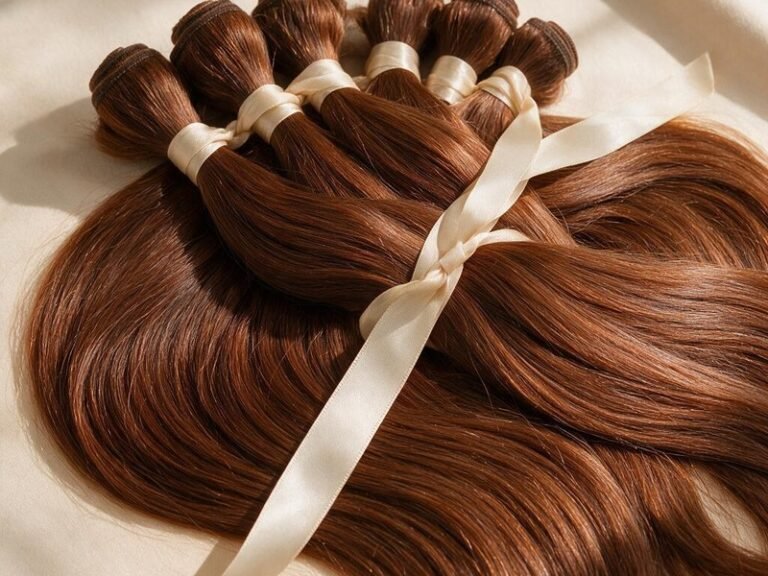
Deep wave hair bundles are wefts of human hair sewn or machine-stitched into a continuous track. A weft is the horizontal band at the top of the bundle where hair strands are secured; stylists sew or attach these tracks during an install, which is the application method used to add the hair.
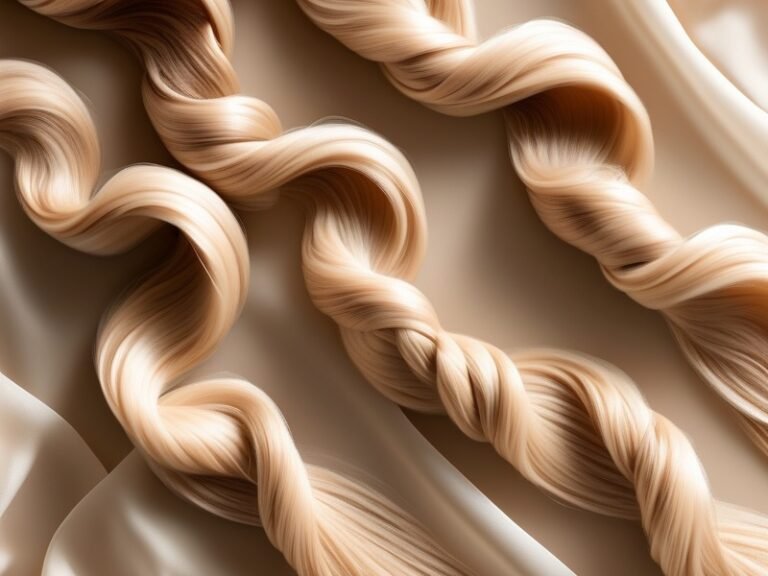
Deep wave has a tighter S-shaped pattern than body wave, but it is usually less coiled than kinky curly or Jerry curly. It tends to look fuller, especially from mid-length to ends, and it styles well in wet looks, twist-out textures, brushed-out waves, or half-up styles. That makes it a strong option for customers who want movement and volume without choosing a very tight curl.
Buyers should remember that “deep wave” is a texture name, not a quality grade. Two vendors can both sell 20-inch deep wave bundles at the same advertised length, but one may be thin at the ends, heavily processed, mixed with synthetic filler, or poorly aligned at the cuticle. The texture tells you the look; the hair origin, processing, and factory controls tell you the value.
Most wholesale deep wave bundles are sold by single piece or by bundle deal. The standard single bundle weight is usually around 95–105 grams, with 100 grams being common. Some markets advertise 3.2 oz, 3.5 oz, or 4 oz bundles, so confirm grams rather than relying on ounces alone. Weight differences can change how many bundles a full install needs.
Deep Wave vs Water Wave, Loose Wave, and Curly Hair
Customers often use texture names loosely, which can create returns if your product photos and descriptions are not precise. Deep wave is a consistent S-pattern with medium definition and noticeable volume. Water wave usually has a softer, more irregular wave that looks naturally wet or air-dried. Loose wave is broader and softer, closer to a voluminous salon blowout wave.
Curly textures have a tighter curl or coil shape and generally need more moisture and more frequent detangling. Deep wave sits between loose wave and curly hair: more defined than loose wave, but usually easier to lengthen visually than a tight coil. It also tends to show dryness faster than straight hair because bends in the strand do not reflect light as evenly.
If your customers want a glamorous “wet and wavy” look, compare deep wave and water wave samples side by side. If they want length with soft body, loose wave may be the safer fit. If they want major fullness and are comfortable with curl maintenance, curly or kinky curly may be better. Use clear wash-and-dry photos because steam-processed curls can look different after the first co-wash.
For resellers, naming matters. Calling every medium-curl texture “deep wave” can cause mismatched expectations. Keep a texture chart, show the pattern both dry and finger-styled, and note whether the hair is steam-set or chemically processed to hold the pattern.
Virgin, Remy, Raw, and Cuticle Aligned Hair: What Buyers Should Actually Check
These terms are often used inconsistently in wholesale listings, so do not place a large order based only on the label.
- Virgin hair: Hair claimed not to have been perm, dyed, bleached, or otherwise chemically processed before collection. Realistically, texture is often steam-set, so ask whether steam treatment is included in the factory’s definition.
- Remy hair: Hair where roots and tips are kept oriented in the same direction. Remy should reduce tangling, but the word is sometimes overused, so test the hair rather than trusting the tag.
- Raw hair: Minimally processed donor hair with no steam pattern or only very light processing. Raw hair is usually more natural in luster and behavior, but deep wave raw hair may be limited because natural textures vary by donor.
- Cuticle aligned hair: Strands arranged with the cuticles running the same direction from root to tip. This is the practical quality feature behind many “Remy” claims and matters for reducing matting.
- Processed hair: Hair that may be washed, sterilized, colored, steamed, or texture-treated. Processed does not automatically mean bad hair, but overprocessing can cause dryness, shedding, and short lifespan.
For deep wave, cuticle alignment is especially important because textured hair tangles more visibly when cuticles run in mixed directions. Run your fingers from weft toward ends and then from ends toward weft. Hair should feel smoother moving downward; rough movement in both directions may indicate cuticle damage or mixed orientation. Do not confuse intentional curl texture with friction.
Ask suppliers direct questions: Is the hair 100% human hair, or is it blended with animal hair, synthetic fibers, or coated fibers? Are the cuticles intact and aligned? Is the deep wave pattern created by steam or chemicals? Has the hair been dyed to a standard natural brown or off-black? Suppliers who cannot answer these clearly are risky for branded repeat orders.
A simple smoke or burn test on a few shed strands can flag synthetic content, but it is not enough by itself. Human hair burns with a distinctive smell and ash-like residue, while many synthetics melt or bead. Still, blends can be hard to identify this way. Your best protection is sampling, repeated washing, tangle testing, and working with a supplier that allows consistent specs across batches.
How Many Deep Wave Bundles Do You Need for a Full Install?
Most customers need three to four bundles for a full sewn-in install, depending on length, desired fullness, head size, and whether they use a closure or frontal. A closure is a small lace or silk piece, commonly 4×4 inches, used to close off a sewn-in style at the top. A frontal is a wider ear-to-ear piece that recreates the front hairline.
Shorter lengths often need fewer bundles because hair naturally has more weight near the top. Longer lengths may look thinner at the ends, especially from 22 inches upward. Deep wave also appears shorter when pulled straight because the curl contracts the visible length. A labeled 22-inch deep wave bundle may look more like 20 inches visually when worn in its curly state, even if it measures correctly when pulled straight.
A practical retail guide is two bundles for modest fullness around 10–14 inches, three bundles for most installs from 12–20 inches, and four bundles for 22 inches or longer. Customers who want very thick hair, a leave-out-free install, or a layered full style may need four bundles even at medium lengths. If using a frontal, the frontal replaces some of the front leave-out but does not eliminate the need for enough bundles across the back and sides.
Density means how much hair is concentrated per area or per finished unit. For bundles, buyers often judge density by bundle fullness, weft thickness, and end weight rather than a single official number. For wigs, density is commonly listed as percentages such as 150%, 180%, or 200%. Do not assume a “10A” grade guarantees thicker ends; many grade labels are marketing language with no industry-wide standard.
Measure length by gently pulling the hair straight without overstretching the curl, then measure from the top of the weft to the longest end. Some sample bundles have long “hero strands” that make the length look longer while the overall ends remain thin. Check average end fullness, not just the longest hair in the bundle.
What B2B Buyers Should Ask Before Ordering Deep Wave Bundles
Start with a sample order before committing to a full collection. Order the same lengths you plan to sell, not only the supplier’s best-looking showcase length. For deep wave, sample at least one short length, one mid length, and one long length so you can see whether the factory keeps curl definition and end fullness consistent as length increases.
Confirm the exact product spec: 100% human hair, bundle weight in grams, weft type, curl pattern, color range, length measurement method, steam or chemical texture process, packaging, and label customization options. Machine wefts are common and affordable; hand-tied wefts are thinner and often flatter but may carry a higher cost and different installation requirements. Reinforced wefts can reduce shedding, but bulky wefts may be harder to lay flat.
Wholesale MOQs vary by supplier, customization, hair type, and stock status. Stock bundles may have a low MOQ, sometimes around 10–50 pieces, while custom labels, colored hair, special lengths, or branded packaging may require 50–100 pieces or more. Ask whether lengths and textures can be mixed to meet the MOQ. New brands often overbuy one length; a safer first order is a balanced run across 14–22 inches with more units in the popular middle lengths.
Lead time needs the same level of attention. Stock human hair bundles may ship within a few business days, while custom processing, labeling, or larger production runs can take 1–4 weeks, sometimes longer during holiday peaks. Raw or premium cuticle aligned hair can also vary in availability because donor supply is less uniform. Put shipping mode, cutoff dates, quality-check photos, and defect policies in writing.
Ask how the factory handles common issues: shedding from weft punctures, curl loosening after washing, color mismatch, short hair ratio, mixed lengths, and packaging damage. A responsible supplier will not promise “zero shedding” for any sewn-in product, because cutting a weft during installation can release hair. They should, however, control stitching quality, short-hair ratio, and excessive factory shedding.
Request photos and videos under natural light, not only studio lighting. Ask for the deep wave pattern wet, air-dried, brushed, and after washing. If possible, have a stylist install or make a wig from the sample and wear it for several wash cycles. Wholesale buyers get into trouble when they approve a sample based on first-touch softness but do not test drying, tangling, shedding, and curl recovery.
How to Test Deep Wave Bundle Quality Before You Reorder
First, inspect the weft. Stitching should be even, tight, and reasonably flat. Loose threads, wide gaps, clumps, or hair pulling out with a light tug are warning signs. Run the bundle along a clean towel and shake it gently; a few loose cut hairs are normal, but continuous handfuls are not. Avoid cutting the sample weft until you have tested the factory edge.
Second, wash the hair with a gentle sulfate-free shampoo or cleansing conditioner. Deep wave should be detangled from ends upward before washing, then washed in a downward motion without rough rubbing. Rinse thoroughly, apply a moisturizing conditioner, and use a wide-tooth comb or detangling brush only while the hair is wet and slippery. Note whether the curl returns evenly after air drying.
Third, check for coating. Some lower-quality hair feels unusually soft and shiny before washing because of a silicone or oil coating. After one or two washes, it may become dry, coarse, tangled, or dull. Better hair should still feel manageable after washing, though all textured human hair needs moisture. A slight natural luster is more realistic than a plastic-like shine.
Fourth, test color and dye behavior on a separate sample if your business sells custom colors. Natural black or dark brown bundles may not lift the same way across batches, especially if the hair has been processed. If you plan to offer honey blonde, highlighted, or pastel deep wave, order hair specifically intended for coloring and test lift, breakage, and curl retention before promising custom color to clients.
Fifth, compare the sample to future production. Keep a sealed reference sample with the supplier’s spec sheet, length, weight, lot date, and texture photo. When the reorder arrives, compare curl pattern, luster, hand feel, weft thickness, color, and bundle weight. Texture drift is one of the most common complaints in repeat hair sales, especially when factories substitute hair sources during shortages.
Care, Styling, and Customer Expectations for Deep Wave Hair
Deep wave is not wash-and-forget hair. It lasts longer when customers detangle gently, avoid heavy grease, keep the hair moisturized, and sleep with a satin bonnet or scarf. Customers who brush it dry aggressively may create frizz; customers who ignore tangling may cause matting. Set these expectations at the point of sale, and returns related to care often drop.
For a defined wet look, stylists can apply a lightweight curl cream or curl mousse to damp hair and scrunch upward. For a softer fuller look, hair can be partially air-dried and gently separated with a small amount of serum or oil. Too much heavy product can build up on the hair and wefts, making deep wave look stringy or dull. Clarify occasionally with a gentle cleanser, then follow with moisture.
Heat can be used on quality human hair, but high heat changes texture over time. A customer who repeatedly flat-irons deep wave may loosen the steam-set pattern, especially if the hair is already processed. Recommend a heat protectant, lower tool settings, and occasional straightening rather than daily heat. If the customer wants the option to switch from curly to straight often, a steam-set texture may not behave the same as naturally wavy donor hair.
At night, the hair should be braided, twisted, pineapple-styled, or covered with satin. In the morning, loosen the sections, mist with water or leave-in conditioner, and scrunch the pattern back. Customers should not sleep on wet hair that is left matted underneath, because friction and damp tangling can create matting near the nape and wefts.
For salon retail, include a simple care card with each purchase: detangle before washing, wash downward, condition regularly, air dry when possible, avoid cutting wefts unless necessary, sew around the weft instead of piercing it repeatedly, and protect hair at night. These steps sound basic, but they directly affect how long your customers believe the bundles last.
Common Deep Wave Buying Mistakes That Hurt Resale
The first mistake is choosing bundles solely by grade names such as 8A, 10A, or 12A. Those labels can help a supplier organize products, but they are not independently standardized. One factory’s 10A can be another factory’s mid-tier line. Compare actual tests: hair origin, cuticle alignment, short-hair ratio, processing, shedding, wash behavior, and batch consistency.
The second mistake is under-ordering length because the model photo looks very long. Deep wave contracts on the head. Buy the length based on the straight measurement and explain that curly-textured hair appears shorter. If your customer wants waist-length visual depth, they may need 24–28 inches measured straight, depending on torso height and how the install is cut.
The third mistake is expecting every bundle to have identical curls. Human hair is a natural material, and even factory steam-set patterns can vary slightly from bundle to bundle. For a multi-bundle install, bundles from the same batch should be used together. If you are stocking inventory, ask the supplier to keep texture consistency within each production run and to notify you if the curl pattern changes.
The fourth mistake is poor product education. Deep wave can frizz if brushed dry, tangle if slept on without protection, and loosen if flat-ironed often. Those are not automatically defects. Your listings should state the texture, length measurement, weight, number of bundles recommended, and care routine. Customers who know what they are buying are less likely to blame normal texture behavior on quality.
The fifth mistake is chasing the lowest factory price. Extremely cheap deep wave may use mixed lengths, low short-hair ratios, thin ends, coated fibers, weak wefts, or inconsistent curls. A slightly higher cost from a supplier who gives stable specs and honest communication usually protects your brand better. You do not need the most expensive hair on the market, but you do need margins built around repeat purchases, not one viral sale.
Frequently Asked Questions
Is deep wave hair bundles real human hair?
Deep wave bundles can be 100% human hair, human hair blends, or synthetic lookalikes, so the texture alone does not prove material. B2B buyers should confirm “100% human hair” in writing, inspect samples after washing, and watch for melting, excessive plastic shine, or unnatural burning behavior. A reliable supplier should also disclose whether the curl pattern is steam-set or chemically processed.
How long do deep wave human hair bundles last?
Well-maintained cuticle aligned human hair bundles can last through multiple installs, often several months to over a year depending on hair quality, install method, heat use, coloring, and care. Heavily processed or budget bundles may have a shorter usable life, especially if the customer brushes them dry or sleeps without protection. Treat lifespan as a range, not a promise, and educate customers on wash and nighttime care.
Can deep wave bundles be straightened?
Yes, most quality human hair deep wave bundles can be flat-ironed, but repeated high heat may loosen or alter the curl pattern. Buyers should test a sample first, use heat protectant, and tell customers that steam-set textures may not return exactly the same after straightening. If frequent switching between straight and curly looks is the goal, ask the supplier how that specific deep wave line performs after heat styling.
What is the best wholesale order mix for a new deep wave hair brand?
A safer first order is a balanced mix rather than buying only the longest lengths. Consider stocking more 16-, 18-, and 20-inch bundles, fewer 10–14 inch and 24–28 inch pieces, plus matching 4×4 closures or frontals if your customers do sew-ins or wigs. Keep the first run focused, test reorder demand, and use consistent labels, care cards, and photos so customers understand the texture before buying.
If you are planning your first wholesale order, send us your target length range, preferred bundle weight, market positioning, and whether you need closures or custom packaging. We can help you compare realistic deep wave specs and build a sample set before you commit to inventory.
If you want the full background before you order, our guide on Human Hair Bundles Deep Wave: How to Choose a Reliable Supplier walks through it in plain terms.
Send Us Your Hair Inquiry
Need bulk pricing, samples, or a private-label quote? Fill in the form and our team will get back to you within one business day.