Cuticle Pattern of Human Hair: What to Check Before Your First Bulk Order
The cuticle pattern of human hair tells you whether the strands are all kept root-to-tip or mixed in different directions. For a first bulk order, aligned cuticles matter because they usually mean less tangling, less matting, and a cleaner reputation with braiders, salons, and retail customers.
You do not need fancy lab equipment to start. You need sample bundles, good lighting, clean hands, a few simple tests, and a supplier who will answer direct questions instead of hiding behind grade labels.
What exactly is the cuticle pattern of human hair?
The cuticle is the outside layer of the hair strand. Under magnification, it looks like overlapping shingles running from the root end toward the tip. In healthy donor hair, those shingles face one direction.
Cuticle aligned hair means the factory has kept the strands organized root-to-tip during collecting, washing, sorting, wefting, and packaging. That matters more than a shiny first appearance. Hair can look glossy after silicone treatment but still tangle badly once washed.
When strands get flipped head-to-toe, the cuticles catch against each other. That is one of the most common reasons bulk hair tangles after the first shampoo, even if the bundle felt soft in the bag. This can happen with loose bulk hair used for braiding and with wefted hair used for sew-ins.
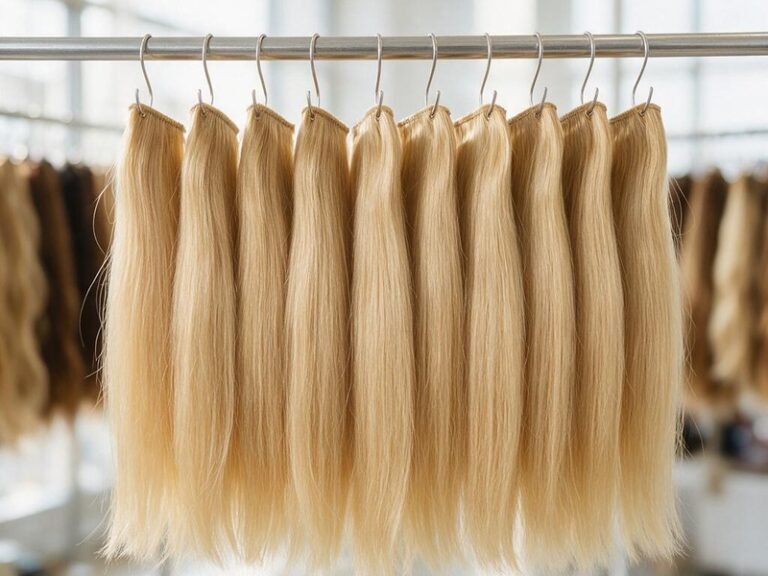
A weft is hair sewn or machine-tied into a track for installation. Bulk hair is loose hair without a weft, often used for braiding, knotting, or making custom extensions. Both need cuticle control, but bulk hair can show direction problems more clearly because there is no track holding the strands in place.
Is cuticle aligned hair the same as virgin, Remy, or raw hair?
No. These terms describe related qualities, but they are not identical, and suppliers sometimes use them loosely.
Virgin hair usually means hair that has not been chemically processed, dyed, permed, or relaxed. It can still be poorly sorted. A vendor could sell unprocessed hair with cuticles running in mixed directions, so “virgin” alone does not prove alignment.
Remy is supposed to mean hair collected with the cuticles kept in the same direction. In practice, the word is overused. Some factories call almost any human hair Remy after a softening or coating process, so ask what controls they use instead of accepting the label on a tag.
Raw hair generally means minimally processed donor hair, often with a more natural texture and less steam styling. Raw hair can be excellent, but raw does not automatically mean perfectly aligned either. Processing level and strand direction are two separate checks.
For wholesale buying, the safest wording is specific: “100% human hair, full cuticle present, roots and tips kept in one direction, no acid wash to strip cuticles, and no heavy silicone coating used to disguise tangling.” If the supplier cannot explain how they maintain that, the product may not match the marketing.
How do you check cuticle direction on a sample bundle?
Start with a small paid sample order before buying bulk. Sampling costs money up front, but it is cheaper than receiving kilograms or dozens of bundles that tangle after one wash. Test at least three samples from different texture categories if your store sells more than one pattern.
First, inspect the hair dry under bright light. Run your thumb and forefinger slowly from the top toward the ends. It should feel fairly smooth. Then run from the ends upward toward the top. Healthy cuticles will feel slightly more resistant when pushed against the grain, similar to stroking fur the wrong way.
That resistance alone is not a failure. It tells you cuticle structure is present. The bigger warning sign is inconsistency: some strands feel smooth one way, others catch the opposite way, especially within the same bundle. Mixed direction often becomes obvious when you separate a small section and pass it through your fingers.
Next, dampen a small section with clean water and gently run it between your fingers from root to tip, then tip to root. Do not yank it. Aligned hair should not quickly twist, lock, or feel rough in both directions. Slight texture and natural coiling are normal in curly and coily hair; sudden knotting is not.
You can also inspect a few shed strands under a cheap microscope or macro lens. Look for the overlapping scales and compare the direction on multiple strands. You are not running a laboratory test. You are checking whether the supplier’s claim matches what you can actually see.
Which practical tests should you run before placing a bulk order?
Do not judge hair only by the way it feels when it arrives. Many factories add temporary softeners that make the first touch feel luxurious. Those coatings can rinse out and reveal dryness, friction, or mixed cuticles.
- Wash test: Shampoo a sample with a gentle sulfate-free shampoo, condition it, and let it air dry. Repeat at least three to five times. Watch for sudden tangling, dullness, dryness, or excessive shedding.
- Direction test: Take ten loose strands, mark the root end with a small dot, and compare the direction of the scales. Most or all strands should run the same root-to-tip direction within a bundle.
- Finger detangle test: After washing, gently detangle from ends upward. Aligned hair should separate without repeatedly locking around itself.
- Shedding test: Hold the weft or bundle securely and comb through a measured section a set number of times. A few loose hairs are normal, especially around pierced wefts; clumps or continuing heavy loss are not.
- Heat test: On a spare section, use normal styling heat after heat protectant. Human hair can be styled, but heavily processed or weak hair may become brittle, frizzy, or unusually dry.
- Color test: If you sell hair that clients dye, lift a small sample to a realistic level and watch for breakage, uneven uptake, or gummy texture.
- Rest test: Leave the washed hair overnight in a loose braid or set position. Minor frizz can be normal by texture, but severe matting at the nape or around the ends is a warning.
Document every test with dates, texture, length, lot number, and photos. That helps when you reorder because hair can vary by donor batch. It also gives you a professional way to discuss issues with the factory instead of sending a message that only says “the hair is bad.”
What hair texture and length reveal about cuticle quality
Straight hair is the easiest texture for beginners to inspect because cuticle direction is easier to feel. Wavy hair can hide mild roughness through natural bend. Curly and coily hair needs more careful washing because tangling can come from texture, dryness, poor detangling, or actual cuticle reversal.
Long lengths are less forgiving. A 20-inch strand has more surface area rubbing against clothing, pillows, and other strands. Even small cuticle damage can show up as dry ends, tangling, or customers saying the hair “matted after two weeks.”
Short bulk hair for braiding can also cause problems if the roots and tips are mixed. During braiding, reversed strands catch and make the braider fight the hair. The finished style may look fuzzy sooner and be harder to wash without tangling around the braid.
Check the ends separately. Some friction at the tips is normal because ends are older and more exposed, but splits, severe dryness, or a harsh crispy feeling can point to overprocessing. Ask whether the factory trims or sorts short hairs and how they control the ratio of flyaway or reversed strands.
Also compare texture after washing. Steam-treated textures can be beautiful and consistent, but they may loosen over time depending on processing. Raw natural textures may be less uniform from batch to batch. Decide which trade-off fits your customers before committing to a large inventory.
What to ask a wholesale supplier before buying bulk human hair
A reliable supplier should be comfortable with specific questions. Vague answers like “premium grade,” “top quality,” or “10A hair” do not protect your business. Grade numbers are not universal standards, so two factories can call very different products by the same grade.
Ask whether the hair is full cuticle, cuticle intact, cuticle aligned, or cuticle removed. Some extension hair is acid-treated to remove cuticles and then coated to feel soft. That product may sell at a lower price, but it can tangle after washing and does not perform like full-cuticle hair.
Ask where the hair is collected, where it is processed, and how root direction is maintained. You do not need every private sourcing detail, but a serious vendor should explain the basic workflow: collection, sorting, washing, disinfecting, processing if any, wefting or packaging, and quality inspection.
Request sample lot consistency, not just one perfect display bundle. Ask whether you can buy samples from current stock and whether bulk orders will match the sample within realistic tolerances. Human hair is not synthetic fiber, so exact matching is impossible, but texture, color, luster, and alignment should remain consistent.
Clarify MOQ, which means minimum order quantity. Some suppliers set MOQ by bundle, others by kilogram, color, length, or texture. A common first order might mix 12-inch through 24-inch lengths, but do not spread yourself too thin. Start with the lengths your customers actually request.
Ask about weights too. Bundles are often around 95 to 100 grams, though some premium lines use 100 to 110 grams. Tape-ins and k-tips are sold by pack weight and piece count. A tape-in is a weft attached with adhesive tabs near the root. A k-tip, or keratin tip, is an individual strand bonded with a small keratin attachment using heat.
Understand lead times before marketing products as ready to ship. Stock hair may ship in days, while custom textures, longer lengths, lighter colors, or private label packaging can take weeks. If a factory promises every texture, length, and color immediately at an unusually low price, be cautious.
Common red flags when inspecting wholesale hair samples
Heavy perfume or oily coating: A strong chemical smell or slick coating can mask processing. A clean, slight hair smell is normal, but perfume should not be the main quality control.
Perfectly identical bundles: Human hair naturally varies. Extremely uniform shine, thickness, or texture can mean heavy processing or a blend. Ask directly whether the product is 100% human hair and whether it contains synthetic or animal-hair fillers.
Tangling after the first wash: This is one of the clearest signs of reversed cuticles, stripped cuticles, dryness, or leftover processing residue. Test before you sell, not after a customer complains.
Unclear return policy: Suppliers should explain what happens if a bulk lot has proven defects. Custom orders may have stricter rules, but you need that policy in writing before payment.
No lot tracking: If the vendor cannot identify when a batch was made or which worker or line processed it, solving quality issues becomes difficult. Lot numbers matter when scaling.
Pressure to skip samples: A sales rep pushing a “limited wholesale deal” before you test the product is not doing you a favor. Samples protect both sides because they set expectations.
How cuticle issues affect closures, frontals, and installs
A closure is a small hair piece, usually lace or silk, used to close a sewn-in style around the top or crown. A frontal is a larger piece that runs from ear to ear along the hairline. Both need aligned hair because customers wash, style, pluck, and sometimes bleach the knots.
If closure or frontal hair has reversed cuticles, the short hairs around the lace can tangle and frizz faster. That creates extra work for stylists and can make an otherwise good unit look low quality. Check shedding around knots both before and after washing, but be gentle because hand-tied pieces naturally lose a few strands.
An install is the professional application of extensions, such as a sew-in, tape-in, fusion, or braided style. Even the best hair can be damaged by poor installation, harsh brushing, neglect at night, or using too much heat. Separate product problems from application problems before filing a complaint.
Density matters when you compare units and closures. Density means how much hair is filled into the cap or lace area, often shown as a percentage such as 130%, 150%, or 180%. Higher density is not automatically better; it can make a unit heavier and harder to style, while thin density may look flat or reveal tracks.
For a first order, choose products that fit the skill level of your customers. Salon professionals may handle premium thin lace and custom coloring. General resellers may need more forgiving stock, clear care instructions, and dependable medium-density pieces.
How to set realistic expectations for your customers
Cuticle aligned hair lasts longer when cared for properly, but it is not indestructible. Curly and coily textures need more moisture, gentler detangling, and nighttime protection. Straight hair may need less daily styling but can show split ends from heat damage.
Give buyers simple care instructions before they ask: detangle from ends upward, shampoo in a downward motion, condition regularly, avoid cutting wefts unless needed, seal wefts for sew-ins when appropriate, and sleep with a silk or satin covering. Remind tape-in and k-tip clients to avoid heavy oils directly near bonds.
Tell customers how long installations should stay in. Sew-ins, tape-ins, and fusion methods have different maintenance schedules, and leaving any install too long can cause shedding, matting, or natural hair stress. Stylists should adjust based on the client’s hair condition and home care.
Be honest about color. Dark natural hair can often be lifted, but bleaching always stresses hair. Lighter factory-colored hair may be more delicate than natural black or brown. If your market wants blondes, pastel tones, or bright colors, test those exact products instead of assuming dark hair samples prove all colors perform the same.
Packaging matters less than hair quality, but clean labels help. Include texture, length, weight, material, care guidance, and lot number. If you sell raw hair, explain natural variation instead of promising every bundle will look exactly like the sample photo.
Buying plan for your first bulk hair order
Begin with a narrow product line. For many new B2B buyers, that means one straight or body wave line, one curly or deep wave option, and a small selection of matching closures or frontals if your clients need units. Too many textures at first makes quality comparison harder and ties up cash.
Order samples from several suppliers, wash them the same way, and compare them side by side after two weeks. Check softness, shine, tangling, shedding, curl return, drying time, coloring behavior, and smell. Include one stylist or braider in the review if you are not installing the hair yourself.
When you choose a supplier, place a controlled trial bulk order rather than a full container or huge private-label run. Confirm bundle weight, length accuracy when pulled straight, texture name, color range, packaging, MOQ, production lead time, shipping terms, and defect policy in writing.
On arrival, inspect a percentage of the order before shipping it to customers. Weigh random bundles, measure lengths, check wefts for loose threads, open a few packs for smell and feel, and compare the lot against your approved sample. Catching a problem at your table is much better than catching it after twenty stylists have installed the hair.
Keep records of customer feedback by lot. If one texture performs well for three months and another tangles only in long lengths, those records help you negotiate better and reorder smarter. Good sourcing is a repeat process, not a single lucky purchase.
FAQ
Can you see the cuticle pattern of human hair without a microscope?
You can feel direction and roughness without magnification, but a macro lens or cheap microscope makes the overlapping scales easier to inspect. For buying decisions, combine visual inspection with wash, tangling, and shedding tests instead of relying on one method.
Does cuticle aligned human hair ever tangle?
Yes. Even aligned hair can tangle from dryness, curly texture, friction, long wear, product buildup, harsh brushing, or an install left in too long. The difference is that properly aligned, full-cuticle hair should resist routine tangling and respond to gentle washing and detangling instead of constantly locking up.
If you are ready to test a small wholesale range, send us your target textures, lengths, and order quantity. We can help you choose samples worth testing before you commit to bulk inventory.
If you want the full background before you order, our guide on Human Hair Bundles Blonde: What to Check Before Your First Bulk Order walks through it in plain terms.
Send Us Your Hair Inquiry
Need bulk pricing, samples, or a private-label quote? Fill in the form and our team will get back to you within one business day.