Chinese Hair for Hair Brands: A Complete Guide
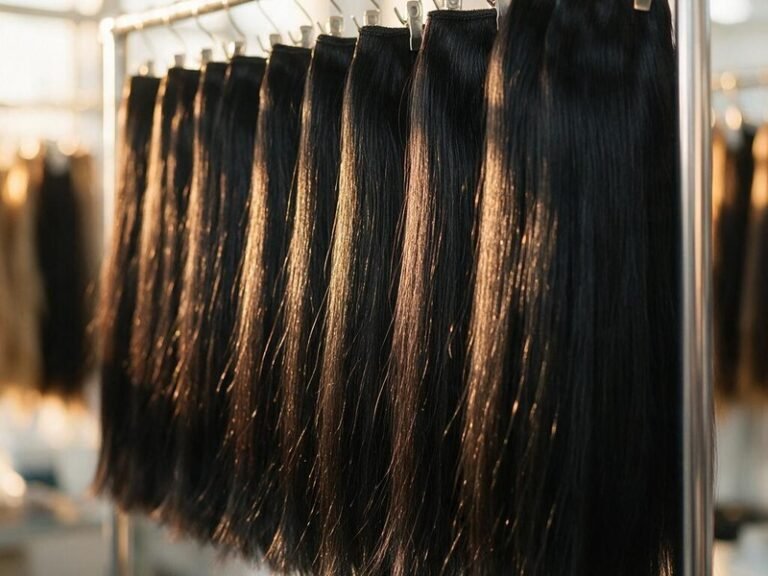
If you’re building or scaling a hair brand, you’ve almost certainly considered Chinese hair for hair brands, even if you’ve heard mixed reviews about quality and reliability. A huge chunk of the extensions sold by US vendors big and small comes from factories in Qingdao, Xuchang, and Guangzhou, and the range in quality is so wide it can make your head spin. We’ve spent years on the warehouse floor here, sorting bundles, fixing order mix-ups, and talking brand owners off the ledge after they got burned by a random Alibaba listing, so we’re pulling back the curtain on what you actually need to know.
First, let’s kill the biggest myth about Chinese hair
I still talk to brand owners who write off all Chinese hair as thin, coated junk that mats after two washes. Have you ever bought a bundle that felt like pure silk out of the package, only to turn into a tangled matted mess after two washes? That’s the low-tier coated stuff we’re talking about. That reputation isn’t a lie for the lowest tier, but it’s not the whole story. A lot of that bad rap comes from 2010s-era dropshippers who sold acid-washed, silicone-coated 50g bundles labeled as 100g virgin hair for $15 a pop, and those sellers are still around if you’re only shopping by the lowest price point.
What most new brand owners miss is that Chinese factories process hair from a dozen source countries too—we don’t only sell hair from Chinese donors. You can find raw Indian, Burmese, Cambodian, and even Slavic hair processed in Chinese facilities, held to whatever quality standard you pay for. If you’ve only ever compared Chinese and Indian hair from social media reels, our side-by-side breakdown cuts through fluff to show how they hold up for installs.
The real quality tiers you’ll actually encounter (no marketing jargon)
Let’s skip the “luxury royal virgin” marketing labels, because every factory uses those same words regardless of what’s in the bundle. There are three core tiers most brands will source, each with clear tradeoffs:
- Low tier: Non-remy, acid-treated, silicone-coated hair, $8–$15 per 100g bundle, MOQs as low as 10 pieces per length. This matting-prone stock gives cheap Chinese hair its bad rap, best for ultra-temporary styles.
- Mid-tier remy: Cuticle-aligned, minimal processing, no heavy silicone, $22–$38 per 100g bundle, MOQs around 50 pieces per length. This workhorse stock powers 70% of mid-range US brands, lasting 6-12 months with care.
- Raw unprocessed: Zero chemical treatment, fully intact cuticles, single-donor sourcing, $45–$75 per 100g bundle, MOQs starting at 100 pieces per length. This is the longest-lasting stock, but texture varies slightly batch to batch due to inconsistent supply.
It’s easy to assume you should jump straight to raw hair to position your brand as premium, but that’s not always the right call. Raw hair has a much higher upfront cost, and if your audience is mostly college students looking for affordable sew-ins that last a semester, mid-tier stock will give you better margins and happier customers long term.
Pricing and MOQs: what numbers you should actually expect
A lot of new brand owners reach out expecting to pay rock-bottom prices for top-tier raw hair with a 3-day lead time and a 1-bundle MOQ, and that combination simply does not exist. Let’s be clear: if a supplier quotes you $10 a bundle for “raw virgin hair”, walk away. There is no shortcut around the math here—raw donor hair costs money to collect, sort, sanitize, and process, and those costs don’t disappear just because you found a listing with a pretty logo.
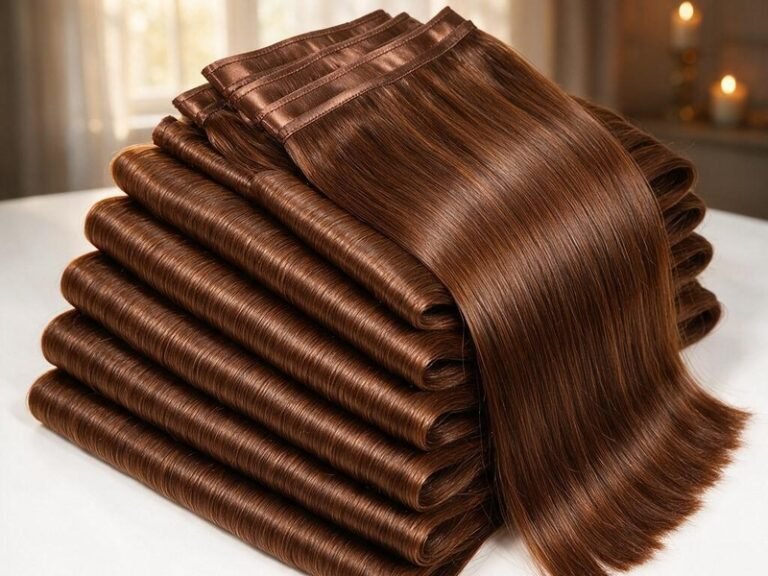
For most brands starting out, we recommend mid-tier stock to test your audience, because you won’t have to sink $10k+ into inventory to hit MOQ requirements. You can source bulk hair for braiding in mid-tier remy starting at 5lb minimums, roughly 22 bundles per order, enough to launch 3-4 texture options without overbuying. If you’re focused on sew-in installs, machine and hand-tied wefts in the same mid-tier usually have a 20-bundle MOQ per length, with custom labeling for orders over 100 bundles total. If you’re building out a fuller extension line, tape-in extensions and k-tip pieces have slightly higher MOQs (usually 50 packs per texture/length) due to more labor-intensive manufacturing. In-stock items ship in 3-5 business days, while custom orders with branding or custom colors take 15-25 business days to produce.
The most common costly mistakes new brands make
We see these every month, and they’re almost always avoidable. First, ordering sample bundles then placing a bulk order without confirming bulk stock matches the sample. Less scrupulous factories often send top-tier samples, then ship low-tier coated hair for full orders, counting on new brands skipping pre-shipment quality checks.
Second, skipping pull and wash tests on bulk shipments. You don’t need to test every bundle, but pull 10% of the order, shampoo it twice, and brush through from root to tip. If it sheds more than 5-10 strands per bundle or tangles immediately, catch it before you print labels. Third, not planning lead times—wait until you’re sold out to restock, and you’ll face 3-4 weeks of dead air and frustrated customers. If you’re mapping out your first order, our step-by-step ordering walkthrough covers pre-deposit checks to avoid unsellable stock.
Quick answers to the questions we get every week
Is Chinese hair worse than hair from other origins?
No, not inherently. The biggest difference between Chinese factory hair and suppliers elsewhere is quality control consistency, not the hair itself. Local factories have 40+ years processing hair, with equipment to produce uniform wefts and aligned cuticles when you pay for that standard. You can get bad hair from any country, and great hair from a Chinese supplier if you verify every order.
How do I spot coated, low-quality hair?
The easiest test is the wash test we mentioned earlier. If hair feels unnaturally slippery out of the bag, leaves silty residue on your hands under water, or tangles badly after one shampoo, it’s coated. A quick burn test works too: real human hair burns slowly, smells like burnt hair, and crumbles to ash. Coated or synthetic-mixed hair melts, smells like plastic, and leaves a hard round bead.
Do I need a huge budget to start?
Not anymore. A decade ago, most factories had 500+ bundle MOQs, but many reputable suppliers now have lower entry points for new brands. You can place a first mid-tier test order for $800–$1,200, enough to test customer demand before scaling.
Sourcing Chinese hair for your brand doesn’t have to be a gamble. You don’t need fancy connections or a six-figure budget to get consistent, quality stock that keeps customers coming back. Skip the hype, pick the tier that fits your audience, test every order, and work with suppliers who don’t hide behind marketing fluff. If you’re ready to place your first order or cross-check restock pricing, our team can walk you through stock levels, lead times, and custom options without high-pressure pitches.
Send Us Your Hair Inquiry
Need bulk pricing, samples, or a private-label quote? Fill in the form and our team will get back to you within one business day.