Buying Body Wave Bundles Human Hair in Bulk: Quality Checks That Matter
Yes, the biggest quality checks for buying body wave bundles human hair in bulk are hair origin, cuticle direction, curl return, weft construction, weight accuracy and batch consistency. A bundle can look good in a sample photo and still become a problem after washing, so B2B buyers need checks they can repeat across every production order.
Body wave is one of the highest-turnover textures because it sells to clients who want movement, softness and a style that can straighten and revert. That also makes it easy for suppliers to mix weaker processed hair into a texture that temporarily looks healthy. Use this guide before you place a large wholesale order, not after customers complain about tangling or thin ends.
What Does Body Wave Human Hair Actually Mean?
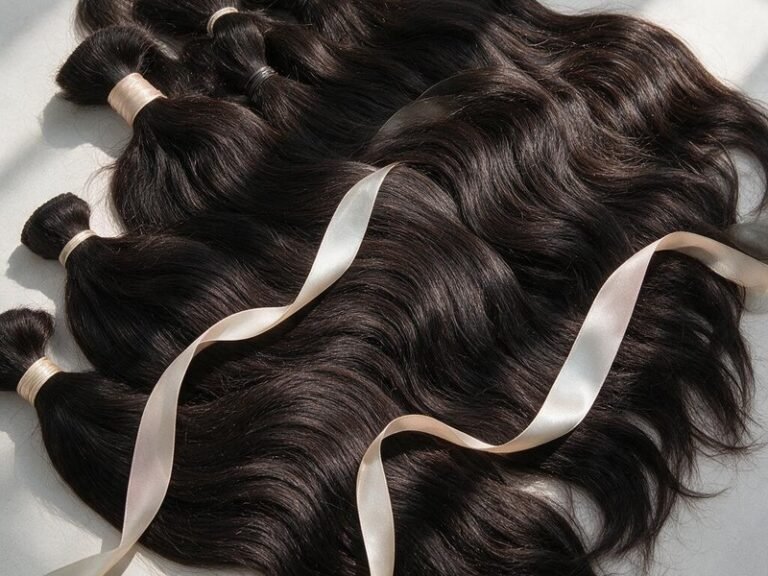
Body wave hair has a loose, consistent S-shaped pattern. It is not a tight curl and not straight hair with a temporary bend. Good body wave should move in soft waves, have visible volume without puffiness and keep its pattern after washing and air drying.
Several terms get mixed together in wholesale listings. Virgin hair usually means hair that has not been chemically processed, colored or permed. Remy hair means the cuticles are kept mostly in the same direction, although quality can vary. Raw hair means unprocessed donor hair with minimal steam treatment, but every supplier uses the word differently, so ask for exact processing details instead of relying on the label.
Cuticle aligned means the hair strands’ outer cuticle layers run from root to tip in the same direction. This matters more than a fancy name because misaligned cuticles rub against each other, causing tangling and matting. For body wave bundles human hair bought in bulk, steam may be used to set the loose pattern, but excessive chemical processing leaves the hair dry, brittle and quick to frizz.
Ask your supplier whether the texture is raw steamed body wave, processed virgin body wave or a Remy blend. A trustworthy factory should answer directly and explain how long the pattern normally lasts under proper care. If they only say “top grade,” “10A” or “no tangle ever,” keep sampling other vendors.
How Do You Check Body Wave Bundle Quality Before a Bulk Order?
Start by ordering samples from at least three suppliers before committing to a big MOQ. Test the same length and density from each supplier, ideally 18, 22 and 26 inches, because longer hair reveals processing and end quality faster than short hair. Label every sample so vendor names, lengths and dates do not get mixed up.
Run these checks on each sample:
- Smell: A slight factory scent is normal, but a strong chemical, sour or overly perfumed smell can signal heavy processing or poor rinsing.
- Cuticle direction: Run fingers down the strand and then upward. Hair should feel smoother root to tip. Excessive drag in both directions often means cuticles are mixed.
- Shedding: Hold the weft and brush gently from ends to top. A few loose hairs are normal, but continuous shedding usually points to weak stitching or insecure wefting.
- Weft strength: Pull lightly along the stitches and inspect for gaps, uneven rows, loose threads or hair slipping from the track.
- Curl return: Wash with sulfate-free shampoo, condition, air dry and compare the S-pattern before and after. Good body wave should revert without sticky products.
- Weight: Weigh each bundle after removing packaging. A standard bundle is often around 95 to 100 grams, but some markets sell 100 grams or 3.5 ounces. Confirm the exact target, not just “one bundle.”
- End fullness: Hold the bundle upright and spread the hair. Thin, scraggly or see-through ends mean lower yield and more customer complaints, especially in lengths over 24 inches.
Do not judge texture only right out of the package. Factory softeners, serums and packaging steam can make hair feel excellent for the first day. The more useful test is how it looks after two washes, one night in a braid and a full air dry without heavy cream products.
Also compare photos under neutral light. Golden ring light can make hair look richer, while harsh flash can exaggerate frizz. A plain white or gray background in daylight gives you a better read on color, luster and wave consistency.
Which Hair Origin and Processing Details Should Bulk Buyers Ask About?
Hair origin affects texture, cost, durability and the way body wave holds pattern. Common wholesale categories include Asian, Chinese, Indian and Southeast Asian hair, but origin alone does not prove quality. Collection method, donor health, sorting, washing, sterilizing, steam setting and wefting all change the final product.
Indian hair is often finer, natural-looking and easy to curl, but it can become dry if overprocessed. Chinese hair can have a stronger strand and take color well, depending on the donor material and processing. Southeast Asian raw hair is popular for natural movement and softer wave patterns, while mixed-origin hair is usually cheaper but less predictable in bulk.
For resale, choose a category that fits your customer base and price point. A salon doing premium installs may want smaller quantities of consistent raw or virgin cuticle-aligned bundles. A beauty supply or online store may need larger stock at a sharper price, but that usually means accepting more steam processing and a shorter usable lifespan.
Ask direct sourcing questions: Is the hair 100 percent human hair with no synthetic or animal-hair mix? Are cuticles intact and aligned? Is the body wave set by steam, chemicals or both? What percentage of short hairs is in each bundle? Can the supplier keep the same origin and process for repeat orders? If the salesperson cannot answer, ask to speak with production or request a video inspection.
A realistic supplier will discuss trade-offs. Raw hair costs more, has limited color consistency and may vary because donor hair is a natural material. Processed hair can look uniform and cost less, but repeated coloring or high heat can shorten its life. A vendor pretending every bundle is identical, perfectly raw and inexpensive is usually selling a story, not a stable product.
How Do You Judge Wefts, Weight and Bundle Construction?
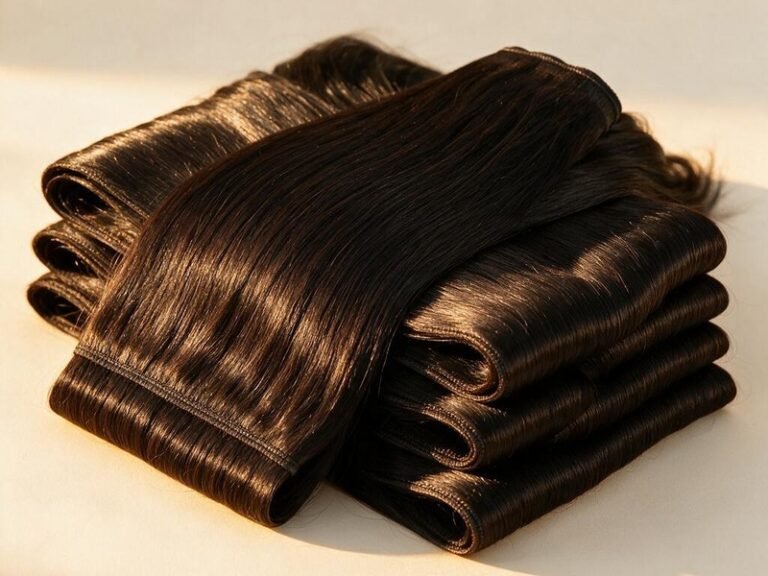
A weft is the stitched track at the top of a bundle where hair is secured for sewing into an install. Bulk buyers sometimes focus only on the hair and overlook the weft, but weak wefts cause the easiest return: shedding. A stylist can work around dry ends sometimes, but a weft that sheds during a sew-in creates immediate damage to your reputation.
Inspect the stitching row by row. The stitches should be even, tight and flat, with no long skipped sections. The weft should feel secure but not so thick that it creates a bulky ridge when sewn down. Reinforced wefts can reduce shedding, but very thick or gummy reinforcement may be hard to sew and can feel stiff against the scalp.
Check whether the bundle is machine-wefted, hand-tied or a hybrid construction. Machine wefts are common for wholesale body wave bundles because they are durable and more affordable. Hand-tied wefts are thinner and lie flatter, but they usually cost more and may not be intended for cutting. Always tell buyers whether a weft can be cut or must be sewn intact.
Weight accuracy matters because bundle pricing can be deceptive. Two suppliers may both quote a cheap 26-inch body wave bundle, but one may ship 90 grams and the other 100 grams. Calculate price per gram or price per full head set rather than price per bag. Also verify length after the hair is pulled straight, since loose waves naturally look shorter in their curly state.
A full sew-in usually needs about 3 to 4 bundles for 12 to 20 inches and 4 or more for longer lengths, depending on head size, desired fullness and whether a closure or frontal is used. A closure is a small lace or silk piece that closes an install, usually 4×4, 5×5 or 6×6. A frontal is a larger ear-to-ear piece used across the front hairline. If you sell sets, bundle weight and piece density should be balanced so the style does not look thin in front or overly thick at the back.
What Causes Tangling, Shedding and Wave Loss in Body Wave Bundles?
Tangling usually comes from cuticles running in multiple directions, excessive short hairs, dryness, poor end quality or lack of maintenance. Some tangling can happen if a client sleeps on loose hair without a scarf or brushes it dry, but wholesale hair should not matte after normal washing and gentle detangling. Test this early so you do not blame every customer issue on maintenance.
Shedding comes from loose factory hairs, weak stitching, cut wefts or poor thread tension. A handful of stray hairs during the first comb-through is not unusual. Hair continuing to come out in clumps after installation is a construction issue. If samples shed before they ever leave your office, do not expect bulk production to be better unless the supplier identifies the exact cause and shows corrected pieces.
Wave loss often comes from temporary styling rather than a true set. Body wave may loosen over time, especially after straightening, coloring or using heavy oils, but it should not become completely straight after one wash. Good steamed texture should return when washed, conditioned and allowed to air dry in its natural pattern.
Test straightening on a small section, then wash and let it revert. This test gives you a fair answer for clients who ask whether they can wear the hair straight and then go back to waves. Keep in mind that repeated high heat, bleach and dye change any human hair, even premium material.
Also test coloring on a sample if your clients dye bundles. Lifting dark hair to blonde exposes processing weaknesses fast. If the hair becomes gummy, smells harsh or loses its wave badly after a controlled color test, it is not a good fit for customers who expect custom color services.
How Do You Verify Color, Luster and Texture Consistency Across Batches?
Body wave should have a natural luster, not a plastic-like shine. Very shiny hair can be coated with silicone to disguise roughness. After washing, that coating may disappear, leaving dull or tangling hair. Compare washed and unwashed samples side by side to see whether the shine is natural or mostly product.
Color consistency is tricky with natural hair. Natural black and dark brown bundles may look close under store lighting but differ in sunlight, especially when mixed with closures or frontals. For bulk orders, set acceptable color ranges and ask suppliers to match closures and frontals to the bundles in the same shipment.
Density and texture should also match from top to ends. Density refers to the amount of hair and its fullness. A bundle can weigh 100 grams but still feel thin if too much weight sits near the top and the ends are sparse. Spread the bundle in one layer and check whether the wave pattern continues evenly through the midlengths and ends.
For repeat inventory, retain a sealed standard sample from each approved run. When a new production batch arrives, compare it against the standard in daylight, weigh it, wash one bundle and inspect the weft. This is especially important if more than one factory or workshop handles your orders.
Private label and packaging do not improve hair quality. Custom tags, satin bags and colorful boxes help branding, but they should come after you have locked in the actual product. A reliable supplier should allow random inspection, clear labeling by length and texture, and replacement terms for confirmed manufacturing defects.
What MOQ, Lead Time and Wholesale Terms Should You Expect?
MOQs vary by supplier, stock status and customization. Ready-to-ship natural black body wave bundles may have a low MOQ, sometimes 10 to 50 pieces, while custom labels, special lengths or colored hair may require 100 pieces or more. Raw hair in long lengths can have a higher MOQ or limited stock because matching donor material takes longer.
Lead times also depend on order size and customization. Stock bundles may ship within a few business days, while production orders often take 10 to 25 days, and custom packaging or peak-season orders can take longer. These ranges are not universal, so confirm production time, inspection time and shipping windows in writing before paying.
Do not build your launch around one shipment. For salon retail or a new vendor business, start with a small sample order, test the hair on real clients, collect feedback and then scale the lengths that sell. Lengths around 18 to 24 inches often move well, but your market may prefer shorter bob lengths or dramatic 28 to 32 inch sets. Buying too much slow-moving inventory ties up cash, even when quality is good.
Understand payment and claim terms. Ask what happens if bundles are underweight, lengths are wrong, wefts are defective or wave patterns do not match the approved sample. Some suppliers allow claims within a certain number of days with photos or video, while others offer very limited support after shipment. Human hair is a natural product, so expectations should be reasonable, but confirmed factory defects should have a clear solution.
Shipping matters too. Long bundles can become frizzy if packaging is too tight, damp or exposed to heat during transit. Ask how bundles are dried before packing, whether each bundle is protected and whether PVC packaging can trap moisture. Clean, dry packaging prevents mildew and keeps the wave neat during warehouse storage.
How Should Buyers Compare Bulk Body Wave Hair, Tape-Ins, K-Tips and Bulk Hair?
Not every body wave sale should be a bundle. Bulk hair is loose hair without a weft, often used for braiding, boho braids or custom tie work. Tape-in extensions are sandwich-style wefts applied with adhesive tabs, while k-tip extensions have keratin bonds applied strand by strand with heat. An install is the professional application method, such as a sew-in, tape-in, fusion or wig installation.
If you mainly sell to braiders, loose bulk body wave may matter more than standard wefts. If your clients are salons doing extension moves every 6 to 8 weeks, tape-ins may give you repeat orders. If stylists offer long-lasting strand-by-strand work, k-tips require excellent cuticle quality because shedding or tangling inside bonds is harder to correct.
For traditional sew-ins and wig making, machine-weft body wave bundles remain the safest starting point. They are easier to inspect, simpler to stock and familiar to most US buyers. Closures and frontals can be sold separately or as sets, but lace quality, knots, bleaching and hairline density need separate checks. Great bundles do not automatically mean a great frontal.
Keep product lines simple at first. A clean assortment of natural black body wave bundles in 12 to 28 inches, one reliable closure size and maybe one frontal option is easier to control than ten textures and six colors. Once you know return rates and client feedback, you can add blonde, highlighted, k-tip or tape-in versions with more confidence.
What Should Your Bulk Quality Control Process Look Like?
Set a written standard before ordering. Your standard should include origin category, hair percentage, cuticle direction, bundle weight in grams, length measurement method, wave pattern, weft type, color range, smell, packaging and allowed short-hair ratio. A supplier cannot consistently match expectations if your requirements only exist in a chat thread.
Approve a golden sample and keep it. For production, request photos or video of random bundles from the actual batch, including the weft, ends, measurement and scale reading. If budget allows, use third-party inspection for larger orders. Even a simple random check of 10 to 20 percent can catch underweight bundles, wrong lengths or inconsistent waves before shipment.
Your receiving process should be quick but consistent. Count pieces, verify lengths and textures, weigh bundles, inspect wefts and note any packaging moisture or strong odor. Wash and air dry one bundle from each large batch as a retention test. Keep records by batch number so you can trace issues instead of guessing which shipment caused them.
Give customers realistic care guidance. Body wave should be detangled from ends upward, washed with sulfate-free shampoo, conditioned regularly and air dried. Sleeping in a satin scarf or bonnet, avoiding heavy oils on the roots and not brushing bone-dry hair all help reduce tangling. Provide these instructions with every order, especially if your customers are end users rather than licensed stylists.
Honest product positioning prevents returns. If you sell affordable steam-processed body wave, do not market it as lifetime raw hair. If you sell premium raw hair, explain natural variations in color and pattern. Buyers trust vendors who set realistic expectations around longevity, heat styling, coloring and maintenance.
Frequently Asked Questions
How many body wave bundles should I buy in bulk for a first order?
Start with enough to test a few full installs and cover your best-selling lengths, usually 18 to 24 inches. A conservative first order might include 20 to 50 bundles plus a small number of matching closures, depending on your supplier’s MOQ and budget. Reorder after testing washing, styling, customer feedback and batch consistency.
Can good body wave bundles be straightened and then go back to waves?
Quality body wave can usually be straightened and revert after washing and air drying, but repeated high heat and color processing loosen the pattern over time. Test this on a sample before promising it to customers, and tell them to use lower heat, heat protectant and sulfate-free care products.
What is the most common mistake when buying wholesale body wave hair?
The most common mistake is choosing a supplier from one styled sample photo without testing washed hair, wefts and batch consistency. Another is comparing bundle prices without comparing grams, length, end fullness and processing level. Cheap hair can look expensive for one photoshoot and still perform poorly after a salon install.
If you are ready to source body wave bundles human hair in bulk, send us your target lengths, gram weight, quantity and whether you need closures or frontals. We can help you compare options, request sample checks and plan a repeat order that fits your salon, braiding business or resale brand.
If you want the full background before you order, our guide on Buying Human Hair Bundles Body Wave in Bulk: Quality Checks That Matter walks through it in plain terms.
Send Us Your Hair Inquiry
Need bulk pricing, samples, or a private-label quote? Fill in the form and our team will get back to you within one business day.