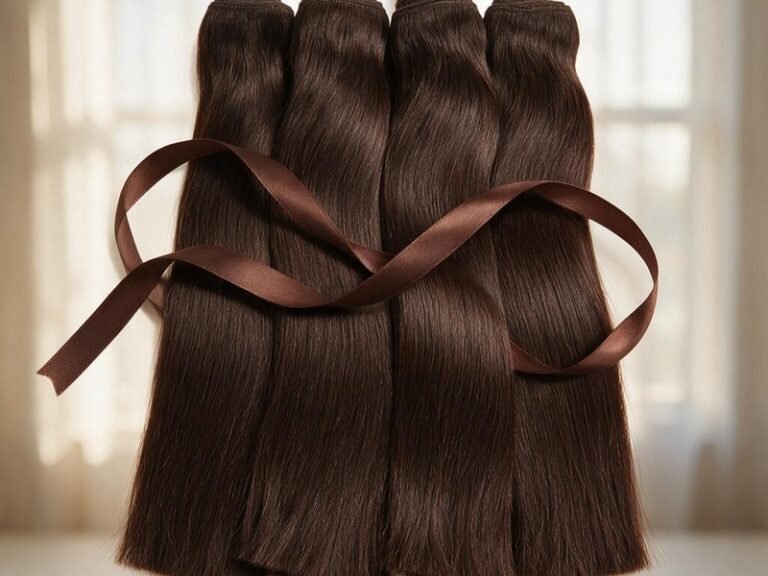
Bulk Human Hair: Pricing, Quality & Red Flags Explained
Bulk human hair is loose hair sold without a weft, usually bundled by weight for braiding, loc repairs, custom wig making, or factory conversion into extensions. Most wholesale buyers should expect to pay roughly $25 to $150+ per 100-gram bundle, depending on origin, donor quality, length, texture, cuticle condition, and whether the hair is raw, Remy, or processed non-Remy.
The cheapest price rarely gives you the best margin if the hair tangles, sheds after washing, or arrives shorter than labeled. This guide explains what B2B buyers should actually inspect, how pricing works, and which supplier claims deserve extra scrutiny.
What Is Bulk Human Hair, and What Is It Used For?
Bulk hair means hair gathered into a loose bundle, held by a string, rubber band, or small tie near the top, with no stitched weft. A weft is the sewn or machine-made track used for sew-in bundles. Bulk hair can be made into many finished products, but buyers purchase it this way when they need flexibility.
Salons and braiders use it for knotless braids, boho braids, goddess braids, ponytail styles, and loc extensions. Wig makers and extension brands may buy bulk hair to ventilate closures and frontals, create custom wigs, or produce tape-ins, clip-ins, or k-tips. A closure is a small lace or silk piece that covers the crown or parting area; a frontal runs ear to ear across the hairline. A tape-in is a thin taped sandwich extension, while a k-tip is a keratin-bonded strand installed with heat.
Because bulk hair has no track, installers can control strand size and application. That also means quality control happens strand by strand. If the cuticles run in mixed directions, the hair can lock against itself and tangle during braiding, shampooing, or daily wear.
How Much Does Bulk Human Hair Cost at Wholesale?
Wholesale pricing changes with length, donor supply, texture, steam processing, currency, order volume, and quality control. Short, standard straight hair in moderate volume will always cost less than 28-inch curly raw hair with tight cuticle sorting. Use these ranges as planning numbers, not fixed quotes.
- Entry processed human hair: around $20 to $45 per 100 grams. Often non-Remy, acid-treated, coated, or mixed with shorter filler hair; better for low-price styles than long-term reuse.
- Mid-market Remy bulk hair: around $45 to $90 per 100 grams. Remy means hair strands were collected with cuticles mostly running the same direction, though some Remy hair is still lightly processed.
- Raw or single-donor bulk hair: often $80 to $150+ per 100 grams. Raw hair is unprocessed or minimally processed donor hair, usually valued for natural texture, durability, and more realistic movement.
- Long lengths: 24 inches and longer can carry a steep premium because donor hair becomes harder to source. The same quality line may jump noticeably between 20, 24, 28, and 30 inches.
- Curly and coily textures: textures created or refined with steam and careful setting can cost more because they require more labor and sorting. Ask whether the pattern returns after washing.
- Custom private-label orders: expect added cost for custom labels, packaging, length assortments, texture matching, or conversion into tape-ins, k-tips, clip-ins, or wigs.
MOQs also affect price. A supplier may publish a low bundle price at 500 pieces, but a smaller salon brand ordering 20 bundles may pay a much higher rate. Ask for tiered pricing by total kilograms, not just by bundle, and confirm whether shipping, duties, packaging, and quality inspection are included.
Raw, Virgin, Remy, and Cuticle Aligned: What Do the Terms Mean?
These labels are often used loosely, so do not buy based on wording alone. Raw hair generally means hair that has not been perming, dyed, bleached, or heavily coated. It may still be washed, sanitized, sorted, and steam-textured. Good raw hair usually has a natural feel, visible cuticle layer, and patterns that vary slightly between donors.
Virgin hair usually means the hair was not chemically processed before collection, but some factories use the term for hair that can still be steamed or surface-treated. Remy hair refers mainly to strand direction: roots and ends should stay aligned. Cuticle aligned means the outer cuticle layer is intact and runs from root to tip, reducing friction and tangling.
Non-Remy hair is collected from brushes, salon floors, temples, or mixed sources where root direction may be lost. Factories can strip cuticles and add silicone to make it feel soft initially. That coating washes away, and the hair may become dry, matted, or difficult to style. Non-Remy can work for budget, short-term installs, but it is usually not the right choice if your clients expect months of reuse.
The practical test is performance after washing. Ask your supplier for a sample, shampoo it twice, condition it lightly, let it air dry, comb from ends upward, and observe shedding, return texture, and matting. A trustworthy supplier should be willing to let you inspect before placing a large bulk order.
Which Bulk Human Hair Quality Checks Matter Most Before Ordering?
Start with weight and length. Most wholesale bundles are measured in grams, commonly 50 g, 100 g, or 3.5 oz, which is close to 100 g. A 100-gram bundle should not lose 8 to 15 grams after removing excess packaging, wet ties, or heavy product. Measure length when the hair is pulled straight, especially curly and coily textures, because curly hair looks shorter in its natural state.
Check the ratio of long hairs to short hairs. Some low-grade bundles use a small amount of correct-length hair on top and fill the middle with shorter strands. Run your hand from top to end, inspect the tips, and compare fullness after combing. A tapered bundle is normal, but a dramatic shelf of short filler means your braiders will get uneven ends and poor value.
Look for cuticle health under magnification if possible. Intact cuticles should look like overlapping scales moving one direction. Mixed cuticle directions create rough spots when you run fingers root-to-tip versus tip-to-root. Hair that feels unusually slippery, waxy, or heavily perfumed may be coated to hide damage.
Run a few practical tests on samples:
- Wash test: Shampoo twice with a gentle sulfate-free cleanser. Tangling after the coating is removed is a warning sign.
- Shedding check: Loose hair is not stitched like a weft, so a few escape strands are normal. Large clumps, broken short hairs, or weak tips are not.
- Color check: Natural black and dark brown donor hair should not reveal suspicious orange, gray, or synthetic-looking shine after washing.
- Curl test: Steam-set curls should reset after conditioning. A pattern that disappears after one wash was poorly set or misrepresented.
- Heat test: Human hair responds to heat differently than synthetic fiber, but do not burn test finished inventory. Use a small sample and avoid open flames around workspaces.
- Bleach or dye test: If your clients color hair, test a sample first. Raw or virgin hair usually lifts more predictably than heavily processed stock.
What Are Common Bulk Hair Supplier Red Flags?
The biggest red flag is a supplier who cannot explain the product clearly. If every texture is called “12A virgin raw Remy cuticle aligned hair,” the labels are probably marketing words rather than quality controls. Ask direct questions: Is the hair Remy or non-Remy? Are cuticles intact? Was it steamed, dyed, or coated? What country or region collected it? How are lengths and weights checked?
Be cautious with prices that look far below market. Genuine long raw hair, especially 26 inches and up or consistent curly patterns, costs money to collect and sort. A suspiciously low price may mean synthetic blend, animal hair mix, heavily processed non-Remy, short-hair filler, inaccurate weight, or recycled hair.
Poor samples followed by pressure to order in bulk is another warning. Some suppliers send premium sample hair and ship lower-quality production stock. Ask whether production orders match the sample by specification, not just by photo. For larger orders, request pre-shipment photos or video showing weight, length, texture, bundle ties, and packaging. Third-party inspection can also make sense for high-value private-label runs.
Watch for vague return policies, no damage claim window, or refusal to acknowledge manufacturing defects. Human hair is sensitive to install and care methods, so suppliers do not have to accept used products back. Still, a professional B2B supplier should have a clear process for wrong lengths, incorrect textures, factory contamination, mismatched dye lots, or major quality discrepancies reported before use.
How Do Texture, Length, and Density Affect Bulk Hair Orders?
Density usually refers to how full a finished wig or hairpiece is, often stated as 150%, 180%, or 200%. For loose bulk hair, the more relevant terms are bundle weight, strand diameter, hair-to-filler ratio, and curl pattern. Coarse or tightly curly hair may look fuller at the same gram weight than straight hair, but it also requires more careful detangling.
Straight and body-wave bulk hair are easier to grade for length and smoothness. Deep wave, curly, and coily bulk hair require more trust because length is measured stretched, and pattern consistency can vary between bundles. For braiding hair, clients often want a soft, lightweight finish; overly thick strands or mismatched curl patterns can make boho braids look bulky or fake.
Length strategy matters for your margin. Many buyers stock 14 to 22 inches for regular braiding and wig work, then offer 24 to 30 inches as premium options. Long raw hair ties up more cash and sells more slowly, so test demand before stocking dozens of long bundles. For custom wig and ventilation work, consistent quality matters more than buying the longest stock available.
How Should Buyers Compare Wholesale Quotes Without Getting Burned?
Compare quotes using the same specification sheet. List hair type, source description, Remy status, processing method, texture, length, grams per bundle, moisture content before weighing, bundle count, MOQ, production lead time, shipping terms, and quality claim window. If two suppliers quote “20-inch curly raw hair” but one sells 50 grams and the other sells 100 grams, the price is not comparable.
Ask for paid samples in the exact textures and lengths you plan to sell. Sampling costs money, but it is cheaper than receiving kilograms of hair your stylists refuse to install. Keep labeled samples from approved orders so future shipments can be compared against a physical standard.
Plan lead times realistically. Stock textures may ship in a few business days, while custom bulk hair sorting, private labeling, or extension conversion can take 2 to 6 weeks, sometimes longer during peak seasons or around holidays. Place test orders before busy salon seasons instead of relying on last-minute air freight, which can erase your margin.
Build a relationship with a supplier who understands both salon use and wholesale consistency. A good supplier will tell you when a requested curl pattern needs steam processing, when a length is in short supply, or when a cheaper option may work for temporary styles. That honesty is more valuable than a polished grade chart.
Bulk Human Hair Care Tips That Protect Your Brand Reputation
Even strong human hair performs poorly with rough handling. Tell clients and stylists to detangle from the ends upward before washing, use a moisturizing sulfate-free shampoo, and avoid aggressive scrubbing at the attachment points. For braided styles, excess leave-in product can build up and cause frizz, so light moisturizers and proper cleansing are better than heavy oils.
Raw and curly hair needs more conditioning than straight processed hair, but it should not be soaked in heavy creams every day. Let the hair air dry when possible, reduce high heat, and use a heat protectant if styling. At night, recommend a silk or satin scarf, bonnet, or pillowcase to reduce friction.
For resale, include simple care instructions with every order. Explain return texture, shedding expectations, wash frequency, nighttime protection, and that cutting bundle ties or installing the hair usually means it can no longer be returned as unused. Clear education prevents many chargebacks and bad reviews caused by expectations, not defects.
Frequently Asked Questions
Is bulk human hair better than bundled weft hair?
It is different, not automatically better. Choose bulk hair for braiding, loc work, ventilating, custom strand-by-strand applications, or making specialized extension pieces. Choose weft hair when you need sew-in bundles, quick weaves, or machine-made wig tracks with less handling during install.
Can I request samples before placing a wholesale bulk hair order?
Yes, and you should. Order samples in the exact length and texture you plan to resell, wash and style them, then compare weight, shedding, tangling, and curl pattern before committing to a larger purchase. Keep the approved sample as your standard for future production orders.
If you are stocking bulk human hair for braiding, wig making, or your own extension line, start with a small paid sample order and test the hair like your clients would wear it. Send us your target texture, length, bundle weight, and monthly volume, and we can help you compare practical wholesale options without overordering.
If you want the full background before you order, our guide on Bulk Hair Weave Human Hair: Pricing, Quality Red Flags Explained walks through it in plain terms.
Send Us Your Hair Inquiry
Need bulk pricing, samples, or a private-label quote? Fill in the form and our team will get back to you within one business day.