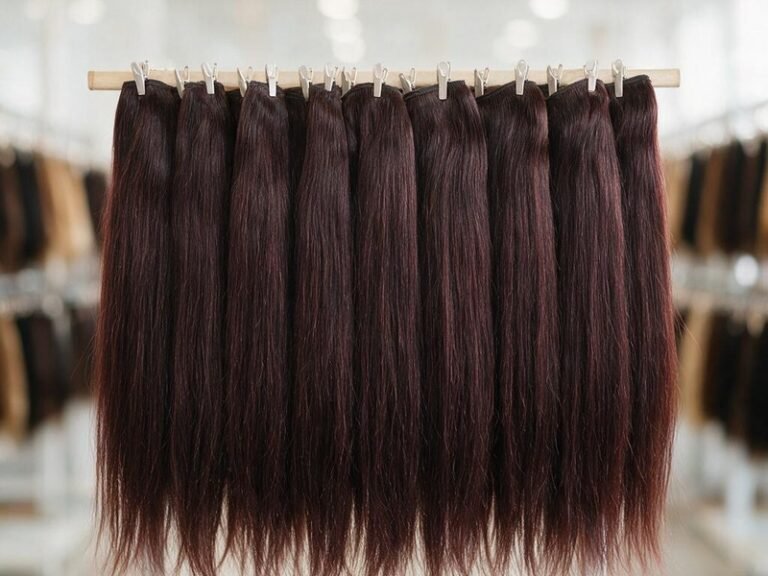
Braids with Human Hair: A B2B Buying Guide for Hair Businesses
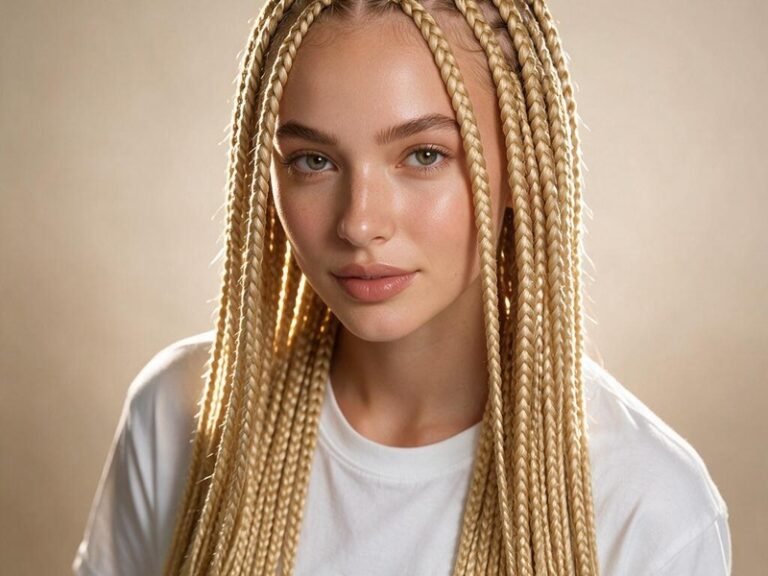
Braids with human hair usually means loose bulk hair used for knotless braids, boho braids, micros, twists, and loc repair—not wefted bundles meant for sew-ins. For a hair business, the buying decision comes down to hair type, texture consistency, weight, length, steam processing, return policy, and whether the factory can keep the same quality across repeat orders.
This guide is for salon owners, braiders, beauty-supply buyers, and resellers ordering from a China-based human hair supplier. I’ll cover what to stock, where buyers lose money, and how to inspect braiding hair before it reaches your stylist or customer.
What exactly is braids with human hair made from?
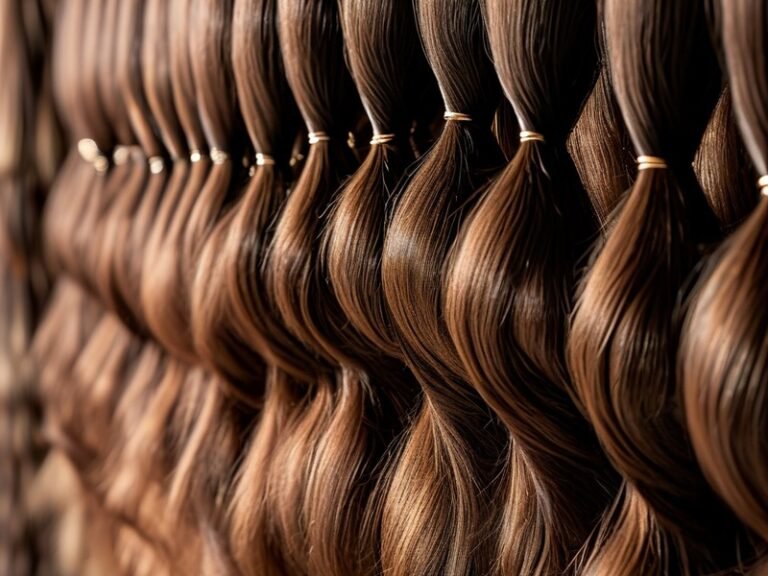
Most professional human hair for braiding is sold as bulk hair: loose hair with no weft, or stitched only lightly at the top for control. A weft is the stitched or machine-sewn track on bundle hair; that track is not ideal for braiding because it creates bulk and short pieces that can poke through the braid.
You may also see feathered bulk, silky bulk, yaki bulk, kinky bulk, afro bulk, curly bulk, and wet-and-wavy bulk. These terms describe texture and finish, not automatically quality. Some textures are naturally closer to the donor pattern, but most uniform yaki, kinky, and afro textures are steam-processed or textured in the factory.
At the material level, buyers usually choose among virgin hair, Remy hair, raw hair, and processed human hair. Virgin hair means hair that has not been colored, permed, or chemically processed, although it may still be washed, sterilized, sorted, and steam-textured. Remy hair means the cuticles are mostly kept in the same root-to-tip direction; Remy can still be colored or processed. Raw hair usually means less treated donor hair with more natural variation, but the word gets used loosely, so ask for specifics instead of paying more for a label.
Cuticle aligned hair has the outer cuticle layer running in one direction, which reduces tangling. That matters in braids because loose strands rub against each other for weeks inside a plait. Hair with mixed cuticle directions can mat, lock together, and become painful to remove.
Which human braiding hair should your business stock?
Start with the styles your clients already request. A braiding salon may need small inventoried amounts in several textures, while a beauty-supply brand may need repeat container-ready stock with uniform packaging. Do not buy a broad texture line just because samples look good on a showroom table.
For knotless braids and clean micros, straight bulk or light yaki bulk is easiest to feed into the braid. For boho braids and goddess braids, buyers often combine straight bulk for the plait with curly or wavy bulk for loose ends. For twists and textured protective styles, kinky bulk or afro bulk gives more grip and a softer finish, but it can tangle faster if the cuticles are not aligned.
Length selection matters too. Common braiding lengths run from 12 inches to 30 inches, with 18, 20, 22, and 24 inches moving well for many US markets. Longer hair looks premium, but it needs more grams per full style and is more vulnerable to thin tips. Ask vendors for length measured stretched, especially for curly and coily textures, because curly hair appears several inches shorter when unstretched.
A practical starter stock plan can include natural black in 18–24 inches, one light yaki option, one kinky bulk option, and one curly bulk option for boho ends. Natural colors such as #1B, #1, #2, and #4 are lower-risk than fashion colors. Add brown, honey, burgundy, or grey after you have real orders, because colored inventory ties up cash and can vary batch to batch.
Bulk hair, wefts, closures, and frontals: what do braiders actually need?
Braided services mostly use bulk hair, but many businesses also buy matching bundle hair, closures, and frontals for leave-out, sew-ins, wigs, or blended styles. A closure is a small hair piece with lace or silk base, usually 4×4, 5×5, or 6×6 inches. A frontal is a wider ear-to-ear piece, commonly 13×4 inches.
If your customer is doing only knotless braids, a closure is unnecessary. If she is offering boho braids with a partial leave-out or a quick-style wig unit, matching closure hair can help the finished look blend. Just remember that closure hair is often wefted around the perimeter and ventilated through lace; it is not the same product as braiding bulk.
Some vendors sell bulk hair cut from wefts. That can work in lower-price services, but it often creates uneven roots, short cut hairs, and flyaways. True drawn bulk is sorted from loose hair and gives a cleaner feeding point. Ask directly: “Is this produced as loose bulk, or cut from machine wefts?” A reliable supplier should answer plainly and show photos or video of the top and length layers.
For brands selling at-home boho kits, you may want pre-measured 50g or 100g bundles instead of large 1kg braiding packs. For salons, larger unbranded kilos can reduce cost per gram, but only if your team can control sanitation and portioning. Beauty-supply sellers usually need labeled grams, length, origin, color code, and care instructions.
How much human hair is needed for braids?
Usage varies by head size, braid size, desired fullness, length, and stylist technique. A full head of medium knotless braids often uses about 150–300 grams of human braiding hair, while micros, small waist-length braids, or very full boho styles can need 300–500 grams or more. Those are practical planning ranges, not universal rules.
Boho styles complicate inventory because the braid base and curly ends use different hair. A stylist might use 150–250 grams of straight or yaki bulk plus 50–150 grams of curly bulk. If your shop sells kits by look, confirm the recipe with your own stylists before promising “one pack does a full head.”
Men’s braids, touch-ups, ponytail wraps, loc repair, and children’s styles need smaller portions. Selling 25g, 50g, or 100g refill packs can raise average order value without forcing clients to overbuy. Resellers should also list weights clearly; customers are increasingly skeptical when a product says 20 inches but does not state grams.
Expect longer lengths to use more hair and take more labor. The hair itself is not the only cost: a stylist may spend 6–12 hours on small human-hair braids. If your business sells wholesale to salons, give portion guidance so stylists do not under-order and blame the hair mid-appointment.
What causes the biggest price differences in human braiding hair?
Price is driven by donor supply, hair length, yield, cuticle control, texture processing, color, sorting labor, and how much short hair is mixed in. A cheap pack may look thick at the top but become wispy after 14 inches. That happens when short hairs are combed into the bundle to add weight.
Virgin cuticle-aligned bulk usually costs more because sorting root direction takes labor and waste. Raw hair can also cost more, but natural donor hair is less uniform, so repeat color and texture matching may be harder. Processed human hair can be beautiful and more consistent, especially for yaki and afro textures, but overprocessing makes it dry, brittle, and quick to frizz.
Steam-textured hair is generally safer than harsh chemical perming, but steam is not magic. Repeated high heat, weak acid baths, poor dye work, or inadequate drying can leave curly hair tangled before the client even opens the bag. Ask whether texture is created by steam only, chemical treatment, or a combination, and how the supplier recommends washing and refresh timing.
Mixed hair is another budget issue. Products labeled human hair can contain synthetic fibers, animal hair, coated fibers, or heavily processed fillers. A low price is not automatically bad, but a claim of “100% virgin Remy human hair” at an unusually low price should trigger testing. Human hair singes with a distinct smell and leaves ash-like residue; synthetic fibers often melt, bead, or harden. Burn tests are only a basic check, not proof of grade.
What quality checks should hair businesses perform before selling?
Always approve a physical sample before placing a bulk order. Photos and even video calls cannot reveal shedding, dryness, short-hair ratio, or how a texture behaves after shampoo. Order samples from at least three suppliers and test them in actual braids, not just by running fingers through the hair.
- Check weight: verify grams on a scale after removing packaging and rubber bands.
- Measure stretched length: pull curly or coily hair straight without overstretching and measure from root band to tip.
- Inspect the top: look for excessive short hairs, lice scars, brittle roots, moldy smell, or chopped weft pieces.
- Test direction: gently run fingers root to tip and tip to root; cuticle friction should not feel harsh or reversed in patches.
- Wash and air dry: note matting, tangling, return-to-curl pattern, odor, shedding, and frizz after three washes.
- Braid a sample section: confirm the hair feeds smoothly, does not slip out, and looks clean at the roots.
- Check color under daylight: compare #1B, #1, #2, and brown shades against your color ring under natural light.
For repeat orders, keep a sealed reference sample from the approved batch. When the next production arrives, compare texture, color, sheen, hand feel, length layers, and smell against that standard. This is especially important for kinky and curly textures, where “same texture name” can mean a very different curl pattern from run to run.
Moisture is a hidden problem. Hair that leaves the factory damp or is sealed too soon can develop a stale smell or mildew during shipping. Packaging should be fully dry, and plastic bags should not reek of heavy perfume used to cover odor. If you receive a chemical or sour smell, document it immediately and contact the supplier before redistributing.
How do MOQs, lead times, and custom orders work?
MOQ means minimum order quantity, and it varies by supplier and customization level. Stock natural black bulk hair may have a lower MOQ, sometimes 500 grams to 1 kilogram per length or texture, while private label, custom colors, custom packaging, and special curl patterns can require 50–500 pieces or more. These ranges vary by factory, so get the threshold in writing before sampling.
Stock products may ship in 2–7 business days after payment and quality check. Custom colors or textures often need 7–20 business days, and private-label packaging can add another 1–3 weeks depending on design approval, material availability, and inspection. Peak seasons—back-to-school, prom, wedding season, and major US gifting holidays—can tighten capacity. Place repeat orders earlier than feels comfortable.
Custom texture is where many new brands make an expensive mistake. They approve one beautiful sample, then order hundreds of pieces without a written texture standard. Give the factory a physical sample, target curl diameter, length drawing, steam method, gram weight, color ring, and acceptable tolerance. Keep the approval sample and require production photos before shipment.
Private labeling also needs realistic artwork checks. Labels should state hair type, material composition, length, weight, color, batch number, country of origin, and basic care instructions. Avoid unsupported claims such as “raw single donor,” “tangle-free forever,” or “100% unprocessed” if the hair is steam-textured or dyed. US customers and salon partners remember exaggerated claims when the product does not match.
How should salons and resellers price human-hair braids?
Do not price the service from the pack cost alone. Human-hair braids consume more expensive hair and more labor than synthetic styles, and removal can also take longer if the hair tangles. Calculate cost per gram, expected grams per style, waste, sanitation, styling products, labor hours, and replacement risk.
For retail packs, compare vendors by delivered cost per usable gram, not just bag price. A 100g pack with clean long strands can be a better value than a 120g pack loaded with short hair. For salon services, separate the hair fee from the braiding labor if that works in your market; this keeps clients from thinking a high service price is only labor.
Resellers should avoid racing to the bottom on natural black straight bulk. That segment is crowded and easy to compare. Better opportunities often come from matched texture sets, boho kits, refill curls, gray coverage, color-matched human braiding hair, and clear care guidance for clients with textured hair.
Set expectations honestly. Human hair looks natural, can usually be styled with low heat depending on processing, and feels lighter than many synthetic fibers. It can also dry out, frizz, tangle from poor maintenance, react to chlorine, and require gentler washing. If the client wants a set-and-forget style with zero upkeep, synthetic or a different protective style may be more practical.
What aftercare should businesses tell customers?
Human braiding hair is not self-maintaining. Clients should wear a satin or silk scarf or bonnet at night, avoid heavy grease on the roots, and gently cleanse the scalp without aggressively scrubbing the braids. Diluted sulfate-free shampoo and a light moisturizing mist are usually safer than thick products that build up inside the braid.
Drying matters. After washing, clients should sit under a hooded dryer or allow enough air-drying time so the braids and roots are not left damp. Human hair can hold moisture, and trapped dampness against the scalp can cause odor or irritation. Curly ends should be separated while damp and refreshed with a light leave-in rather than brushed dry.
Heat use depends on the hair. Virgin straight or wavy hair may tolerate moderate heat better than heavily processed curly or colored hair, but every batch has limits. Recommend a heat protectant and low-to-medium settings, and warn that frequent flat ironing can loosen steam textures and make ends look thin.
Removal should be patient. Clients should not wet the hair and try to comb through years-old growth without cutting added hair below their own hair first. A professional removal is worth recommending for micros, long braids, or styles kept in for many weeks. Good hair can still tangle if a client yanks through new growth or uses the wrong take-down tool.
How can buyers verify a China supplier without relying on labels?
A trustworthy supplier should be willing to discuss the product honestly: where the hair is collected, how cuticles are controlled, whether texture is steamed or chemically treated, what percentage of short hairs is normal, and how repeat batches are matched. Vague answers around “premium grade” are not enough. Ask for factory videos, stock footage, packing shots, weight checks, and batch samples.
Be cautious with grade letters such as 10A, 12A, or 15A. Those marks are not a universal industry standard. Two vendors can both call hair 10A while selling completely different yields, textures, and processing levels. Build your own standard using gram weight, length, donor type, cuticle direction, short-hair ratio, color, wash performance, and smell.
Communication is part of quality control. Notice whether the sales rep asks about your target market or simply pushes the most expensive raw hair. A helpful supplier should warn you when a texture needs higher MOQ, when a color is hard to repeat, or when 30-inch hair has more natural tip thinness. That kind of practical answer usually matters more than a polished catalog.
Before scaling, place a small trial order through normal shipping channels. Inspect the cartons for moisture, labeling errors, mismatched lengths, and package weight. Once the product sells and stylists approve it, you can increase volume with clearer standards. Scaling after one sample is risky, especially for curly and kinky human braiding hair.
FAQ
Is human hair good for braids?
Yes, human hair can be excellent for knotless braids, boho braids, twists, and micros because it looks natural, moves softly, and can blend with many hair textures. The key is buying true bulk hair with aligned cuticles and enough long usable strands; cheap human hair can tangle or shed just as badly as a poorly made synthetic product.
How many grams do I need to sell for a full head of human-hair braids?
Medium knotless braids often need roughly 150–300 grams, while small, long, or very full styles can need 300–500 grams or more. Boho braids may need separate bulk for the braid base and curly ends, so create tested salon recipes instead of using a universal pack claim.
If you are building a braiding hair line or stocking salon inventory, send your target lengths, textures, colors, pack weights, and order volume. We can help you compare bulk human hair options and choose a repeatable range without paying for grade-label hype.
Order samples first, test them in real installs, and only scale once the texture, grams, and aftercare behavior match what your customers expect.
If you want the full background before you order, our guide on Human Hair Bundles with Frontal: A B2B Buying Guide for Hair Businesses walks through it in plain terms.
Send Us Your Hair Inquiry
Need bulk pricing, samples, or a private-label quote? Fill in the form and our team will get back to you within one business day.