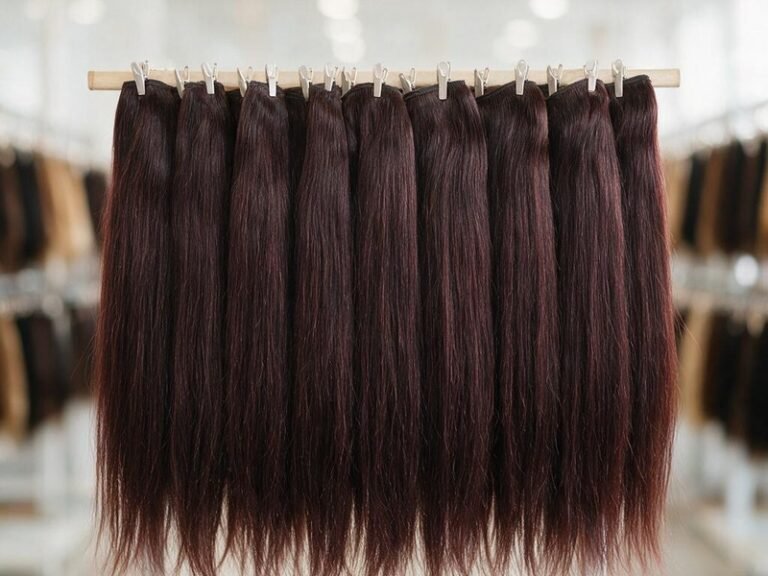
Buying Glueless Wigs Ready to Wear in Bulk: Quality Checks That Matter
Yes, glueless wigs ready to wear can be a strong bulk purchase, but only if the hair, cap construction, lace and adjustment system all hold up after repeated installs. For wholesale buyers, the biggest risk is not how the wig looks in a product photo; it is whether your customer can open the package, adjust the cap, put it on and wear it without glue, custom plucking or major styling work.
A glueless ready-to-wear wig usually means a human hair wig that arrives pre-cut, pre-bleached or subtly tinted at the lace, pre-plucked at the hairline, styled and fitted with bands, combs, adjustable straps, silicone grips or elastic cords. “Install” is the term for attaching and styling the wig on the head. Glueless does not always mean one-size-fits-all, and ready to wear does not always mean zero finishing work, so your vendor spec sheet needs to be specific.
What Should a Ready-to-Wear Glueless Wig Include?
The product should arrive closer to a finished unit than a standard lace wig. A customer may still need to shampoo, re-curl, trim stray lace fibers or personalize the part, but she should not need to rebuild the cap, sew on bands, bleach knots, pluck a whole hairline or cut a large sheet of lace.
For bulk orders, ask the supplier to confirm exactly what is done before shipment. Some factories call a unit “wear and go” because it has an elastic band, even if the lace is uncut and the knots are dark. Other factories include pre-cut lace, bleached knots, a pre-made bleached area around the perimeter, baby hairs, washed texture and a shaped style. Those are not the same product and should not be priced the same.
A dependable bulk glueless wig should include a breathable cap, secure non-glue attachment points, a natural lace transition, properly aligned hair and a stable density from crown to edge. Density means how much hair is packed into the wig, often written as 150%, 180%, 200% or 250%. Higher density is not automatically better; too much hair near the hairline can make the lace lift and the unit look bulky.
Which Hair Quality Checks Matter Most for Bulk Orders?
Start with the hair itself because cap problems can sometimes be repaired, but weak or processed hair creates returns. Ask whether the wig is virgin hair, Remy, raw hair or non-Remy processed hair. Virgin hair has not been chemically processed, while raw hair usually describes minimally processed donor hair with natural texture variation. Remy means the cuticles are kept mostly in the same direction, but the term is used loosely, so do not rely on a label alone.
Cuticle aligned hair should feel smooth when you run your fingers from roots to ends and only slightly rougher in the reverse direction, without tangling into clumps. Test sample units before washing, after one wash and after three washes. Matting that appears after the first shampoo often points to stripped cuticles, mixed hair lots or excessive silicone coating. A temporary super-slippery feel can be misleading; some factories add heavy softeners that wash away quickly.
Check shedding by holding the weft and giving the lengths a few firm but reasonable brushes through. A few loose hairs are normal, especially around hand-tied areas, but repeated pulls from the weft or knot area are a bad sign. Run your fingers along the weft, which is the stitched track holding bundled hair into the cap. Look for uneven stitching, gaps, loose threads, hair escaping from track holes and thick ridges that could make the wig feel lumpy.
For curly and deep-wave units, test the pattern after washing and air drying without heavy product. Cheap processed curl may become frizzy, stringy or lose its pattern once the coating is gone. Body wave can naturally loosen, but it should not turn into dry, matted waves. If you sell colored wigs, inspect dryness around the lighter ends because blonde, balayage and highlighted units need more careful processing than natural black hair.
How Do You Inspect the Lace, Knots and Hairline?
The hairline is where most customers judge a glueless wig immediately. The lace should be soft against the forehead, with a color that works for the skin tones you serve. Transparent lace can look clean in photos but may cast a light edge on deeper skin if the customer does not tint it. Light brown, medium brown or HD-style film lace can be better choices depending on your market, though very thin lace is more delicate and may tear more easily during handling.
Bleached knots make the hair-to-lace transition look less dot-like, but over-bleaching weakens the knots and increases shedding. Ask whether knots are lightly bleached only in front or treated across the whole unit. For durability, many wholesale buyers prefer lightly bleached front knots with natural knots elsewhere. Inspect the hairline under natural light; there should be gradual density variation, not a perfectly straight wall of hair or obvious plugs.
Pre-plucked hairlines need moderation. A heavily plucked unit can look thin, create holes or become unsellable after a customer customizes it further. Baby hairs should be optional and realistic, not thick curled strips that make every wig look dated. If you order in bulk, consider fewer baby hairs on the base model so stylists and end users can add their own.
Pre-cut lace is convenient, but the cut must leave enough material around the ear tabs and forehead for adjustment. Lace cut too short cannot be fixed. Sample units should be tried on multiple head sizes, not just one mannequin. Check whether the edge rolls, wrinkles, scratches or shows a visible line when no adhesive is used.
What Cap Construction Makes a Glueless Wig Secure?
A true glueless wig needs a cap system that grips without depending solely on glue. Common features include adjustable straps at the nape, elastic bands across the back, combs or clips at the sides and nape, silicone strips, stretch panels, drawstrings or Velcro-style adjusters. Combs can provide security, but some customers find them uncomfortable or catching, especially on fine or protective hairstyles.
The best cap for your inventory depends on your customer. Salon clients may prefer a softer cap with a snug elastic band and fewer combs. Beginners may want more adjustment points. Active wearers may need stronger grip, but no glueless cap should be so tight that it causes headaches or presses the lace edge upward. Fit testing matters because cap size, head shape and hair underneath change security.
Check sizing in centimeters, not just “average.” Ask factory specs for circumference, front-to-nape, ear-to-ear over top and temple-to-temple around the back. A common adult cap is around 21.5 to 22.5 inches with adjustable room, but petite and large customers need options. If you only buy average caps, expect fit complaints even when the hair quality is excellent.
Inspect band placement by putting the wig on and shaking the head gently, pulling the sides lightly and wearing it for at least 30 minutes. The band should sit flat and not push the frontal lace away from the forehead. A frontal runs ear to ear across the front, while a closure is a smaller lace piece usually placed in the middle, top or crown area. Both can be glueless, but frontals need more careful edge molding because they cover a larger area.
What Should You Verify Before Placing a Bulk Wholesale Order?
Do not place a large order from one perfect sample alone. Factories can make a beautiful salesman sample and then produce bulk units with looser quality control. Order at least two or three samples from different production rounds if possible, then request pre-shipment photos or video of the actual bulk batch. Confirm whether every unit will match the sample in texture, curl pattern, lace color, bleaching, band style and packaging.
Use a practical checklist before approving production:
- Hair origin and grade: Confirm human hair percentage, donor type, processing level and whether synthetic or animal-hair blends are prohibited.
- Cap details: Document cap size, stretch material, band width, comb count, silicone placement and adjustable range.
- Lace specs: Confirm lace type, color, size, cutting standard, knot bleaching and whether baby hairs are included.
- Density and length: Verify length when the hair is straightened for textured patterns, and weigh cap units to catch underfilled hair.
- Finished style: Specify whether units arrive washed, curled, flat-ironed, colored, trimmed or styled in a set pattern.
- Defect tolerance: Agree on acceptable shedding, short hairs, lace holes, uneven hairlines, coloring flaws and cap defects before payment.
- Packaging: Make sure bands are not folded against wet styling product, lace is protected, and hangtags do not puncture delicate edges.
MOQs, or minimum order quantities, vary widely by factory and customization level. Stock colors in standard lengths and densities usually have lower MOQs, while private labels, custom cap labels, special colors and upgraded lace may require 50, 100 or more pieces. Lead times can range from several business days for stock units to several weeks for custom production, with extra time needed during holiday and back-to-school seasons.
Ask about return terms for manufacturing defects, not just shipping damage. A reliable supplier should stand behind obvious problems such as tearing at the lace tab, unsewn wefts, incorrect density, wrong cap construction or major shedding out of the package. Be realistic too: tangling caused by heavy products, rough brushing, sleeping on wet hair or cutting the wefts is usually not a factory defect. Clear care instructions reduce those disputes.
How Do You Test Long-Term Wear and Reduce Customer Returns?
Put sample units through the same conditions your customers will create. Wash them with sulfate-free shampoo, condition from mid-lengths to ends, detangle gently and air dry on a wig stand. Put the unit on and take it off repeatedly, adjust the band, restyle the hairline and check whether the lace develops runs around the temples. Thin lace may look the most natural, but it may not be the best choice if your audience includes first-time wig wearers.
For styled units, test heat at normal styling temperatures. Human hair can be heat styled, but repeated high heat, especially on colored hair, will dry the ends. Record what temperature and products you used during testing so your care card is accurate. Customers should not sleep in the wig without wrapping or protecting it, and they should avoid heavy glue, oily edge products or alcohol sprays near the lace if they want the unit to last.
Include simple wear instructions: adjust the inner band first, place the front edge roughly one to two fingers behind the natural hairline depending on preference, secure the back combs if used, then mold the lace with a light wrap or heated styling tool only when the material and instructions allow. Customers with little or no leave-out may prefer a grip band or silicone edge. Remind buyers that glueless security depends on cap size, head shape and how the natural hair is braided or wrapped underneath.
Packaging should support repeat use. A simple satin or dust bag, breathable net and firm inner form can protect the style without adding too much cost. If the wig arrives with a strong chemical smell, dampness, visible mold spots or loose styling residue, pause the bulk shipment. Those signs can point to rushed drying after washing, poor warehouse storage or low-quality processing.
Frequently Asked Questions
Are glueless ready-to-wear wigs actually easy for beginners?
They are easier than traditional lace wigs when the cap fits, the lace is already cut and the adjustment system is well placed. Beginners can still struggle with lace tinting, styling the hairline or choosing the right cap size, so clear photos, size charts and short care guidance help reduce returns.
Should I buy higher density for every bulk glueless wig?
No. Many customers prefer 180% to 200% for a full but natural look, while 130% to 150% can suit bob cuts and everyday styles. Very dense units cost more, feel hotter and can create bulk around the lace, especially in short or frontal-heavy designs.
If you are sourcing glueless wigs ready to wear for your store or salon, start with a small sample order and test fit, hairline, shedding and wash performance before scaling. Send us your target density, cap size, lace type and market, and we can help you build a bulk assortment with fewer avoidable returns.
If you want the full background before you order, our guide on Buying Glueless Wigs Human Hair in Bulk: Quality Checks That Matter walks through it in plain terms.
Send Us Your Hair Inquiry
Need bulk pricing, samples, or a private-label quote? Fill in the form and our team will get back to you within one business day.