What Does Double Drawn Hair Mean: Everything You Need to Know
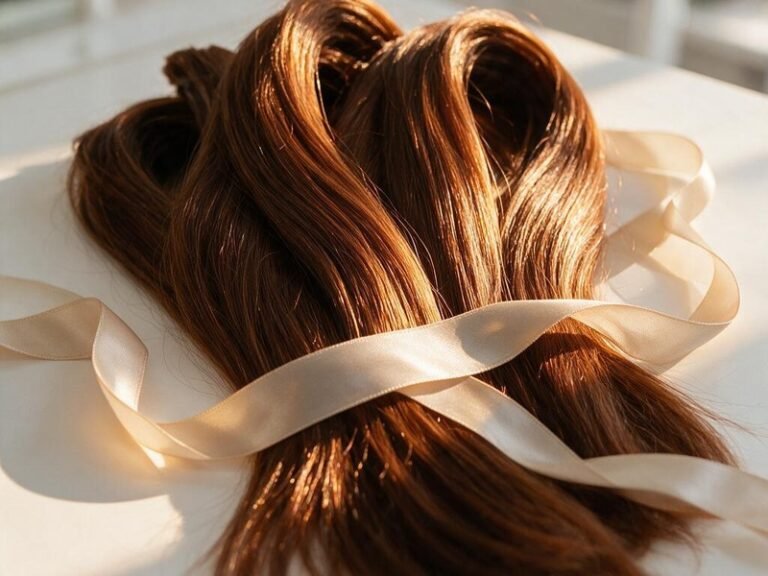
Double drawn hair means the shorter hairs have been removed from a bundle so the hair stays thick from near the top all the way to the ends. For US buyers, the key takeaway is simple: double drawn usually gives a fuller, more uniform look, but it costs more and should not be confused with higher-grade raw hair or automatically better cuticle quality.
If you sell extensions, wigs, or salon hair, this term affects inventory cost, customer expectations, install results, and how you describe products. A lot of suppliers use “double drawn” loosely, so the label alone is not enough. You need to know how the hair was collected, sorted, processed, measured, and tested before you place a wholesale order.
What exactly is double drawn hair?
Double drawn hair is human hair that has been sorted to remove a large portion of the short hairs. In a normal bundle, hairs naturally have different lengths. That gives a tapered finish: more density near the weft and gradually thinner ends. Double drawn hair is re-sorted so most strands are closer to the marked length, creating a thicker bottom line.
The term describes hair length distribution, not the source by itself. Hair can be double drawn and still be virgin hair, Remy, raw hair, cuticle aligned, processed hair, or even lower-quality mixed hair. Those words answer different questions.
Virgin hair means chemically unprocessed hair that usually still has its natural color and texture. Remy means the hair roots and tips are kept mostly in the same direction, which helps reduce tangling. Raw hair generally means minimally processed donor hair without steam-texturing or heavy chemical treatment. Cuticle aligned means the outer cuticle layer faces the same direction from root to tip.
Double drawn does not automatically mean cuticle aligned. A factory can remove short hairs and still mix directions, strip cuticles, or coat the hair with silicone. That is why a bundle can feel thick and soft on arrival but become dry or tangled after a few washes.
A weft is the stitched or machine-sewn track that holds bundle hair together. Bulk hair is loose hair without a weft, often used for braiding. Double drawn sorting can be applied to wefted bundles, bulk braiding hair, closures, frontals, wigs, tape-ins, and tip hair systems.
Single drawn vs double drawn hair: what is the difference?
Single drawn hair is the more natural, tapered option. It still contains a mix of hair lengths, so a bundle marked 22 inches may contain many 22-inch hairs but also plenty of 16-, 18-, and 20-inch strands. That is normal. The ends move naturally, but the bundle looks thinner at the bottom.
Double drawn hair is sorted for more consistent strand length. A 22-inch double drawn bundle should have a much higher percentage of hairs at or near 22 inches. It gives the blunt, full-ended look many customers call “luxury” or “HD thick,” even though those words are marketing terms rather than universal factory standards.
- Single drawn: natural taper, lighter feel, lower cost, more natural movement, thinner ends.
- Double drawn: thicker ends, more uniform length, higher waste and labor cost, fuller finished style.
- Super double drawn: an extra-sorted, even fuller version, but standards vary by supplier.
- Cuticle aligned: refers to cuticle direction and tangling resistance, not thickness.
- Remy: means roots and tips are directionally kept, but quality can still vary.
- Raw or virgin: describes processing level and donor origin, not whether hair is double drawn.
Do not assume every supplier uses the same percentage. One factory may call hair double drawn when only a portion of short hair is removed. Another may have stricter sorting tables with length percentages. Ask for the actual standard, such as the percentage of hairs that reach the labeled length, and confirm it in writing before ordering.
How is double drawn hair made?
The process starts with collected donor hair. Workers first sort the hair by length, color, texture, and sometimes source quality. If the order is Remy or cuticle aligned, the root-to-tip direction has to be maintained during collection and sorting. If the direction gets mixed, later processing cannot fully fix it.
For double drawn production, hair is pulled through sorting devices or arranged by hand so shorter hairs can be removed. The removed shorter hair is not always wasted. Factories may use it in shorter bundles, blends, cheaper lines, or training hair. The longer, more uniform group becomes the double drawn product.
The sorting process adds labor and reduces usable yield. That is the main reason double drawn hair costs more. To make one thick 100-gram bundle at 24 inches, the factory may need more donor hair than it would for a standard single drawn 100-gram bundle of the same labeled length.
After sorting, the hair may be washed, sanitized, colored, steam-textured, conditioned, and made into a weft or extension. Raw hair usually receives minimal processing. Processed hair may be colored or textured to create body wave, deep wave, curly, or straight styles. The more processing involved, the more important quality control becomes.
Some lower-end factories compensate for poor material by using silicone baths. The hair feels smooth in the bag, but after shampooing, the coating washes away and dryness or tangling can show. For wholesale, request washed sample feedback, not just factory-fresh hand feel.
Does double drawn hair last longer?
Not automatically. Double drawn hair may look fuller at the ends, but lifespan depends mostly on donor quality, cuticle direction, processing, construction, install method, and home care. A well-made single drawn cuticle aligned bundle can outlast a poorly made double drawn bundle with stripped or mixed cuticles.
For example, raw double drawn hair with aligned cuticles and a strong weft can be an excellent premium product. On the other hand, heavily processed double drawn hair may look thick initially but shed, mat, or become dry because the hair itself was lower quality. Fullness is only one part of value.
Expect good-quality cuticle aligned double drawn bundles to last through repeated installs with proper care, often for multiple months to over a year depending on use. Be careful with exact time promises. Daily heat, chlorine, heavy products, rough brushing, inexperienced installs, and poor washing habits can shorten the life of any hair.
For wig buyers, density also matters. Density is the amount of hair sewn into the cap, usually shown as percentages such as 150%, 180%, or 200%. A double drawn bundle and a high-density wig are not the same measurement. Double drawn refers to strand length distribution; density refers to total hair volume on the wig cap.
A closure is a small lace or silk piece used to close a sewn-in style, usually covering the crown or part area. A frontal is a larger ear-to-ear piece used across the front hairline. You can use double drawn hair for the bundles while choosing a lighter density closure or frontal for a natural hairline, because overly thick frontal hair can look wiggy.
Is double drawn hair better for tape-ins, k-tips, and installs?
Double drawn hair works well when the client wants thick ends and a consistent style from root to tip. It is popular for straight and lightly wisted textures, long lengths, blunt cuts, glamorous waves, and clients who feel cheated by wispy ends. It can also give better perceived value in retail photos because the bundle looks substantial.
An install is the professional application method used to attach extensions, such as sew-ins, tape-ins, fusion bonds, wigs, or beaded rows. Tape-in extensions use adhesive weft tabs applied close to the root. K-tip extensions, also called keratin-tip or fusion extensions, use individual bonded strands attached with heat.
For tape-ins and k-tips, double drawn hair can create a fuller result with fewer pieces, but the extra thickness may feel bulky if the client has fine hair. A skilled stylist may prefer mixed-length or more natural density extensions around the hairline and crown, with thicker pieces underneath. Talk with your salon buyers before stocking only the thickest option.
Double drawn curly hair needs special attention. Curly strands shrink visually, and thickness can look different after the hair dries. Some customers judge curly bundles by the pulled-straight length, while others judge by how it appears installed. Publish both the measured length method and realistic texture photos so buyers know what they are receiving.
Also consider weft weight. Many wholesale bundles are sold around 95 to 100 grams per piece, but standards differ. A 100-gram double drawn bundle is not automatically the same thickness as another supplier’s 100-gram double drawn bundle. Compare gram weight, length percentage, hair origin, weft width, texture, and cuticle quality together.
What B2B buyers should ask a wholesale supplier
Start by asking for the supplier’s exact double drawn standard. A trustworthy factory should be able to explain how much short hair is removed and whether the claim refers to sorted length, bundle weight, or just a product name. If they answer only with grade letters like “10A” or “12A,” treat that as marketing, not proof.
Ask whether the hair is raw, virgin, Remy, cuticle aligned, or processed. Those terms can overlap, so ask for details instead of accepting a keyword list. For premium lines, request cuticle alignment checks, shedding tests after combing, odor checks, wash tests, curl return checks, and photos under natural daylight.
Order samples before a bulk purchase. Compare the sample at the labeled length by holding the bundle securely and measuring from the top of the hair bundle to the longest substantial layer. Run your hand downward from root to tip, then upward with care. Hair should feel smoother downward; rough or inconsistent direction in both directions can signal cuticle issues.
Wash the sample gently and let it air dry. Watch for tangling at the nape, excessive short hairs falling out, dry ends, strange odor, heavy tangling after rinsing, or texture that changes dramatically. A sample test is more useful than relying on a product title.
Confirm MOQ, lead time, stock continuity, and custom packaging before you build a product line. MOQ means minimum order quantity. Stock hair may ship quickly, while custom texture, label, length, or color orders may take longer, often several weeks depending on volume and factory schedule.
Price differences also tell a story. If a supplier offers very cheap “raw double drawn cuticle aligned” hair in long lengths, be cautious. Long donor hair, careful sorting, intact cuticles, and skilled wefting all cost money. A low price may mean mixed hair, shorter fill hairs, weak wefts, chemical coating, or inconsistent batches.
Which customers should buy double drawn hair?
Double drawn hair is a strong fit for customers who want visible fullness, especially at 18 inches and longer. It suits sewn-in bundles, glamorous wig units, customers with naturally full hair, and resellers marketing a premium thick look. It also works well for blunt cuts and styles where thin ends would be obvious.
It is not always the best choice for every client. Customers with fine or very soft natural hair may find double drawn extensions heavy or hard to blend. Natural-texture clients may prefer a tapered finish that resembles their own hair. Some curly and coily styles also look more natural with softer ends rather than a perfectly thick bottom line.
For salons, offering both single drawn and double drawn options can reduce returns. Single drawn can be positioned as natural and budget-friendly, while double drawn can be positioned as full and premium. Just make sure the descriptions match the actual hair instead of repeating factory grade language.
For resellers, the safest approach is to create clear product specs: hair type, texture, length measurement, grams per bundle, weft type, color, estimated lifespan with proper care, and realistic photos. Add recommended bundle counts by length. Longer installs generally need more bundles because the hair is distributed farther down the style.
Common double drawn hair mistakes to avoid
The biggest mistake is treating “double drawn” as a complete quality grade. It only explains one feature: the hair has been sorted to reduce short strands. It does not prove ethical collection, authenticity, cuticle alignment, donor age, processing method, or long-term wear.
Another mistake is judging thickness only by the bundle edge in a photo. Vendors sometimes fan the hair strategically or use lighting that hides short layers. Ask for videos of the full bundle, the weft, the ends after shaking, and the hair after washing. Repeated batch consistency matters more than one perfect sample.
Do not confuse double drawn with double wefted. Double drawn refers to strand-length sorting. Double wefted usually means two wefts joined or a heavier weft construction. One describes hair distribution; the other describes how the track is constructed. A product could be both, neither, or one without the other.
Be careful with unrealistic “all hairs exactly the same length” claims. Human hair does not naturally grow that way, and even sorted hair still has some variation. A believable double drawn product should look much fuller and more uniform, not like a plastic broom with every strand ending at one sharp line.
Finally, do not ignore maintenance. Even premium double drawn hair needs gentle detangling, sulfate-free shampoo, conditioning without heavy buildup, proper drying, and bedtime protection. Stylists should avoid cutting the wefts unnecessarily, sewing through the top cord incorrectly, or applying tape and bonds to overly product-coated hair.
Frequently Asked Questions
Is double drawn hair real human hair?
It can be, but the term by itself does not prove that the product is 100% human hair. Double drawn refers to how the hair lengths are sorted, so buyers still need to verify hair origin and composition. Ask for cuticle status, processing details, sample tests, and batch consistency before purchasing wholesale.
Is double drawn hair thicker than single drawn?
Yes, double drawn hair usually looks thicker toward the ends because more short hairs have been removed. That does not mean the bundle always weighs more; two bundles can both be 100 grams while one has more long strands. Compare gram weight, length percentage, texture, and cuticle quality, not just the label.
If you want help choosing double drawn hair for your salon, store, or resale brand, tell us your target texture, lengths, budget, and monthly volume. We can help you compare realistic samples and build a wholesale order that matches what your customers expect.
If you want the full background before you order, our guide on K Tip Hair Extensions Cost: Everything You Need to Know walks through it in plain terms.
Send Us Your Hair Inquiry
Need bulk pricing, samples, or a private-label quote? Fill in the form and our team will get back to you within one business day.