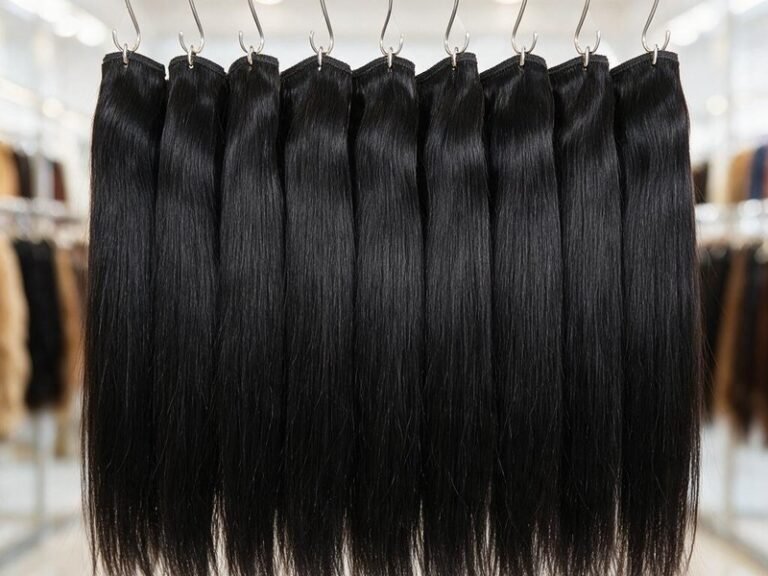
Best Short Bob Wigs: Pricing, Quality & Red Flags Explained
Most wholesale short bob wigs in 100% human hair cost $60–$220: standard 8–12 inch units run $60–$110, while premium lace or raw, unprocessed versions often hit $140–$220. I’ll break pricing, quality, and red flags so you can order without guessing. We see buyers get burned on bobs because every shortcut shows.
What affects a short bob wig’s price?
Short doesn’t mean cheap. A 10-inch, 150% density bob—density is how full the cap is, shown as a percentage—uses about 150–180 grams, but cap work still costs money. Standard closure bobs—a closure is a small lace piece for a fixed part—run $60–$110; frontal units, using an ear-to-ear lace strip, usually cost $140–$220. Remy hair means cuticles face one direction, and it costs less than virgin hair, which is unprocessed human hair; raw hair sits at the top. Anything far below that range may be a synthetic blend.
How can you spot a quality bob wig?
Check the back, not just the front. A good bob uses cuticle-aligned hair, meaning each strand’s outer scale faces the same direction, so it resists tangling. The nape of an 8–12 inch bob exposes thin tracks, short fillers, or flipped ends right away. Look for clean stitching, adjustable straps, a secure elastic band, and natural pre-plucked knots. Ask for a shake video; good hair moves, while heavily siliconed hair looks stiff and glassy.
Which lace and cap should you actually stock?
Most buyers should start with a 4×4 closure bob; 4×4 means the lace piece is about 4 inches by 4 inches. It’s the safest first reorder because it fits more clients and has fewer install issues. A 13×4 frontal bob—13 inches across and 4 inches deep—offers more parts and a fuller hairline, but it takes more skill and thin lace can fray. Before paying up for HD lace, know it’s thinner and blends closer to skin, but many listings misuse the label. Brown lace often works better for deeper skin tones and avoids the gray cast some transparent lace leaves.
What red flags show up in bob listings?
- A full human-hair bob under $40 is likely blended or made from short dropped hair.
- The seller only uses studio photos and refuses a video of the cap and nape.
- Density is missing or below 130%, so the bob looks thin after washing.
- All units use identical stock photos with no batch or factory details.
- The hair smells chemical or feels greasy, signs of overprocessed stock.
How do minimum orders and lead times usually work?
MOQ, or minimum order quantity, rules vary by supplier. Many will send one sample bob, but custom colors or labels usually start at 10–50 pieces. Stock units often ship in 3–7 days; custom density, color, or packaging takes 12–25 days. Bobs are built with weft hair sewn onto a cap, so ask how tracks are spaced at the nape. Reorder by exact SKU and cap measurements, not just “the same bob.”
Short bob wig FAQ
Is 150% or 180% density better for a bob?
For a sleek bob, 150% density is the sweet spot; 130% can be too thin after trimming, while 180% gives a fuller blunt shape. Choose 180% for bouncy or blunt styles and 130–150% for a flatter natural look. Sample both before stocking multiple colors.
How long does a human-hair bob wig last?
A decent Remy bob usually lasts 8–18 months with gentle washing, detangling, and nighttime care; raw or virgin hair can last longer if the cap holds. Short wigs still get friction at the nape, which can wear the hair and lace. Glue removal and lace care usually make the biggest difference.
If you’re ready to compare options, send over your preferred length, density, cap size, and budget, and we’ll help you avoid the bad batches. You can shop all hair extensions or review our FAQ for shipping, payment, and sample-order details.
Send Us Your Hair Inquiry
Need bulk pricing, samples, or a private-label quote? Fill in the form and our team will get back to you within one business day.