What Is Raw Indian Temple Hair and Is It Worth the Cost
Raw Indian temple hair is unprocessed human hair donated at South Indian temples, with cuticles aligned—each strand’s outer scales pointing the same way—and no silicone or chemical texture change. It’s worth the premium for vendors selling long-wear installs, but it doesn’t fit every budget or style line. Here’s what drives the price and reorder value.
Where does temple hair come from?
Most comes from devotees who have their heads tonsured, or shaved, as a religious offering. Temples auction the hair to processors, who sort, wash, disinfect, and machine-weft it or sell it as bulk. Raw means no coloring, perms, permanent steaming, or silicone coatings that make dry hair feel soft. Virgin hair means no chemical treatment, though it can still be coated or lightly processed, so raw is the stricter label. We’ve seen processed hair mislabeled temple, so our Indian temple versus Vietnamese hair guide stresses audits and samples.
Why does raw Indian temple hair cost more?
A 100-gram machine-weft bundle often wholesales for $45 to $85 at 10 to 14 inches and $110 to $220 at 24 to 30 inches. Prices jump for single donor bundles, where one donor’s hair is kept separate rather than blended. Long lengths are rarer and temple supply is shorter on average, so the markup isn’t linear. Remy hair means cuticles point one way, but it can still be processed, so true raw stock is more limited. Single donor hair can support higher retail prices, but budget buyers rarely pay that difference automatically.
How long does raw Indian temple hair last?
Good raw temple hair usually lasts 2 to 4 years and several reinstalls with gentle care. Processed bundles feel softer at first because silicone fills the cuticle, then tangle after washing. Raw hair has less fake slip, may feel coarser initially, and needs moisture and low heat. It curls like real hair, but humidity can shift its wave, so bundles may not match exactly. That variation is the tradeoff for skipping a permanent steam set.
Is raw Indian temple hair worth the cost?
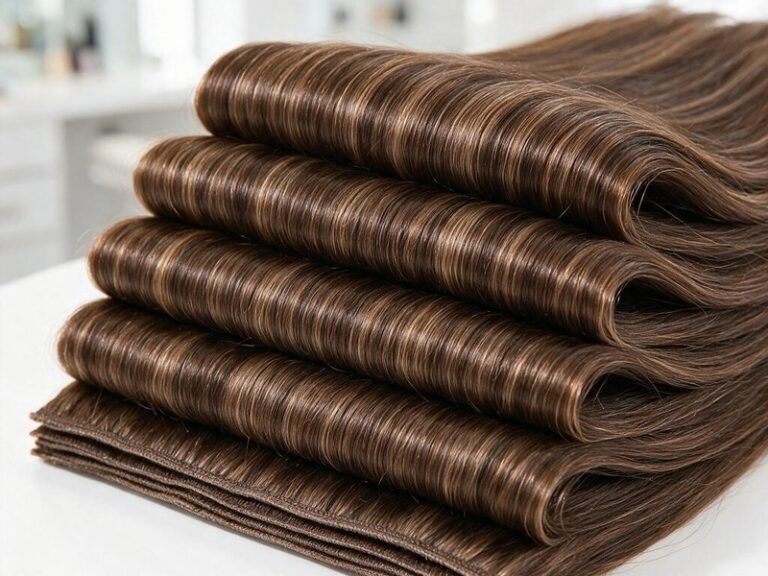
It earns its keep for clients buying custom wigs or reusable sew-ins and willing to follow maintenance advice. It’s harder to justify for one-event styles, budget bobs, or shoppers expecting identical factory curls. For sew-ins, inspect weft hair bundles; for twists, use bulk hair for braiding instead of cutting tracks. Test 12-, 18-, and 24-inch samples, wash and color them, and reorder once your team approves. A mixed inventory usually beats forcing every customer into premium raw hair.
What should I check before ordering?
- Confirm it is raw, not just virgin or Remy, and whether steam set the pattern.
- Verify grams and length; some batches mix short hairs into long bundles.
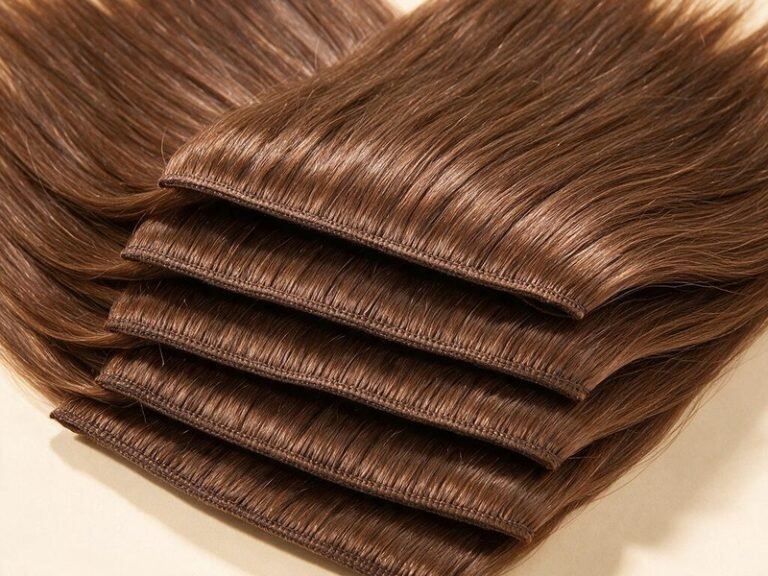
- Inspect weft stitching and loose short hairs that may shed initially.
- Wash a sample to reveal silicone, tangling, or curl changes.
- Request recent factory or shipment photos and compare reorders.
Buyer FAQ
Is raw Indian temple hair the same as virgin Indian hair?
No. Raw must be unprocessed, uncolored, and free of silicone or permanent texture treatments. Virgin Indian hair only means no color or chemical processing, though it may still be coated or lightly steamed, so read the spec sheet.
How many bundles do I need for a full sew-in?
Three 100-gram bundles usually cover 12 to 20 inches; four are common for 22 to 30 inches. A closure—a small piece covering the leave-out area—may let short styles use one less bundle. Longer hair shows spacing, so extra bundles give a fuller finish.
If you’re planning a drop, browse our shop all hair extensions collection for current lengths. Send your clients’ texture goals, budget, and install method, and we’ll help you choose raw temple or a more practical grade.
Send Us Your Hair Inquiry
Need bulk pricing, samples, or a private-label quote? Fill in the form and our team will get back to you within one business day.