How to Prevent Tangling in Deep Curly Bulk Hair During Storage
If deep curly bulk hair shows up at your salon or beauty supply store looking full and springy, don’t assume it will stay that way after two months on a shelf. Most tangling we hear about starts after delivery, not at the factory, because curly cuticles get rubbed, crushed, or stored while still damp. Here’s how we protect it in our warehouse and what I’d suggest buyers do once the package is in your hands.
Start with dry, fully reset curls
Deep wave and curly textures are usually steam processed, so the pattern can look tighter or looser depending on moisture and handling. If you want the full backstory, our guide on steam-styled bulk hair explains why water weight changes the curl so much. Before long storage, gently finger-comb the hair while it’s damp, let the curls reform, and then wait until every layer is completely dry. I’m talking roots, folded sections, and the tied ends, not just the outside layer that dries first.
Keep bundles separated, not stuffed together
We see buyers transfer 20 to 30 bundles into one large bin because it saves space, then wonder why the curls lock together. It saves space, sure, but it creates a matted mess when customers start pulling samples from the middle. Keep each bundle in its original sleeve, paper band, or a breathable hair bag, and leave the fold or tie loose enough that the curls aren’t creased. If you’re stocking bulk hair for braiding, label the length and texture outside the package so nobody has to rummage through it ten times a day. The goal is simple: less friction, less searching, less rubbing between curly cuticles.
Storage shape matters more than people think
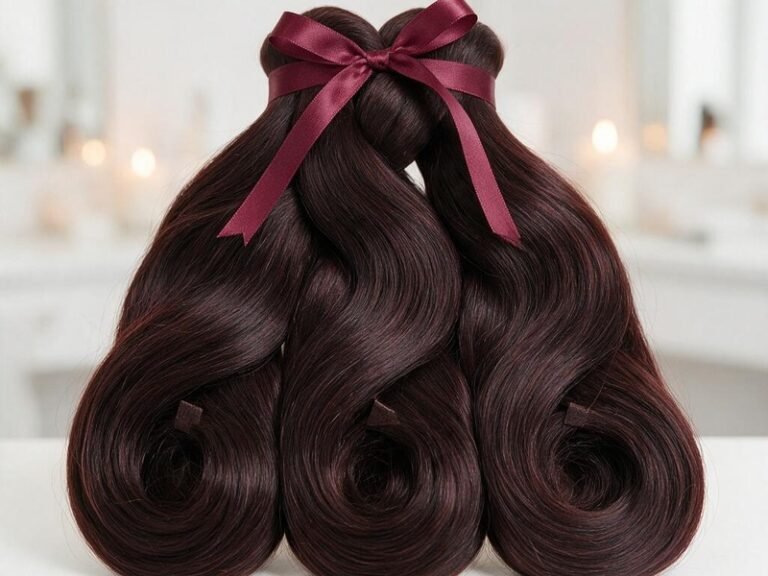
Deep curly hair should be laid flat or hung with the fold supported, not crammed under straight bundles or packed tightly on a narrow shelf. A 100-gram bundle may seem light, but six or seven stacked bundles put steady pressure on the curls underneath. Use open shelving, wardrobe bags, or individual hangers in a room that stays around 45 to 60 percent humidity if you can manage it. Avoid basement floors, bathroom cabinets, and sunny windows, because moisture, heat shifts, and dust all make the hair harder to refresh later.
A quick shelf-ready routine
This is the routine I’d use if I were setting up a small stock room or backbar:
- Inspect each bundle when it arrives and open only what you need to photograph or show clients.
- Detangle from the ends upward with fingers or a wide-tooth tool before the hair goes back into storage.
- Spritz lightly only if the curls need refreshing, then give the bundle enough time to air-dry fully.
- Re-band loosely in one or two places; tight rubber bands can crush curls and create weak tangling points.
- Store 18- to 30-inch lengths flat where possible, since longer curls swing and knot more easily.
- Check older stock every two weeks, especially in Atlanta, Houston, Miami, or other humid U.S. markets.
- If a display piece is handled often, rotate it into service stock and keep a fresher bundle for customers to view.
What to do when a bundle starts tangling anyway
Don’t yank a curly bundle apart from the top. That pulls cuticles against each other and can turn a small tangle into permanent matting, especially on longer lengths. Lightly mist it with water or a diluted leave-in mix, support the hair above the tangle, and pick it apart from the ends in small sections. Once the curls are separated, let the bundle dry completely before returning it to its bag or shelf. If you sell multiple extension types, keep curly bulk hair away from smoother weft hair displays where it can rub every time someone reaches past it.
Buying choices that make storage easier
Cheaper hair can look good in a photo, but dry, overprocessed ends tangle faster and need much more babysitting on the shelf. That doesn’t mean every shop needs the priciest grade; it means you should match the quality to how long the hair may sit before sale. A new beauty supply store might keep stock leaner with 10 to 15 pieces per popular length instead of buying a huge MOQ that waits months. Our article on starter bulk hair inventory has a sensible approach if you’re trying to balance cash flow and texture choices. Rotate older bundles forward, but don’t punish them by shoving them into an overcrowded bin.
Should I brush deep curly bulk hair before storing it?
Use fingers or a wide-tooth tool, and detangle while the hair is slightly damp or coated with a light moisturizing product. Brushing dry deep curly hair can make it frizzy, pull the pattern apart, and actually encourage more tangles before the bundle even goes back on the shelf.
How long can deep curly bulk hair stay in storage?
Dry, properly packaged human hair can usually sit for several months without much trouble, but I’d still inspect it every couple of weeks. The real issue isn’t a fixed expiration date; it’s humidity, crushed packaging, dirty hands, and customers repeatedly pulling through the same bundles.
Treat stored curly hair like inventory you want to sell next week, not something to hide until the shelf clears. If you’re comparing textures or need help choosing stock for your market, browse the shop all hair extensions page and order what you can realistically rotate.
Send Us Your Hair Inquiry
Need bulk pricing, samples, or a private-label quote? Fill in the form and our team will get back to you within one business day.