Payment Terms Chinese Hair Suppliers Actually Accept
If you’ve spent more than 10 minutes sourcing wholesale hair from China, you’ve run into the same frustrating loop: a supplier quotes you a great per-bundle price, then hits you with a payment demand that makes zero sense for a US-based salon or reseller. Most of the confusion comes from not knowing which payment terms Chinese hair suppliers actually accept, vs. the scam asks or unreasonable demands you’ll see from bad actors online. We’ve talked to hundreds of buyers who’ve lost thousands sending full payment upfront to random factory accounts, or wasted weeks haggling for Net 30 terms no real supplier will ever agree to for a first order.
This isn’t a list of textbook payment terms pulled from a generic import guide. It’s what we see work every week in our own warehouse, from $500 sample orders to 500kg bulk runs, no fluff, no sales pitches.
The standard payment terms Chinese hair suppliers offer for first orders
For 9 out of 10 first-time buyers, no matter if you’re ordering bulk hair for braiding, weft bundles, k-tips, or tape-ins, the standard is 30% deposit upfront, 70% balance before the order ships. That’s not some arbitrary rule to make things hard for buyers. Right now, raw unprocessed virgin hair runs $110-$160 per kg before we even wash, sort, color, or sew it. That deposit covers that raw material cost, so we don’t get stuck fronting thousands of dollars for a stranger’s custom order.
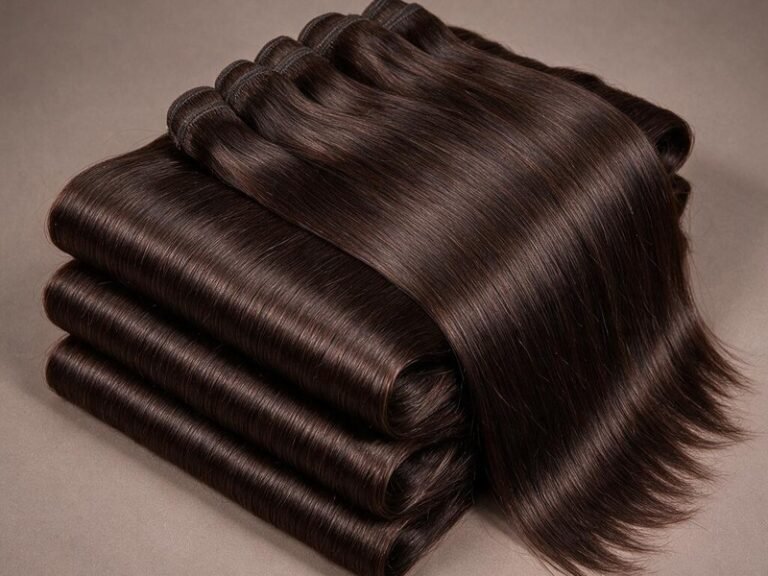
Here’s how that split works in practice: You send the 30% deposit to lock in your order and reserve raw hair stock. We finish production, then send you clear photos, weight checks, and a short walkthrough video of your exact order laid out on our warehouse packing table. You sign off on the quality, send the 70% balance, and we ship the order out. For orders under $1,000, most suppliers (us included) will ask for 100% upfront, because the admin work of tracking two separate payments for a small order eats into the already thin margin on sample and starter runs.
Don’t waste your first email demanding to pay the full balance after delivery. We get it — you’re worried about scams, and you’ve heard horror stories. But that structure puts 100% of the risk on the supplier, and no legitimate factory with consistent quality will agree to that for a buyer they’ve never worked with.
Terms you can negotiate once you’ve built trust
After 3-5 consistent, on-time orders with zero chargeback drama? You’ve got real leverage. Some of our smallest regular salon accounts, who order $1,500 worth of hair every 6 weeks like clockwork, get slightly adjusted terms after a year of working together.
What can you actually ask for, without sounding entitled? A 20% deposit instead of 30%, with 80% due pre-shipment, is a common ask for repeat buyers, and most suppliers will say yes if your order history is solid. A handful of our longest-running accounts get 50% deposit, 50% due 15 days after delivery, but that’s only for folks we’ve worked with for two+ years, who’ve never disputed a payment, and who send us referrals on a regular basis. Don’t ask for Net 30 on your second order. That’s a surefire way to get marked as a high-maintenance buyer who doesn’t understand how the industry works.
A quick red flag here: If a supplier offers open Net 30 terms to every random buyer who fills out a contact form, run. Those are almost always trading companies selling mixed, low-quality hair marked up 30-40%, not actual factories. They can absorb a few payment defaults because their margins are high enough to cover it, but you’ll be overpaying for hair that tangles after two washes. A lot of buyers ask about letters of credit for very large orders over $50k, and we break down exactly when that makes sense (and when it’s a waste of steep bank fees) in our guide to T/T vs letter of credit.
The “too good to be true” payment asks that are always scams
You’ll run into these constantly on Instagram, TikTok, and random B2B marketplaces, so keep an eye out. None of these are standard practice for legitimate suppliers, no matter how good their price sounds:
- Requests to send full payment for orders over $200 via Zelle, Cash App, or personal PayPal Friends and Family. Legitimate suppliers use business bank accounts for T/T transfers, business PayPal for goods and services, or verified trade assurance platforms. We’ve talked to a Detroit-based braider who lost $3,200 sending Cash App to a “factory rep” who blocked her 10 minutes after payment cleared. There’s zero recourse with those methods.
- Demands for 100% upfront payment for orders over $2,000 before they even show you proof of raw material stock. The 30/70 split exists for a reason — it protects both sides. If someone won’t let you pay the balance after you’ve seen photos and video of your finished order, walk away.
- Refusals to put exact payment terms in writing on a signed proforma invoice, with all details only shared over disappearing WeChat voice notes. You need a clear paper trail for every order, no exceptions.
For context, we accept Zelle for small sample orders under $300, because it’s fast and easy for both sides, but we’ll never ask a buyer to send a $5,000 bulk order payment that way. If you’re ever unsure what payment methods a legitimate supplier accepts, you can cross-check against our public order FAQ to get a baseline for what’s normal.
Payment methods that sound official, but aren’t worth the hassle
Not every widely advertised payment method makes sense for hair orders, even if they’re used for other types of imports. Western Union, for example, is fast, but the fees are brutal for large transfers, and there’s almost no buyer protection if something goes sideways. We only accept Western Union for repeat buyers who specifically request it, because we know new buyers are right to be wary of it for first orders.
Cryptocurrency is another one we get asked about at least once a week. We turn every crypto request down, flat out. The price volatility alone means you could end up overpaying (or we could end up underpaid) by 10% in the time it takes a payment to clear, and there’s no easy way to resolve a dispute if a payment gets sent to the wrong wallet address. Those random third-party escrow services that pop up on wholesale forums aren’t much better — most charge 8-10% in fees on top of your order total, and have fine print that lets them hold payments for 90+ days if there’s even a minor disagreement about curl pattern or bundle weight.
A lot of buyers accidentally mix up payment terms and shipping terms, and we’ve had folks ask if they can roll order payment into their shipping quote for one easy transfer. That’s almost never a good idea, and we break down why in our explainer on DDP vs DAP shipping. For example, custom colored weft hair orders that require multi-step custom dye work have a slightly higher non-refundable deposit (40% instead of 30%) because we can’t resell neon pink or pastel blue bundles to another buyer if you cancel last minute. That policy applies no matter what shipping method you pick.
Quick answers to the questions we get every week
Can I use a credit card to pay for my hair order?
For most small to mid-sized orders under $5,000, yes, but expect a 3-4% processing fee added to your total. Credit card chargeback risk is real for suppliers, so we don’t offer credit card payments for first-time orders over $10k, because the fees get too high and the risk of a fraudulent chargeback isn’t worth it for either side. If a supplier doesn’t pass that processing fee on to you directly? They’re already marking up their hair prices to cover it, so you’re still paying for it one way or another.
Is Alibaba Trade Assurance a good option for new buyers?
It can be, for your first 1-2 orders, if you read the fine print. Don’t assume Trade Assurance covers every possible issue — you have to list exact specifications (gram weight per bundle, hair origin, texture, length, color match) in the platform contract, otherwise you’ll have no leg to stand on if you get sent 90g bundles instead of the 100g you ordered. A lot of factories won’t take Trade Assurance for orders over $15k, because the platform holds payment for weeks after delivery, and that crushes cash flow for raw material purchases.
Will I get a better price if I pay 100% upfront?
Maybe a 2-3% discount, max. If a supplier offers you 15% off for paying 100% upfront on a first order? That’s a major red flag. They’re either desperate for cash (which usually means they’re about to cut corners on your order quality, or are at risk of going under before your order ships) or running a straight-up scam.
At the end of the day, fair payment terms are about shared risk, not one side holding all the cards. If you’re pushing for terms that put zero financial risk on you as a buyer, you’ll only end up working with suppliers who have enough markup to absorb that risk — which means you’re overpaying for hair, or getting lower quality than you expected when the order shows up.
If you’re ready to place an order, or just want to talk through what terms make sense for your salon, braiding business, or resale shop, shoot us a message. We’ll send over a clear proforma invoice with every term spelled out, no hidden fees, no last-minute payment demands.
Send Us Your Hair Inquiry
Need bulk pricing, samples, or a private-label quote? Fill in the form and our team will get back to you within one business day.