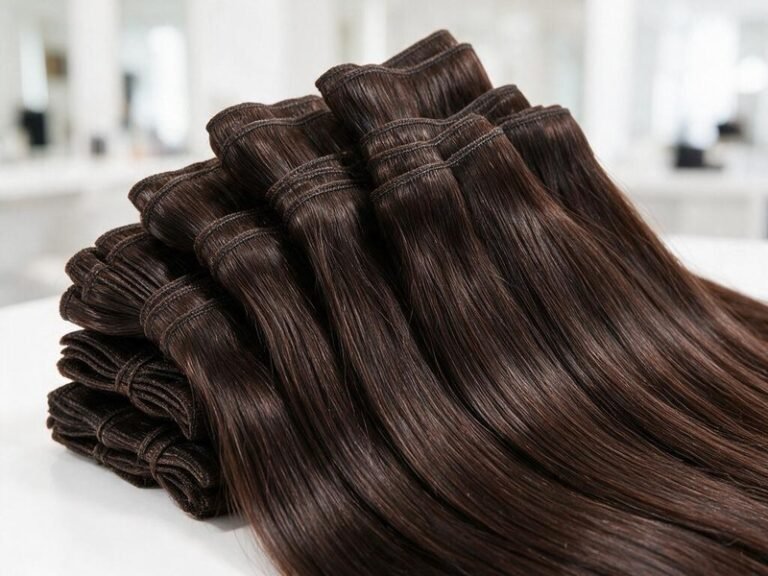
Salons Upselling From Clip-Ins to Permanent Extensions
If you’ve been running a salon for more than six months, you already know clip-ins are the most common entry point for first-time extension clients. We talk to dozens of salon owners every week who say 60% or more of their first-time extension buyers walk in asking for clip-ins, because they’re scared of damage, high price tags, or being locked into a look they might hate.
The thing is, salons upselling from clip-ins to permanent extensions miss the mark all the time by leaning into pushy tactics, instead of meeting clients where they are. We’ve seen salons pull this off so smoothly clients ask about permanent options before the stylist even brings them up, and we’ve seen salons blow it so bad regulars never come back. This is what actually works, from our side of the supply chain.
First: Stop treating clip-ins like a “starter” option to dismiss
We see this mistake every single week. A client comes in giddy to pick out their first set of clip-ins for a vacation or wedding, and the stylist immediately snorts and says clip-ins look fake, and they should just drop $1500 on a permanent install instead. The client walks out, buys clip-ins from the beauty supply store down the road, and never gives you a second thought.
Clip-ins fill a real, legitimate need for a lot of people. They’re perfect for clients who only want length for special events, who travel for work 2+ weeks a month and can’t make regular maintenance appointments, who have super fine fragile hair that can’t handle any root tension, or who just like switching their length up week to week. If you haven’t already broken down the real pros and cons of each temporary option for your team, our breakdown of tape-in vs clip-in hair extensions is a good starting point for staff training.
Start every conversation by validating their choice. Say something like, “Clip-ins are such a smart pick for how often you travel—no last-minute salon panics if a bond slips.” That tiny bit of validation builds more trust than any sales pitch ever could.
The quiet upsell window most salons miss
You don’t need to pitch permanent extensions on a client’s first visit. The sweet spot is 2-3 visits after they buy their first clip-in set from you. By that point, they’ve had time to use the set regularly, and they’ve almost certainly run into the small, annoying pain points that come with daily clip-in wear.
We’ve had salon owners tell us 40% of their regular clip-in clients complain about those frustrations unprompted, if the stylist just asks a simple, open question: “How’s your clip-in set working out for you so far? Any little annoyances popping up?”
Common answers? They’re sick of fumbling with clips at 6 a.m. before work. They’re paranoid a weft will slip on a windy date night. They notice the clips tug a little when they wear the set 3+ days in a row. That’s your open door. For clients who hate the daily take-down, tape in hair is usually the softest first step into permanent installs, because the application is quick, there’s no harsh heat on the natural hair for bonds, and maintenance is only every 6-8 weeks for most hair types.
Wait to bring it up until they voice a frustration. If they say they only wear the set once a month for girls’ nights? Don’t push permanent. They’re not a candidate, and you’ll just annoy them.
Match the method to their lifestyle, not your highest margin
Nothing kills long-term trust faster than pushing the service that makes you the most money, even when it’s a terrible fit for the client. We’ve heard too many horror stories of stylists talking clients with ultra-fine, breakage-prone hair into heavy beaded wefts, or selling tape-ins to competitive swimmers who wash their hair every single day. Those clients leave with damaged hair, slipping bonds, and a very public negative review that costs you way more than the one sale was worth.
There is no single “best” permanent extension method. Every option has tradeoffs, and you need to be upfront about all of them. If a client swims 4 days a week and washes their hair daily, don’t sell them tape-ins—they’ll be back in two weeks with slipping bonds, furious they wasted $1000. That client is a better fit for hand-tied installs made with high-quality weft hair, as long as they can commit to 4-week move-up appointments. If a client wears high ponytails and braids to work every day, k-tips are a better pick, because there are no visible beads or tracks around the hairline.
Keep these quick matches top of mind for your team:
- Client wears clip-ins 5+ days a week, washes hair 2x weekly, low-fuss routine: Tape-ins, minimal at-home care, 6-8 weeks between maintenance
- Client loves braided styles, has thick coarse natural hair: Bulk human hair for knotless or boho braids, 6-8 week hairline touch-ups
- Client works out 5+ days a week, wears hair up constantly: K-tips, no bulky beads, bonds hold up to regular shampoo as long as they’re fully dried
And be honest if permanent extensions aren’t a good fit right now. If a client has severe scalp psoriasis or hair that breaks at the lightest tug, tell them clip-ins are the safest option for them right now. You’ll lose that one upsell, but they’ll refer every friend they have, and come back when their hair is healthier.
Make the price gap feel less intimidating
Most clients see the $800-$1800 price tag for a permanent install and immediately write it off as out of reach, compared to their $200-$300 clip-in set. That’s why you can’t just throw the number at them—walk them through the math.
Let’s do the numbers together in the chair. If a client buys a $250 clip-in set and replaces it every 6 months because the ends fray from daily wear, that’s $500 a year, not counting the 10-15 minutes a day they spend clipping them in and taking them out, or extra dry shampoo to hide the clips. Over two years, that’s $1000, and they still don’t have hair they can wake up in. Most salons offer no-fee payment plans now, too—four equal installments for a $1100 tape-in install comes out to $275 a payment, almost exactly what they were already spending on new clip-in sets every few months.
Don’t hide the ongoing costs, either. Tell them up front that maintenance appointments run $150-$300 a visit, that they can’t use coconut oil near their bonds, that they have to use a loop brush to avoid pulling tracks out. We post clear guidance on hair lifespan and care requirements on our FAQ page that you can share directly with clients so there’s no confusion down the line.
You also don’t have to drop thousands on a huge inventory order to start offering these options. If you’re testing the waters with a handful of loyal clip-in clients first, our guide to small batch hair extension orders walks you through minimums that start at just 10 bundles, so you don’t tie up cash in inventory that sits on a shelf for months.
Quick answers to the questions we hear nonstop
How many clip-in clients will actually convert to permanent?
Let’s be realistic. Not every client will make the switch, and that’s fine. If you’re doing this right—no pushy sales, matching methods to lifestyle, honest about costs and upkeep—you can expect 25-35% of your regular clip-in clients to move to a permanent option within a year. For a client who spends $300 a year on clip-ins, that turns into $1000-$1800 a year in install and maintenance revenue, not counting add-on treatments or retail. It adds up fast if you have even 50 regular clip-in clients on your books.
Will permanent extensions kill my clip-in sales?
Short answer: No, unless you make it happen. We’ve tracked this with dozens of salon partners over the last 5 years, and most see clip-in sales stay flat or go up slightly after adding permanent options. Permanent clients still buy clip-ins for big events—like a bright highlight streak for a festival, or extra volume for their wedding day, without adjusting their existing install. The only time clip-in sales drop is if you stop carrying them entirely, or if your stylists badmouth clip-ins to every client who walks in.
What’s the easiest permanent method to start with?
Tape-ins are almost always the lowest lift for a salon that’s only offered clip-ins before. The required training is shorter than beaded wefts or k-tips, upfront inventory cost is lower, and application only takes 45-90 minutes per client, so you don’t have to block huge chunks of your schedule when you’re first building out the service.
At the end of the day, this isn’t about tricking people into spending more money. It’s about listening to the little things your clients complain about, and offering them a solution that actually fits their routine and budget. If you start small, validate their choices first, and stay honest about the tradeoffs of every method, you’ll build a loyal client base that comes back for years, for both clip-ins and permanent installs. If you’re ready to stock up, our team can help you pick the right lengths and textures for your client base, no huge minimum orders required.
Send Us Your Hair Inquiry
Need bulk pricing, samples, or a private-label quote? Fill in the form and our team will get back to you within one business day.