Clip-In Hair Extensions Wholesale: A Complete Buyer’s Guide
If you’re stocking salon shelves, running an online beauty shop, or building a client roster as a braider or stylist, clip-ins are one of the lowest-fuss, highest-margin products you can carry. We’ve watched buyers waste thousands on bad clip-in hair extensions wholesale orders that shed, tangle after one wash, or come with clips that snap mid-install, so we put this guide together from what we see every day in our warehouse and on calls with factory teams. No hype, just the stuff you actually need to know before you place your next bulk order.
Why clip-ins are worth the shelf space
Permanent extension installs are great for consistent service revenue, but clip-ins fill a gap no other product can touch. They don’t require a licensed stylist to put in, they work for one-night events like weddings or prom, and they’re the perfect entry point for customers who are nervous to try extensions for the first time. We see 30% higher average reorder rates from shops that stock entry-level clip-in sets alongside permanent options, because customers pop in to grab a new set or shade even when they aren’t booking a full install appointment.
They aren’t perfect, of course. Clip-ins aren’t designed for 24/7 wear for months on end, and they can slip if a client doesn’t section their hair correctly before clipping them in. Don’t market them as a set-it-and-forget-it solution, and you’ll avoid 90% of customer frustration. We break down the core differences between temporary and semi-permanent options in our tape-in vs clip-in guide, but the short version is clip-ins have the lowest barrier to entry for both you and your customer.
Clip-in hair extensions wholesale quality tiers you’ll actually see (and what each costs you)
Forget the made-up 10A/12A/15A grade labels suppliers throw around to mark up prices. Those don’t mean anything across the industry.
The lowest tier is a mix of non-remy human hair and up to 20% synthetic fiber, coated in silicone to feel soft out of the bag. A standard 18-inch set weighs 80-90 grams, running $12-$18 per set wholesale. The catch? That silicone washes out in 2-3 shampoos, leaving hair that tangles so bad most customers toss the set. We only recommend these for ultra-low-cost impulse buys at festivals or popups, never for regular salon clients.
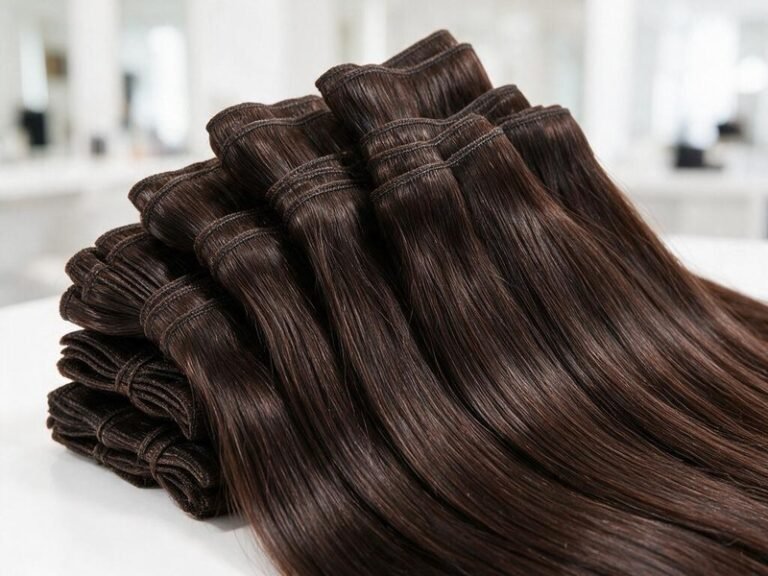
The middle tier is standard remy human hair, cuticles aligned the same direction, no synthetic fillers. An 18-inch set weighs 100-120 grams, costing $28-$42 per set wholesale. This is the sweet spot for 80% of our buyers. The hair lasts 6-12 months with proper care, shedding is minimal, and clips are stitched (not glued) to the weft.
The highest tier is unprocessed virgin remy hair, which can be bleached, dyed, and heat styled repeatedly without drying out. An 18-inch set weighs 120-150 grams, running $55-$75 per set wholesale. Stock this for high-end clients who want custom color matches or daily wear sets.
Have you ever ordered a sample set that felt silky perfect, only to get a bulk shipment that felt dry and straw-like? That’s the old sample switch, where suppliers send a top-tier sample but ship low-tier product for bulk orders. If you’re browsing options, our shop all hair extensions page lists exact gram weights and fiber content for every set, no vague grade labels to sift through.
MOQs, lead times, and the fine print no one mentions
A lot of new buyers reach out assuming wholesale clip-in orders require a 500-set minimum and 2-month wait. That’s only true for fully custom product with your branding stitched into every weft.
Our standard MOQ for in-stock clip-ins is 10 sets per order, no required even split across lengths or colors. For orders of 10-49 sets, lead time is 5-7 business days to US fulfillment, plus 2-3 days ground shipping to you. For 50+ sets with custom packaging or color blends, lead time jumps to 3-4 weeks, so plan ahead for prom and wedding season—order volume doubles in the 6 weeks before those peaks, and last-minute orders leave you with empty shelves.
Watch for hidden fees, too. Many suppliers quote rock-bottom per-set prices but leave out duties, freight, and insurance, which add 25-30% to your invoice. We’ve had buyers call panicking over a surprise $400 freight bill after their order shipped, with no warning from their original supplier. Always ask for a full, all-in quote before paying a deposit.
The most common ordering mistakes we see new buyers make
We’ve processed thousands of clip-in orders over the years, and we see the same handful of mistakes pop up over and over. Most are easy to avoid if you know to look for them:
- Overstocking super long lengths. 26+ inch sets look great on social media, but 70% of customers shop 14-20 inch lengths for everyday wear. Loading up on 28 and 30 inch sets first ties up cash in slow-moving inventory.
- Skipping sample orders. We get it, you want stock fast. But I’d suggest ordering one sample of every new shade or length you carry, even with a trusted supplier. We’ve seen bulk shipments go out with misaligned clips or off dye batches, and samples catch that before you’re stuck with 50 unsellable sets.
- Ignoring clip quality. A cheap, sharp clip that digs into scalps or snaps after three uses gets more bad reviews than tangling hair. Good clips have a soft silicone grip, stitched (not glued) to the weft with thick nylon thread that won’t melt in summer heat.
One more thing: If you sell online, expect an 8-12% return rate on clip-ins, almost always from customers who picked the wrong shade. Order a few extra of your most popular neutral brown and blonde shades to cover exchanges, so you don’t make customers wait two weeks for a replacement while they leave a negative review. We cover return and exchange policies for wholesale orders on our FAQ page, so you don’t have to dig through pages of fine print to get a straight answer.
Quick answers to common buyer questions
We field the same questions from almost every new clip-in buyer, so we’ll cut to the chase.
Can I mix clip-in stock with other extension types?
Absolutely. Most salon buyers stock clip-ins alongside semi-permanent options for clients who want event length without 3 months of maintenance. We even have buyers who use weft hair to build custom clip-in sets for clients with unique highlights, so you don’t have to carry pre-made sets for every possible shade.
How should I price clip-in sets for my customers?
Standard retail markup is 2.5x to 3x your wholesale cost, depending on your audience. If you’re a high-end salon offering custom color matching and a blend trim, you can go as high as 4x, since you’re selling a service with the product. Don’t underprice to compete with fast fashion sites—customers associate too-low prices with bad quality, and you’ll cut margins too thin to cover returns or damaged stock.
Do I need custom branded packaging to start?
Nope. When you’re first testing clip-ins, plain satin pouches with your logo sticker work great. Wait until you move 30+ sets a month before investing in custom boxes or fancy inserts. Most customers don’t care about packaging as long as the hair holds up and clips stay put.
The best wholesale clip-in stock matches what your actual customers ask for, not the viral sets you see online. Start small, test a few lengths and shades, and adjust as you see what sells. If you’re ready to place your first order or have a question we didn’t cover, reach out to our team—we don’t do pushy sales pitches, just straight answers about what’s in stock and what works for your business.
Send Us Your Hair Inquiry
Need bulk pricing, samples, or a private-label quote? Fill in the form and our team will get back to you within one business day.