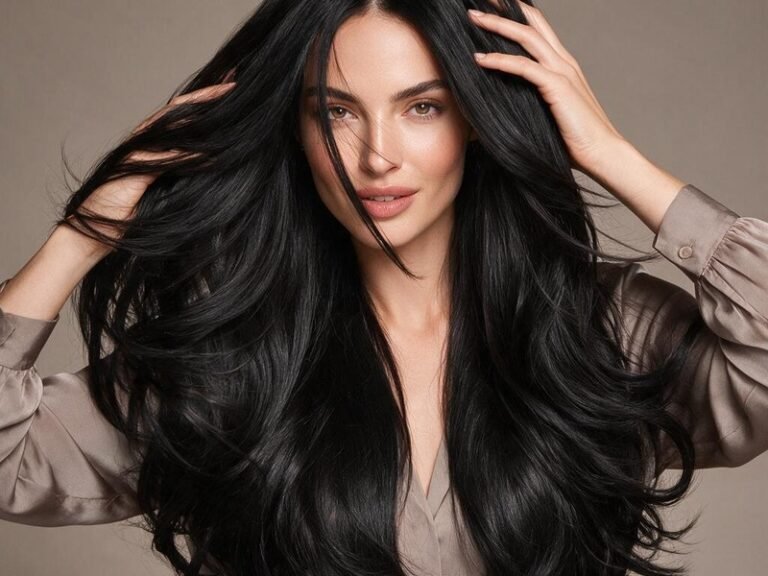
What Is Virgin Human Hair?
If you’ve ever ordered a batch of hair that felt silky out the bag but matted into a bird’s nest after two washes, you’ve probably run into mislabeled product. We get asked to define virgin human hair every single week by new salon owners, braiders, and resellers tired of paying premium prices for knockoff stock. It’s not a fancy marketing buzzword, but a lot of sellers stretch the definition so thin it’s basically meaningless.
The actual definition we use in our warehouse
Let’s cut through the sales copy. For hair to count as virgin in our books, it has to check three non-negotiable boxes. First, it’s 100% human hair, collected from a single donor, not swept up from salon floors or mixed from a dozen different sources. Second, it has never been exposed to any chemical processing: no perms, no dye, no bleach, no harsh straightening treatments, no silicone dips to fake softness. Third, every cuticle is fully intact and aligned in the same root-to-tip direction, which is what prevents random tangling and matting down the line.
We don’t take a supplier’s word for it, either. Every incoming batch gets a quick bleach test on the warehouse floor: we snip a small 1g strand, mix it with 20 volume developer, and let it process for 30 minutes. If it lifts evenly to a pale blonde without turning gummy, breaking, or throwing a weird muddy orange tone? It’s virgin. If it fails that test, we send the whole batch back. A lot of new buyers mix this up with Remy hair, and to be fair, plenty of sellers label Remy as virgin to mark up prices. We break down the core differences in our guide to Chinese Remy hair, but the short version: Remy can be lightly processed, as long as cuticles stay aligned. Virgin is completely, 100% untouched.
What “virgin” is not, because we’ve seen every scam
There is no such thing as “almost virgin” or “90% virgin” hair. If there’s any synthetic fiber, processed hair, or stripped cuticle in the bundle, it’s not virgin. Full stop.
We’ve had factory reps show up to our office with samples labeled “premium single-donor virgin” that were 30% polyester fiber, which feels incredibly soft to the touch until you hit it with a curling iron and it melts into sticky plastic. We’ve seen hair stripped of all cuticles with acid, dipped in a thick silicone coating to make it glide, and sold as virgin for $80 a bundle—right up until the third wash, when the silicone rinses off and the hair turns into a dry, tangly mess that your clients will be furious about.
Right now, raw unprocessed virgin hair costs us roughly $120-$180 per 100g bundle at the factory gate, before we do quality checks, trim split ends, package, or ship it to our US warehouse. If you see someone selling 100g virgin bundles for $25 wholesale? They’re lying. The math doesn’t work. Here are the most common fake virgin labels we spot every month:
- “Virgin hair” coated in silicone to feel soft, which washes off after 2-3 shampoos to reveal dry, misaligned strands
- Mixed floor sweepings from dozens of donors, acid-stripped and dyed a uniform dark brown, sold as “single donor virgin”
- Previously dyed or permed hair that’s been re-coated to look unprocessed, which fails our bleach test every single time
How virgin hair actually holds up for your clients
We carry virgin stock across every format we sell, from bulk hair for braiding to weft hair for sew-ins and pre-bonded tips, so we see this expectation gap all the time. True virgin hair is incredibly durable. With proper at-home care, it can last 1-2 years of regular wear, lift to any blonde or custom color without breaking, and handle heat up to 400 degrees without permanent damage. It moves and feels exactly like the natural hair growing from your client’s scalp, because that’s exactly what it is.
It’s not perfect, though. I’d never tell you it’s a magic product that works for every single client. Because it’s unprocessed, it has natural variations: two bundles from the same donor source might have slight differences in wave pattern or depth of brown, especially in longer lengths over 22 inches. We always tell buyers to order 5-10% extra stock for every install to account for that, so you don’t end up mid-sew-in with two mismatched bundles you can’t use. It also reacts to humidity exactly like natural hair—if the donor had hair that frizzed in 80% humidity, the extensions will too. You can’t sell it as “100% frizz-free in any weather” because that’s just not true.
It’s also a higher price point, which means it’s not the right fit for clients who want a temporary install for a one-time event, or who can’t commit to gentle washing and regular conditioning. For those clients, a high-quality processed Remy is often a better, more budget-friendly pick.
The grading scale scam you can ignore entirely
If you’ve shopped for hair before, you’ve seen the labels: 8A, 10A, 12A, even 15A virgin hair, with higher grades marked up hundreds of dollars per bulk order. Let me save you a lot of wasted money: there is no universal, industry-wide grading system for human hair. It is completely made up.
We’ve stood on factory floors and watched workers pack the exact same batch of hair into three different boxes, labeled 8A for a budget buyer, 10A for a mid-tier buyer, and 12A for a buyer who asked for “the best quality.” It’s just a marketing tool to get you to pay more for the exact same product. When you’re sourcing, don’t ask what grade the hair is. Ask for a video of a bleach test, ask for the strand composition, ask for a 10g sample you can wash and test yourself before placing a full order. We walk through more red flags to spot in our guide to vetting a reliable bulk hair supplier, but the biggest red flag is always a price that seems too good to be true.
Quick answers to the questions we get most often
Is virgin hair better than Remy for every client?
No, not even close. If your client wants a perfectly uniform texture, is on a tighter budget, or only plans to wear the install for 4-6 weeks, high-quality Remy will serve them just fine. Virgin hair is the best pick for clients who want to custom color their extensions to match balayage or bright fashion shades, or who plan to re-use the hair for multiple installs over a year or more.
Can virgin hair come from any donor origin?
It can, but origin changes the texture and price point. Chinese virgin hair is usually thick, straight to slightly wavy, and holds curl really well. Indian virgin hair is finer, with loose natural waves, and tends to be a little lower cost. You’ll see a lot of labels for “virgin Brazilian” or “virgin Peruvian” hair, but that’s the second most common fake label out there—more often than not, it’s processed Chinese hair marked up for a premium.
Why do some virgin bundles have random gray strands or split ends?
Because it’s real human hair! Single donors have random gray hairs, slight color variations from root to tip, and occasional split ends, just like everyone else. If every single strand in a bundle is perfectly uniform in color, length, and texture with zero small flaws? It’s been processed. We trim obvious split ends and pluck out long gray strands during our QC checks, but we leave small natural variations in place because that’s the easiest, most reliable sign the hair hasn’t been treated with chemicals.
At the end of the day, virgin human hair is just unprocessed, real human hair—no fancy tricks, no secret formulas, just honest product that works the way it’s supposed to. If you have more specific questions about MOQs, batch consistency, or shipping times for wholesale orders, our FAQ page covers most of the details new buyers ask about before placing their first order. If you’re ready to test samples for your salon or shop, you can browse our in-stock options any time to find the right texture and length for your client base.
Send Us Your Hair Inquiry
Need bulk pricing, samples, or a private-label quote? Fill in the form and our team will get back to you within one business day.