How to Choose Human Hair for Bleaching
If you’ve ever spent 3 hours painting lightener on a client’s bundles only to watch the ends turn to mushy cotton that snaps when you pull it, you know not all “100% human hair” is built to hold up to bleaching. We see this mistake every month in our warehouse: buyers grab the cheapest cuticle-aligned stock they can find, assume it’ll lift to a clean level 10, and end up eating the cost of ruined hair and unhappy clients. This isn’t about pushing the most expensive hair we stock — it’s about telling you exactly what to look for, what to skip, and what tradeoffs you can actually expect when you’re picking hair to lighten.
The #1 non-negotiable trait for human hair that bleaches well
Let’s cut to the chase: the only hair that bleaches reliably well is hair with fully intact, uniformly aligned cuticles that hasn’t been stripped with a harsh acid bath during processing. We test random 10g samples from every new production batch in our back office: we mix 20vol developer, let it process for 45 minutes, rinse, and check for lift and breakage. Hair with fully intact cuticles will lift 5-6 levels without snapping, every single time. Acid-washed hair? It feels impossibly soft right out the package, but the cuticle layer is eaten away, so it will only lift 2-3 levels before turning gummy and breaking off in your hands.
A lot of first-time buyers fixate on origin or texture when they shop for bleach-friendly hair, but none of that matters if the cuticles are damaged or running in random directions. If you’re specifically working toward pale ash or platinum tones, we broke down extra tips for that in our guide to hair extensions for blonde coloring too.
Why “100% virgin hair” labels are almost always lying
We’ve been in this business long enough to tell you straight: 90% of the hair labeled “100% virgin” on the market has had a gentle, deposit-only color bath to match standard natural brown shades. That’s normal. It doesn’t ruin the hair for bleaching, and it doesn’t mean you got scammed. What does ruin hair for bleaching is when suppliers treat hair with heavy metallic salts to lock in dark color, or mix in 20-30% synthetic or animal hair filler to cut costs.
You don’t need a fancy lab to test for this, either. Snip a 1-inch strand from the weft, hold it over a regular cigarette lighter for 2 seconds. Real human hair will burn quickly, curl into a small ash ball, and smell like burning campfire hair. Hair with synthetic filler will melt into a hard, plastic bead and smell like burning chemicals. Skip that hair entirely, no matter how good the deal is.
A lot of stylists stocking up for custom colored braid work reach for bulk hair first when they plan to bleach, because it doesn’t have the thick silicone sealant some manufacturers use on track edges that can cause splotchy, uneven lift. It’s a solid pick, just don’t fall for the “virgin bulk hair” marketing that jacks prices up 40% for hair that’s had the same gentle color bath as every other quality bundle.
What hair grades actually mean (and what they don’t)
Let’s get this out of the way: those 8A, 10A, 12A grade numbers you see on every supplier site? They’re completely made up. There is no global, third-party standard for grading human hair. We’ve tested 8A hair from a small family factory outside of Xuchang that lifted better than 12A hair from a big commercial supplier, because the 8A stock had full, intact cuticles and the 12A stock was acid-washed and coated in silicone to feel premium out of the bag.
Don’t pay a 30% premium for a higher grade label unless the supplier can share actual lift test results from the exact batch you’re ordering. The things that actually predict how well hair will bleach are cuticle integrity, minimal harsh processing, and — to a smaller degree — donor hair health. Hair from younger donors (18-30 years old) typically has a tighter, more resilient cuticle layer that stands up to lightener better, but that doesn’t mean hair from older donors is unusable, it just might be slightly more porous.
Skip any hair that hits these red flags, no matter how good the price is:
- It feels unnaturally slippery when you run it under cold water, with a slick residue that coats your fingers — that’s silicone buildup that will cause uneven lift, and it almost always means cuticles are stripped underneath
- It tangles badly when you run a fine-tooth comb through it from root to tip before you even wash it — that’s cuticles running in opposite directions, which will turn to a matted mess as soon as lightener breaks down the top coating
- The price is under $40 for a 100g 18-inch bundle. Real, cuticle-intact human hair costs money to source and process correctly; anything cheaper is almost certainly mixed with filler that won’t lift.
How different extension constructions hold up to bleach
Once you’ve confirmed the hair itself has intact cuticles, the next thing to think about is how the extension is constructed, because that changes how you apply lightener and how well the final result holds up.
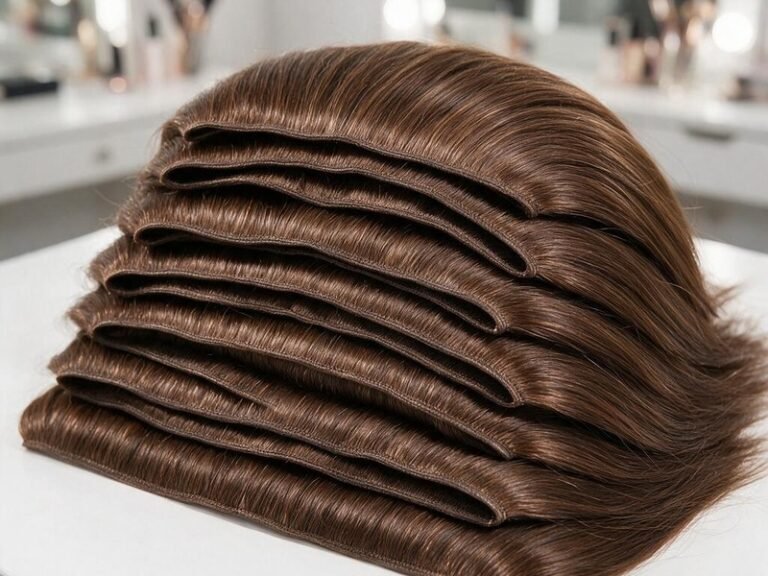
Weft hair extensions are a solid pick for bleaching, as long as you don’t slather lightener directly on the thick stitched track. The cotton or polyester thread used to stitch wefts can hold lightener longer than the hair itself, leading to breakage right at the root of the weft and excess shedding after install. Keep lightener a quarter-inch away from the track, and you’ll be fine.
Tape-in hair extensions also work great for bleaching, but peel the adhesive tabs off first if you’re lifting the root area. If you leave the tabs on, lightener will seep under the adhesive, break down the glue, and cause the tabs to slip within days of install. It adds 10 minutes of prep time, but it saves you from redoing a full install a week later.
K-tip extensions are a little trickier. The keratin bond at the root will soften and break down if it comes in contact with lightener, so you have to stay at least a half-inch away from the bond when applying product. That makes k-tips a great pick if you’re only doing balayage or end lightening, but a frustrating choice if you want to lift the full length of the hair from root to tip right out of the package.
What to confirm before you place a bulk order
You don’t have to take a supplier’s word for it when they say their hair bleaches well. Ask them to send you 5g sample swatches of the exact batch you’re considering before you place a full order. Most legitimate suppliers will send these swatches for $3-$5 each, shipped first class, which is a tiny cost compared to wasting hundreds of dollars on hair that doesn’t work for your clients.
When you get the swatch, do your own quick strand test: mix up a small batch of the same lightener you use in the salon, paint it on, process for your usual time, and check for breakage and lift. If it lifts cleanly and doesn’t snap when you pull it gently, it’s good to go. If it feels mushy or turns a brassy orange you can’t tone, move on.
If you’re vetting a new supplier for the first time, we put together a full checklist of things to confirm before you send payment in our guide to verifying a human hair supplier. It covers everything from batch consistency to return policies, so you don’t get stuck with a shipment of unusable hair.
Quick answers to common bleaching hair questions
Can I bleach hair that’s already been dyed?
Short answer, sometimes. If the hair was dyed with a gentle semi-permanent tint to match a standard natural brown shade, and it still has intact cuticles, you can lift it 3-4 levels without issue. If it’s been dyed with a permanent black dye loaded with metallic salts, don’t waste your time — you’ll get a brassy, uneven mess that breaks off no matter how much bond protector you use.
How many levels can I expect good bleachable hair to lift?
With quality 30vol developer and proper processing time, cuticle-intact hair that’s had minimal processing will lift 5-6 levels, to a pale yellow that tones easily to cool blonde shades. The cheaper, acid-washed hair most budget vendors sell will only lift 2-3 levels max before turning mushy, leaving you stuck with a brassy orange you can’t tone out.
Do I need to pay extra for raw hair to get good bleaching results?
Not usually. Raw, completely unprocessed hair will lift the lightest — often up to 7 levels — but it costs 30-40% more than standard cuticle-aligned hair that’s had that gentle initial color bath we mentioned earlier. For most clients asking for caramel, honey blonde, or even level 9 ash blonde, that standard cuticle-aligned stock works perfectly, and the cost savings let you keep your retail prices competitive without sacrificing quality.
At the end of the day, choosing human hair for bleaching doesn’t have to be complicated. Skip the marketing buzzwords, test your swatches, and prioritize cuticle integrity over fancy grade labels. If you’re browsing for stock for your salon or resale shop, all of our cuticle-aligned batches are lift-tested before they hit our shelves, and we’re always happy to send small swatches to wholesale accounts so you can test before you commit. Just let our team know what level you’re trying to lift to, and we’ll point you to the right stock for your needs.
Send Us Your Hair Inquiry
Need bulk pricing, samples, or a private-label quote? Fill in the form and our team will get back to you within one business day.