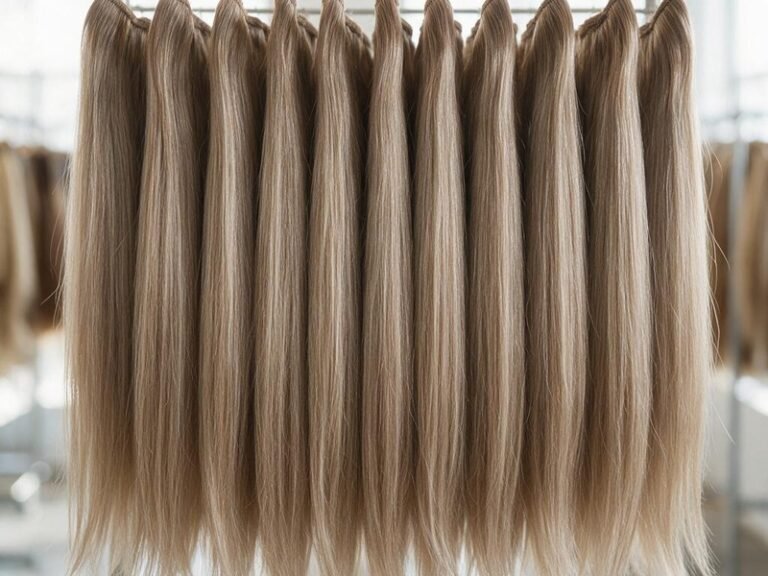
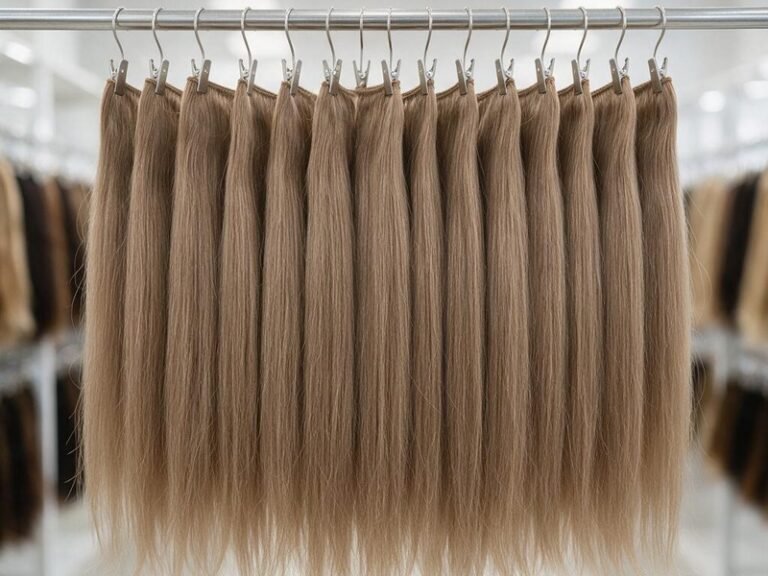
Flat Tip vs Tape-In Hair Extensions
If you’ve stood in our warehouse watching us pack orders, you know half the new salon owners who reach out mix up flat tip and tape-in extensions at least once. Both are semi-permanent, both use 100% cuticle-intact human hair when you source right, but they work for totally different client lifestyles, stylist skill levels, and price points. We’ve seen buyers stock the wrong one, end up with 30% of their inventory sitting on shelves for 6+ months, and kick themselves for not asking the basic questions first.
What flat tip extensions actually are, no marketing fluff
Flat tips (sometimes called stick tips, but don’t get them twisted with round I-tips) have a pre-bonded keratin tip pressed flat at the top of each 1-gram strand. You apply them with a low-heat connector, clamping the softened keratin to small sections of the client’s natural hair—no beads, no tape, no extra tabs to restock between appointments. Each bond is about the size of a grain of rice once melted and set, so they lay pretty close to the scalp if the stylist knows what they’re doing.
Wear time lands at 3-4 months on average, if the client isn’t dousing their roots in pure coconut oil every other day, because oil breaks down keratin bonds faster than any other product. From our wholesale side, they run about 10-15% more per 100g pack than tape-ins, because the keratin bonding process adds an extra factory step, and there’s more labor involved in sorting and tipping individual strands. The downsides? Removal takes longer, you have to crush each hardened keratin bond with pliers after applying dissolver, and if a stylist applies them too tight or too close to the root, clients can get tender tension spots around the hairline. We’ve had stylists send back photos of irritated scalps and broken hair, and 9 times out of 10 it’s application error, not a flaw in the hair itself.
Tape-ins: fast installs, more frequent salon visits
Tape-ins are 1.5-inch wide thin weft slices, pre-coated on one side with medical-grade acrylic adhesive, that you sandwich around a thin, 1/8-inch section of the client’s natural hair. No heat required for application, just a firm press to set the two adhesive sides together, which is why so many new stylists learn tape-ins first before moving to bonded styles. A full head takes 45 minutes to an hour, tops, compared to 2-3 hours for a full set of flat tips—that’s a massive difference for a salon that books 4-5 clients a day and needs to keep chair turnover high.
Wholesale cost is lower, too, which makes them a popular pick for resellers targeting everyday clients who don’t want to drop $800+ on a first set of extensions. Wear time is shorter, though: 6-8 weeks before you have to move the wefts up, because as the client’s hair grows, the tabs slide down away from the root and start to show if they pull their hair back. We’ve covered before how oil and heavy silicone conditioners break down tape adhesive fast, which is why we always point stylists to our guide on washing tape-in hair extensions to pass along to clients after their install.
The big downsides? Clients with extremely fine, silky hair sometimes deal with slipping tabs if they skip pre-install prep (no conditioner on roots the day of, no heavy serums near the scalp for 48 hours post-install), and you can’t pull hair up into a super tight high pony for those first two days while the adhesive fully cures. You also have to stock replacement tape tabs for move-up appointments, which is a small recurring cost that adds up if you’re doing 10+ tape-in installs a week.
Hard numbers that actually impact your bottom line
Don’t get distracted by social media reels hyping one style over the other. These are the concrete numbers we track for every wholesale order that ships out of our warehouse, so you can build your service menu and inventory plan without guessing:
- Full head install time: Tape-ins = 45-60 mins; Flat tips = 2-3 hours
- Average client wear before adjustment: Tape-ins = 6-8 weeks; Flat tips = 12-16 weeks
- Wholesale cost per full head (18 inch, 100g remy hair): Tape-ins = $110-$135; Flat tips = $125-$155
- Removal time: Tape-ins = 15-25 mins with adhesive remover; Flat tips = 45-60 mins with keratin bond dissolver
- Training curve: Tape-ins = 1-2 practice heads to get consistent, hidden placements; Flat tips = 4-6 practice heads to avoid bond slippage or tension damage
Those numbers shift a little if you’re sourcing unprocessed virgin hair vs standard remy, or going longer than 22 inches, but they’re consistent enough to use as a baseline for pricing. If you’re just starting to stock tape-ins, you can browse standard weights and lengths in our tape in hair collection to get a feel for color options and cost per pack.
Which clients are the right match for each style?
Flat tips shine for clients who hate frequent salon visits, who work out 4+ times a week, who swim regularly, or who style their hair in tight updos for work (dancers, competitive athletes, military members, we’re looking at you). The keratin bond holds up way better to constant sweating and chlorine exposure than tape, no random slippage mid-workout, no visible tabs if they pull their hair straight back into a bun. They’re also a solid pick for clients with medium to thick hair who want targeted dimension or fullness, because you can place individual strands exactly where you need extra volume without adding bulky wefts.
We don’t usually recommend flat tips for clients with extremely fine, fragile hair, especially around the hairline, because the hard keratin bond can put too much concentrated tension on weak strands if applied incorrectly. Keratin-bonded styles like flat tips and k-tips share that same tension risk for fine hair, which we break down in more detail in our post about k-tips for thin hair.
Tape-ins, on the other hand, are perfect for clients who want a lower upfront service cost, who don’t mind coming in every 6-8 weeks for a quick move-up, who have short to medium fine hair that can’t handle the weight of individual keratin bonds. They’re also great for clients who like to switch up their length or color seasonally, because removal is fast and doesn’t require grinding down hard keratin bonds. The one caveat we hammer home with every stylist: Don’t overpromise tape-in hold for clients who sweat heavily or swim 3+ times a week. Those clients will almost always end up back in your chair 3 weeks in with slipping tabs, frustrated that their set didn’t last as long as you said it would. Be honest about limitations upfront, it saves you bad reviews and awkward fix appointments.
Inventory mistakes we see new buyers repeat every month
We’ve been doing this long enough to spot the same ordering missteps over and over, and almost all of them tie back to buyers picking one style and writing off the other entirely. First, there’s the group that stocks 100% tape-ins because they’re cheaper, then realizes 30% of their regular client base has super oily roots or trains 5 days a week, and tape-ins won’t hold for them. Then there’s the group that drops a ton of cash on flat tips in every bold fashion color and 28 inch length imaginable, only to sell 2 packs a quarter and tie up cash that could go toward faster-moving core stock.
We always tell new buyers to start with a 60/40 split between tape-ins and bonded styles, and round out their stock with versatile weft hair for sew-in clients, so you’re covered for 90% of client requests without overbuying niche stock. Another common mistake? Skimping on hair quality for semi-permanent styles. You can get away with lower quality, non-cuticle hair for a one-time wedding or prom updo that comes out the same night, but extensions that live in a client’s hair for months will mat and tangle fast if the cuticle is stripped or misaligned, no matter how good the install is. If you’re not sure what MOQ is for custom colors or specific lengths, our FAQ page covers lead times and minimums for all our semi-permanent extension lines, so you don’t have to guess how much to order to qualify for wholesale pricing.
Quick questions we get every week
Which option is less damaging for clients?
It’s never the extension itself that causes damage—it’s bad application. Tape-ins can cause just as much breakage as flat tips if you sandwich too much natural hair in a tab, or place the weft too tight to the scalp pulling on the root. That said, for clients with extremely fine, fragile hair, tape-ins placed in thin, lightweight sections usually put less concentrated tension on individual strands than a hard keratin bond.
Can clients reuse the hair after removal?
For tape-ins, yes—if you’re working with high-quality cuticle-intact hair, you can peel off the old adhesive, apply fresh tape tabs, and reuse the wefts for 2-3 install cycles, which brings down the long-term cost for repeat clients. For flat tips, you almost never can reuse them. The keratin bond gets crushed and saturated with dissolver during removal, and you can’t re-form a consistent, secure bond on the stripped strand end without risking slippage.
Which gives a more natural, undetectable finish?
This comes down to install skill, not the extension type. A great stylist can place flat tip bonds so you can’t see them even if the client wears their hair in a slicked-back middle part, and a rushed stylist can leave tape tabs peeking out half an inch from the hairline. The only small difference: Tape-ins have a slight edge for clients with baby-fine hair along the part line, because the thin weft doesn’t create a tiny hard bump the way a keratin bond can if placed too high on the head.
At the end of the day, there’s no universal “better” pick between flat tip and tape-in hair extensions. The right choice for your business is the one that matches your clients’ daily habits, your stylists’ current skill level, and the price point your local market will actually pay. You don’t need to stock every extension type on the market to run a successful salon or resale shop, but having both core options on hand means you won’t turn away clients who don’t fit a one-size-fits-all service. If you’re ready to put together your first wholesale order or adjust your current stock mix, our team is here to help you pick weights, lengths, and colors that move fast instead of collecting dust on your storage shelves.
Send Us Your Hair Inquiry
Need bulk pricing, samples, or a private-label quote? Fill in the form and our team will get back to you within one business day.