What Makes Vietnamese Hair Different for Wholesale Buyers
If you’ve been shopping wholesale hair long enough, you’ve probably noticed that “Vietnamese” gets used as a premium label on a lot of listings that don’t act premium once installed. Vietnamese hair is different mainly because of the donor texture, the way strands are gathered, and how much processing the factory uses afterward. Here’s what I’d actually check before you place a bigger order.
The hair itself usually feels denser
A lot of new buyers expect Vietnamese hair to be super silky, and that’s not always the right word. It often has a medium, slightly coarse feel with good body, so it can hold curls better than very fine, soft donor hair. In our warehouse, we usually see stronger ends and fuller bundles, especially in the 18–26 inch range.
That density matters when you’re comparing bundle weight. A 100-gram bundle of fine hair can look thinner than the same 100 grams of Vietnamese hair because there is simply more visible hair per bundle. It also means braiders may need fewer bundles for a full sew-in, but clients who love a very silky relaxed-hair look may need a steam-processed texture instead. If your market wants bone straight with a soft slip, ask for samples before committing to 50 bundles.
Cuticle quality is the real difference
Vietnamese raw or virgin hair is often collected in smaller donor pools, ponytails, or family networks rather than huge mixed batches. When the factory keeps roots and ends oriented the same way, the cuticles lay in one direction and the hair tangles less after washing. That’s why you’ll hear suppliers call it cuticle-aligned hair, but don’t just take the label at face value.
Run your fingers from roots to ends, then reverse direction. Real cuticle alignment should feel smoother downward and slightly resistant upward, not plastic-slick in both directions. The honest downside is that true aligned raw hair costs more, and supply in very long lengths can be uneven. If a supplier offers unlimited 32-inch raw Vietnamese at a suspiciously low price, that’s a red flag, not a sale.
How it compares with Chinese hair
Chinese hair isn’t automatically bad, despite the lazy talk online. A lot of finished Vietnamese-looking orders actually pass through Chinese factories for coloring, texture treatment, wefting, or packaging. The difference is usually the starting material and the production goal: Chinese factories can offer huge consistency, fast capacity, and many styles, while Vietnamese donor hair is often prized for natural strength and a less processed feel.
For buyers, that means choosing by product type, not just country. If you need matching sets, predictable color, and larger repeat orders, Chinese-processed hair may be the smarter business move. If your clients pay for raw hair, natural wave, or longevity through multiple washes, Vietnamese material can be worth the higher cost. We break this down in more detail in what makes Chinese hair different, because the two often get confused.
What it works best for
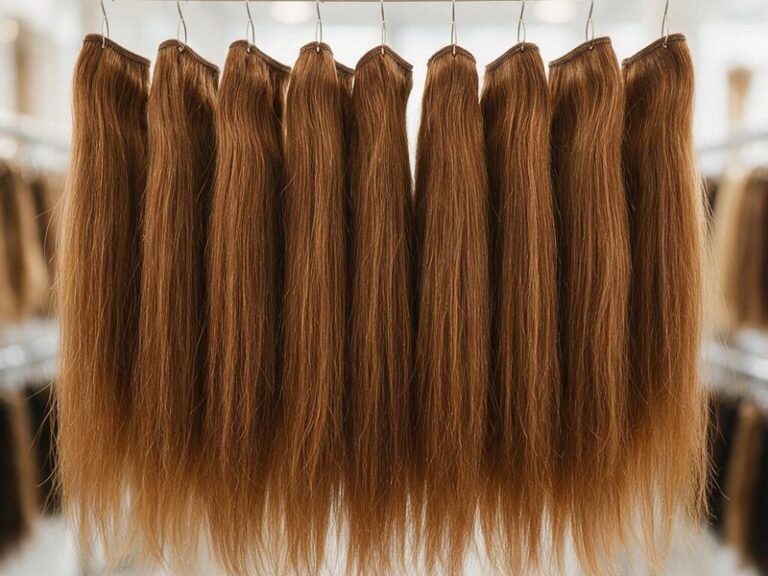
Vietnamese hair performs especially well in natural straight, natural wave, steam curls, and colors that don’t require aggressive bleaching. It’s a solid fit for weft hair extensions, wig making, and clients who style often. For braiding hair without wefts, you can also source bulk human hair, but specify length, weight, and whether you want single or double drawn.
Here’s where wholesale buyers get tripped up:
- Single drawn: more shorter hairs, natural taper, lower cost.
- Double drawn: thicker ends, more uniform length, higher price.
- Raw hair: minimal processing, but colors and patterns vary batch to batch.
- Virgin hair: usually uncolored donor hair, but standards vary by supplier.
- Steam texture: curl pattern can loosen after washes, so set client expectations.
- Bleached blonde: ask for lift level and maintenance rules before ordering.
Pricing, MOQ, and lead times to expect
Don’t compare Vietnamese hair by bundle price alone. A $28 bundle may be 95 grams, mixed cuticles, or lightly coated, while a $42 bundle at 100 grams with aligned cuticles may create fewer complaints. Typical wholesale MOQs can start around 10–20 pieces for stock orders, while custom colors or private-label packaging often start at 50 pieces or more.
Stock wefts may ship in 3–7 business days, custom textures can take 10–20 days, and big color orders may need 2–4 weeks depending on factory load. Ask for bundle weight, hair origin, processing method, length tolerance, and photos from the actual batch, not only model photos. If you’re comparing options across the catalog, shop all hair extensions with those specs written down so suppliers aren’t answering different questions.
Buyer questions we hear a lot
Is Vietnamese hair better for curly styles?
It usually holds steam curls well because the strand has some natural density and grip. That doesn’t mean the curl is permanent; tighter steam textures can loosen with shampoo, heat, and heavy products. Tell your clients to use sulfate-free shampoo, rinse with cool or lukewarm water, and let the curls air-dry when possible.
Can I color Vietnamese hair like client hair?
Raw or virgin Vietnamese hair can generally be colored, but darker natural shades are safer than lifting to 613 blonde. If your business sells blonde units, buy hair that has already been professionally processed and quality-checked instead of bleaching raw bundles in the salon. You can read more ordering details on our FAQ page, including common production and shipping questions.
Before ordering 50 or 100 pieces, buy samples in two lengths and test the wash, curl, and coloring behavior yourself. Then reorder the texture that matches what your clients actually wear, not the one with the loudest marketing.
Send Us Your Hair Inquiry
Need bulk pricing, samples, or a private-label quote? Fill in the form and our team will get back to you within one business day.