Sourcing Human Hair Bundles Burgundy: A Practical Guide for Hair Businesses
Burgundy human hair bundles can sell very well, but they are easier to mess up than natural black bundles because dyeing changes texture, shine, moisture, and return behavior. The short version: order sample bundles first, confirm whether the color is dyed from virgin hair or pre-colored stock, and inspect shedding, tangling, and color consistency before committing to a wholesale run.
This guide is written for salon owners, braiders, beauty-supply buyers, online vendors, and resellers ordering from China-based suppliers. We’ll cover what to ask, how burgundy is made, what quality level fits your price point, and how to avoid the most common wholesale mistakes.
What Are Burgundy Human Hair Bundles, and Why Do They Need Extra Care?
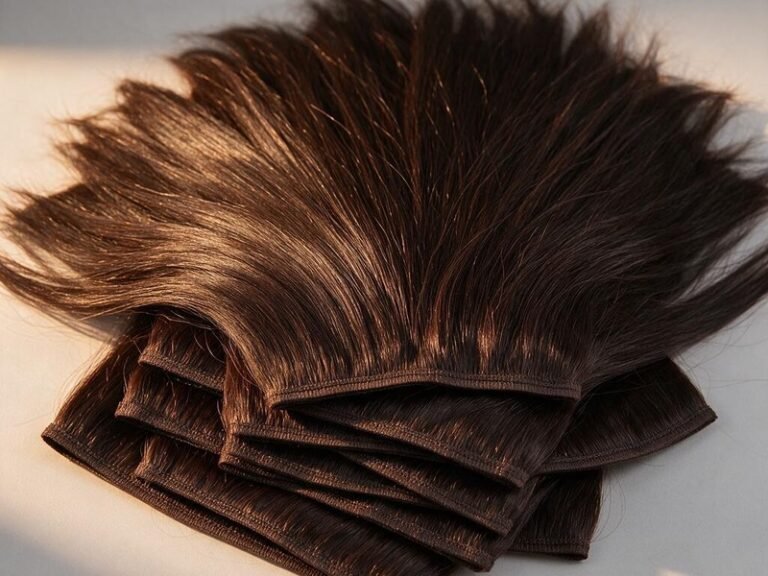
Burgundy bundles are wefts of human hair dyed into a deep red-violet shade. A weft is the stitched or machine-sewn track that braided or sewn-in installs are attached to. The color can range from dark wine, almost black-red indoors, to brighter plum or red-purple under light.
Colored hair is not the same product as unprocessed natural black hair. To get a clean burgundy, factories often lift the hair first, then deposit red and violet tones. That process can make the hair drier, slightly coarser, or more prone to frizz, especially if the source hair was weak, overly processed, or processed too quickly.
That does not mean burgundy bundles are low quality. A good factory can produce soft, wearable colored bundles with proper dye timing, conditioning, and quality sorting. But you should never judge colored hair by the same standards as raw natural hair without accounting for the chemical process.
Buyers also need to define terms before comparing prices. Virgin hair has not been permed, dyed, bleached, or chemically processed before reaching the factory, though it will usually be processed when the burgundy color is added. Remy means the hair roots and tips mostly run in the same direction, which helps reduce tangling. Raw hair usually refers to minimally processed donor hair, while cuticle aligned means the cuticles lie in the same direction.
For burgundy, “100% human hair” matters, but it is not enough. Some cheap colored bundles can still be human hair yet contain mixed lengths, weak fibers, excessive short hair, or poorly aligned cuticles. Ask about hair grade, donor source, dye method, cuticle direction, and whether the color is stock or custom made.
Which Burgundy Shade Should Your Business Stock?
The biggest complaint with colored bundles is usually not quality alone; it is shade expectation. One supplier’s “burgundy” can look like dark cherry, another like purple wine, and another like bright red. Phone screens, studio lighting, and customer selfies make this even harder.
If you are buying for resale, choose a shade name that matches your market and ask the factory for a color code. Common names include 99J, burgundy wine, dark plum, cherry burgundy, and red violet. In many wholesale catalogs, 99J is the closest standard shorthand for a deep burgundy, but factories may interpret it differently.
For most hair businesses, a dark 99J-style burgundy is the safer inventory choice. It works on deeper skin tones, pairs well with natural black closures and frontals, and does not look as costumey as a bright red. A brighter burgundy can do well around prom, wedding season, holidays, or content launches, but it may sit longer in stock.
A closure is a small lace or silk piece used to close the top of an install, while a frontal is a wider ear-to-ear piece that creates a new hairline. If your customer wants a full burgundy look, matching bundle color to the closure or frontal is critical. Lace pieces often take color differently because of knot construction, shedding risk, and smaller individual hairs.
Ask suppliers to photograph bundles and matching closures together in natural daylight, indoor warm light, and flash. You also want a root-to-tip color check. Some lower-level stock has darker roots, brighter ends, or uneven red tones hidden by glossy product photography.
What Hair Quality Level Fits Your Price Point?
Burgundy bundles are usually offered in several quality bands. Your choice should depend on selling price, customer expectations, install method, and how long you want the hair to last. A weekend wig does not need the same hair as a salon client paying for a three-month sewin.
- Entry-level colored human hair: usually lower cost, softer marketing language, and more variation in donor hair. It may look great new but can become dry or tangly after washing. Best for budget wigs, short-term styles, or promotional offers.
- Mid-tier Remy burgundy bundles: the most common practical choice for small businesses. Roots and tips should be directionally aligned, shedding should be controlled, and the color should be reasonably uniform after processing.
- High-end virgin or cuticle-aligned colored hair: starts from better donor hair and is dyed more carefully. It should feel smoother after washing, have fewer flyaways, and tolerate heat better, but it will cost more and still needs color-safe maintenance.
- Raw hair custom-colored burgundy: usually a special order rather than cheap stock. Raw hair can be beautiful, but results vary by donor batch, and lifting dark donor hair to burgundy may still cause slight texture changes.
- Mixed or unclear fiber bundles: avoid these if your brand promises human hair. Mixed synthetic or animal-fiber content may not curl safely, can melt under high heat, and can create returns that erase your margin.
Do not chase the cheapest factory quote without asking what changed to get there. Lower pricing may mean thinner wefts, more short hair in the bundle, heavier silicone that washes out, weaker dye work, or less sorting after coloring. Those issues show up after the customer washes the hair, not during the first unboxing.
For a repeat business, mid-tier Remy or a controlled high-end colored line is often easier to defend than the cheapest burgundy stock. You can sell the better hair with honest expectations: color-safe shampoo, fewer heat passes, deep conditioning, and bedtime protection.
How Do Factories Make Burgundy Hair, and What Can Go Wrong?
Most wholesale burgundy bundles begin as natural dark hair. The factory may use already-made stock hair or dye virgin hair to order. To reach burgundy, the hair usually needs lifting to reduce natural brown and black pigment, followed by a red-violet deposit.
The risk starts during lifting. If the hair is lifted too aggressively, it can become porous, meaning it absorbs water and products quickly but also releases color faster. Porous hair may feel dry, tangle at the nape, look dull after one wash, or take heat styling unevenly.
A reputable supplier will usually control this through slower processing, pH balancing, conditioning treatments, and post-dye inspection. Some factories use heavier oil or silicone to make processed hair feel soft in the bag. That feel can be misleading, so sample testing after shampooing is essential.
Color bleeding is another common issue, especially with reds and burgundies. Some initial rinse water can have tint, but repeated heavy bleeding during customer washes is a problem. Ask the supplier whether the bundles have been post-washed, set, or treated to reduce excess dye.
Weft damage can also happen during bulk dyeing. The hair may be beautiful, but if the weft is loose, punched through, or poorly reconstructed after processing, sewin installs can shed. Run your fingers along the track, gently pull small sections, and inspect whether cut hairs are escaping from the stitching.
If you are ordering wigs, tape-ins, k-tips, or bulk hair in burgundy, do not assume the same bundle process works for every product. Bulk hair is loose hair without a weft, often used for braiding. Tape-in extensions use adhesive tabs, and k-tip extensions have keratin bonds that are fused with heat. Color processing and product residues can affect tape adhesion and keratin bonding, so confirm the factory has experience with the exact construction.
What Should You Ask a Wholesale Burgundy Hair Supplier?
Start with direct questions that force the supplier to be specific. A factory that knows colored hair should answer without relying only on grade letters or vague phrases like “premium” and “top quality.”
Ask whether the burgundy color is ready stock or custom dyed. Ready stock usually has a lower MOQ, faster shipping, and lower price, but shade and batch can vary. Custom dye gives more control, but MOQs may start around 30 to 100 bundles depending on length, texture, and supplier policy. Lead times can range from 3 to 7 days for stock to 2 to 4 weeks for custom colors during busy seasons.
Ask for bundle weight in grams, not just “one bundle.” Most standard bundles are around 95 to 115 grams, with 100 grams common in wholesale listings. Longer lengths can appear thinner if the weight is spread from root to tip, so compare total grams and length instead of comparing bundle thickness from photos.
Confirm whether lengths are measured stretched. Curly and wavy hair should usually be pulled straight for measurement. A labeled 20-inch curly bundle may look much shorter in its natural spring state, and customers may complain if your listing does not explain that.
Request a sample order in the exact texture and length you plan to sell. Test one 18-inch or 20-inch bundle plus a closure if possible. That is long enough to reveal dry ends and color problems without spending too much. Keep the supplier’s tag and packaging until testing is complete so you can compare future bulk batches.
Ask these questions before paying:
- Is the hair 100% human hair, and is it Remy, virgin, raw, or cuticle aligned?
- What is the exact color name or color code, and can you send daylight photos and videos?
- Is the color stock or custom dyed, and what is the MOQ for repeat consistency?
- What is the gram weight per bundle, and how are curly lengths measured?
- Does the price include the closure or frontal match, or are those priced separately?
- How much temporary color release is expected during the first wash?
- What is the defect policy if a bulk order arrives with wrong color, shedding, or weft damage?
How Do You Test Burgundy Bundles Before Ordering in Bulk?
First inspect the hair dry. The color should look even from root to mid-lengths to ends, with no suspicious bands, brassy patches, or purple streaks unless you ordered a fashion color. A few natural variations are normal in human hair, but a full wholesale order should be close enough that customers can buy multiple bundles for one install.
Run your fingers downward from root to tip, then gently upward near the ends. Slight resistance can happen because cuticles are directional, but crunch, gummy spots, or extreme tangling are warning signs. Check the ends for thin, frizzy “split tail” appearance, especially in lengths over 22 inches.
Wash the sample with lukewarm water and sulfate-free shampoo. Do not use a heavy mask before testing because it can hide dryness. Notice how much color rinses out, how long the hair takes to dry, whether it reverts to its labeled texture, and whether it tangles while wet.
After air drying, run a wide-tooth comb from ends upward and count the shed hairs. A few loose cut hairs are normal, especially after first brushing, but clumps, repeated pulling from the weft, or visible track gaps are not acceptable. Lightly heat-style a small section around 320 to 350 degrees Fahrenheit to see whether the color dulls or the ends become crispy.
If you sell installs, put the hair through the same prep method your stylists use. An install is the method of attaching extensions, such as sewing bundles onto braided foundation, making a wig, or applying tape-ins. Some hair behaves differently after cutting the weft, flat-ironing, or co-washing, so test the way your customer will actually use it.
Finally, compare the cleaned sample to a fresh bundle from the same claimed batch. If the fresh hair feels silky but the washed hair feels straw-like, the softness likely came from surface coating rather than hair quality. That is one of the most useful tests you can do before placing a large order.
How Do You Match Burgundy Bundles to Closures, Frontals, and Wigs?
Matching colored bundles to lace pieces is where many brands lose money. The bundle may be a beautiful wine shade, while the closure looks brighter, duller, browner, or more purple because baby hairs, knots, lace tint, and processing affect the final look.
Order closures or frontals from the same dye lot whenever possible. A dye lot is the group of hair colored together in the same production run. If that is not possible, ask the supplier to match pieces against the actual bundles under daylight before shipment, not just pull from separate bins labeled “burgundy.”
Understand density when ordering wigs. Density is the amount of hair on the wig cap, usually expressed as 130%, 150%, 180%, or higher. A 130% density wig can look natural but thinner, while 180% gives a fuller style with more weight. Burgundy color can visually look thinner than black because red tones reflect light differently, so customers may expect more volume than the same density in natural black.
Cap size, lace type, bleached knots, and pre-plucked hairlines are separate choices from hair color. Do not let a supplier substitute a lower-quality closure just because the color matches. A mismatched closure with excessive shedding or large knots can ruin an otherwise good bundle set.
For retail bundles, consider offering three ways to buy: single bundles for add-on color, a three-bundle deal, and a bundle plus closure or frontal set. This gives customers options while reducing the chance they buy incompatible shades from multiple vendors.
What Textures and Lengths Sell Best in Burgundy?
Burgundy works well across straight, body wave, loose wave, deep wave, and curly textures, but the color shows differently on each pattern. Straight and body wave reflect shine and show the red-violet tone clearly. Curly textures absorb more light and can look darker, sometimes almost black indoors.
If you are building a new collection, start with body wave or straight in 18 to 24 inches. These are approachable lengths, easy to photograph, and work for both sewin installs and wig making. Longer lengths, especially 26 to 30 inches, look luxurious but cost more, have weaker ends if quality is poor, and sell more slowly in some markets.
For curly burgundy, set expectations in the listing. Explain that curls should be measured stretched, that colored curly hair needs more moisture, and that the shade may appear darker in the coiled state. This prevents avoidable chargebacks from customers expecting the exact brightness of a straight sample photo.
Most clients need about three bundles for a standard full sewin from 14 to 20 inches, and three to four bundles for longer or fuller styles. If using a closure or frontal, some stylists use slightly fewer bundle tracks at the top, but desired fullness still matters more than a universal rule.
Do not overstock every texture at once. Start with two textures, one closure size, and one frontal option. Once you know which shade your customers repurchase, you can negotiate better pricing and more consistent custom color with the factory.
How Do You Set Customer Expectations for Colored Human Hair?
Even good burgundy hair needs maintenance, and educated customers have fewer returns. Tell buyers that red and violet tones can fade gradually, especially with clarifying shampoo, hot water, hard water, heavy oils, and frequent high heat. That is normal for colored human hair, not automatically proof of bad quality.
Recommend sulfate-free shampoo, lukewarm water, moisturizing conditioner, and a deep conditioning treatment every one to two weeks. Customers should avoid soaking tape tabs or keratin bonds and should focus conditioner on mid-lengths and ends rather than the weft or adhesive area.
For sewin bundles, advise a satin scarf or bonnet at night and gentle detangling from the ends upward. For wavy and curly hair, a light leave-in conditioner is usually more useful than heavy grease, which can build up and make colored hair look dull.
Heat styling should stay around 300 to 350 degrees Fahrenheit for most colored hair, with a heat protectant. Customers who repeatedly flat-iron at 400 degrees or bleach the hair again may see dryness, breakage, or rapid color shift. If they plan to recolor burgundy hair lighter, warn them that lifting an already processed color is risky.
Your product page should mention that monitor screens and lighting change color. Include photos in daylight and indoor light, and say whether the shade leans red, purple, or dark wine. Honest content takes more effort, but it reduces messages and returns from buyers expecting a neon red.
How Do MOQs, Lead Times, and Packaging Work for Wholesale Orders?
MOQ depends on whether you buy stock color or custom dye. Stock burgundy bundles may allow small sample packs or 10 to 30 pieces, which is helpful when testing a supplier. Custom colors, special labels, custom packaging, or matched bundle sets often require a larger commitment because the factory must prepare dye, process hair, and sort batches.
Lead time is not only shipping time. It includes stock confirmation, processing, quality control, packaging, and export handling. A supplier may ship stock in a few days, while custom burgundy orders can take 10 to 20 working days, longer before holidays or sales events. Always ask for the ship date, not just “processing takes about a week.”
Packaging matters if you are building a brand. Plain plastic bundles cost less and let you add your own sleeves, tags, or boxes. Custom labels, colored wrapping paper, satin bags, and branded boxes improve presentation but add per-unit cost and can complicate returns if the factory misprints labels.
Keep labels accurate. Do not label colored hair as “unprocessed virgin raw hair” if it has been dyed burgundy. Better wording is “100% human hair,” “Remy burgundy bundles,” or “virgin hair colored to order,” depending on what the source material actually is. Accurate descriptions protect your salon or store from disputes.
Before shipment, ask for QC photos or a short video showing bundle weight, weft stitching, color under daylight, closure match, and packaging. This is especially important on first orders. If the supplier refuses any visual confirmation on a custom order, that is a sign to slow down.
What Red Flags Should You Avoid When Ordering Burgundy Bundles?
Avoid suppliers who answer every quality question with a grade number and nothing else. Grade terms are not universal across China factories, and “10A” or “12A” does not guarantee donor quality, dye process, cuticle alignment, or after-wash softness. Use grades as catalog labels, not proof.
Be cautious of prices that look far below the market for long lengths. Longer human hair costs more, and burgundy processing adds labor. A very cheap 28-inch colored bundle may have thin ends, mixed hair, heavy coating, or inaccurate weight. If the deal seems too favorable, request grams, video, and a sample before buying bulk.
Watch for inconsistent color names. If listing photos show a bright cherry-red but the product is called dark burgundy, ask which item will actually ship. Suppliers sometimes reuse marketing photos across colors, and that creates direct-to-customer disappointment.
Poor communication around returns is another warning sign. Ask in advance what happens if the shade is wrong, the bundles are not the same color, the wefts shed heavily, or closures do not match. A responsible supplier may not accept free returns on every custom item, but they should have a clear defect process and be willing to inspect evidence.
Finally, avoid placing a huge private-label order on the first transaction. Start with samples, then a small stock order, then a repeat order with packaging. Once the supplier proves color consistency and communication, you can increase volume with less risk.
Frequently Asked Questions
Is burgundy human hair good for a wholesale hair business?
Yes, burgundy can be a strong wholesale color because it is bolder than natural black but still wearable for everyday styles, wigs, sewins, and seasonal launches. The key is selling honestly colored hair with realistic care instructions and matching closures or frontals from the same dye lot when possible.
How many burgundy bundles do customers need for a full install?
Most customers need three bundles for lengths around 14 to 20 inches, and three to four bundles for lengths over 22 inches or very full styles. Exact amount depends on bundle weight, head size, desired volume, texture, and whether a closure or frontal is used.
Will burgundy human hair bundles fade?
Red and burgundy tones can fade gradually after washing, heat styling, and sun exposure, just like other colored human hair. Sulfate-free shampoo, lukewarm water, moisturizing products, heat protection, and satin nighttime coverage help keep the color looking richer longer.
Can customers bleach or recolor burgundy bundles again?
They can try, but lifting already dyed burgundy hair is risky and may cause brassiness, dryness, breakage, or uneven results. For clients who want a custom lighter shade, it is safer to order the final color from the factory or start with quality virgin hair and have a professional colorist do a strand test first.
If you are ready to add burgundy bundles to your line, start with samples in straight or body wave and test wash, heat style, and match a closure before buying bulk. Send us your target shade, texture, length range, and order quantity, and we can help you compare stock color versus custom production for your business.
If you want the full background before you order, our guide on Sourcing Deep Wave Bundles Human Hair: A Practical Guide for Hair Businesses walks through it in plain terms.
Send Us Your Hair Inquiry
Need bulk pricing, samples, or a private-label quote? Fill in the form and our team will get back to you within one business day.