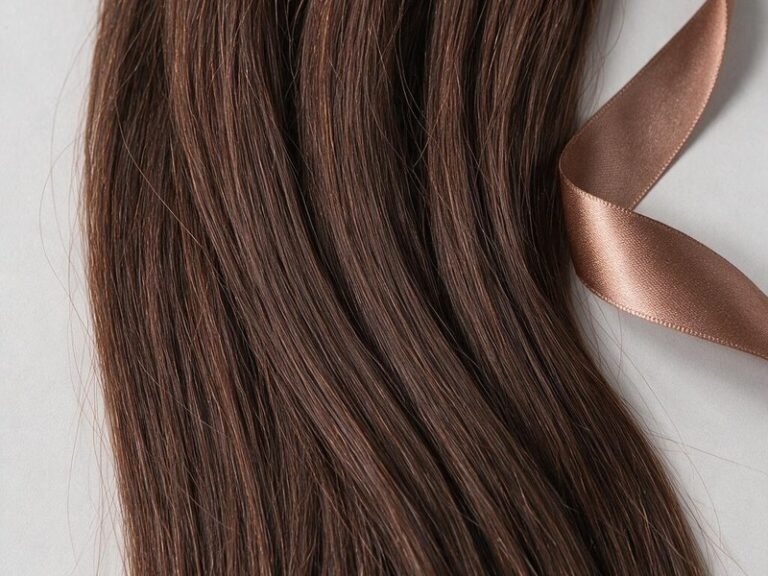
Human Hair Bundles Straight: Vendor Selection Checklist for Buyers
The best vendor for straight human hair bundles is not always the one with the lowest price. It is the supplier that can consistently give you clean donor hair, true length, healthy ends, realistic shedding limits, dependable lead times, and wholesale terms that fit your sales channel.
Use this checklist before placing a bundle order, especially if you sell to salons, braiders, wig makers, beauty-supply accounts, or online retail customers. Straight hair is less forgiving than curly textures because short hairs, frayed ends, weak wefts, and fake “silky” coatings show up quickly after washing.
What should buyers look for in straight human hair bundles?
Start by asking what the bundle actually is, not just what the vendor calls it. Virgin hair means hair that has not been chemically processed, colored, permed, or texture-treated. Remy means the hair roots and tips are kept mostly in the same direction, which reduces tangling, but Remy does not automatically mean unprocessed. Raw hair usually means minimally processed donor hair with no silicone-heavy finish, and cuticle aligned means the outer cuticle layer runs in one direction from root to tip.
For straight bundles, ask whether the hair is naturally straight or steam-processed from another texture. Both can be good products, but they should not be priced or marketed the same way. Naturally straight raw donor hair tends to move in a softer, flatter pattern, while processed silky straight can look very uniform and may become drier after repeated washes.
Check the percentage of long hairs in the bundle. A bundle labeled 22 inches should measure 22 inches when pulled straight, not only at the longest top layer. Some factories build bundles with shorter filler hair near the weft; that creates thin ends, tangling after washing, and customer complaints even if the top looks full.
Expect a quality straight bundle to have minimal flyaway short hairs, neat weft construction, no harsh chemical smell, and ends that do not feel like broom bristles. A few stray shorter hairs are normal because real human hair is not manufactured like plastic fiber. Large clumps of short hair, split ends, or visible layered “steps” are not normal for premium wholesale stock.
How do you compare bundle weight, length, and density honestly?
Most wholesale straight bundles are sold in 3.5 oz, which is about 100 grams, but some suppliers use 95 grams, 105 grams, or 4 oz bundles. Always compare price per bundle, grams per bundle, and length together. A cheaper 95-gram 24-inch bundle is not the same value as a fuller 100-gram 24-inch bundle, especially if the ends are thin.
Density means how much hair is actually distributed through the bundle. A bundle can weigh 100 grams but still look stringy if too much of that weight sits near the weft. Ask vendors for pulled-length measurements, end-width photos, and bundle weights on a scale. If they cannot provide those details on sample orders, that is a warning sign.
Length should be measured from the weft to the longest hairs after the hair is gently pulled straight. Curly and wavy hair shrinks, but straight hair should measure close to the stated length. Also ask about single-drawn versus double-drawn hair. Single-drawn hair has a more natural taper, while double-drawn hair has more uniform thickness from top to ends and usually costs more.
Do not confuse marketing grade letters with real quality. Terms like 8A, 9A, 10A, or 12A are not universal industry standards. One vendor’s 10A may be another vendor’s basic Remy line. Build your own spec sheet using donor origin claim, hair type, processing method, weight, length tolerance, weft style, moisture level, shedding standard, and expected lifespan.
Which sample tests should you run before a wholesale straight bundle order?
Always sample before committing to a large order. Two or three lengths are enough, such as 14, 20, and 26 inches, because they reveal root fullness, mid-length strength, and end quality. Buying only one short sample can hide problems that appear in longer hair, where weak material and short filler are more obvious.
Run the same tests on every vendor sample so you are comparing apples to apples:
- Weigh and measure: Confirm grams, pulled length, and whether the longest hairs represent the whole bundle.
- Inspect the weft: A weft is the stitched track where hair is secured. Look for tight stitching, secure returns, loose hairs, and excessive thickness that would be hard to sew.
- Wash twice: Use a gentle sulfate-free shampoo and conditioner. Heavy silicone coatings often make the first touch feel slippery but leave water cloudy and hair drier after washing.
- Air dry and heat style: Let one sample air dry and use low or medium heat on another after applying heat protectant. Note bounce, frizz, return movement, and whether the ends become straw-like.
- Check shedding: A few loose hairs from installation and first combing are normal. Continuous hairs pulling from the track, especially near stitching holes, point to weak weft construction.
- Comb from ends upward: Start at the tips, then move upward. Straight hair should detangle without forming mats around the nape or behind the weft.
- Compare after 7 to 10 days: Leave the washed sample out, comb it daily, and watch for tangling, dullness, dry ends, odd bend patterns, or color change.
Do not rely on factory photos alone. Lighting, filters, and camera angle can make average hair look thicker and shinier. Your own wash test is more useful than a grade label, a fancy package, or a social-media video shot under salon lights.
What product specs belong on your hair vendor checklist?
A useful vendor checklist forces the supplier to commit to details in writing. Your purchase order or spec sheet should name the product as straight human hair bundles, then list whether it is raw, virgin, Remy, cuticle aligned, steam-processed, colored, or coated. If the sales contact uses those words loosely, ask direct follow-up questions until the claim is clear.
Specify the origin claim carefully. “Chinese factory” describes where the hair was processed, not necessarily where the donor hair came from. Ask whether the donor material is single-source or blended, and whether the factory can describe color range, texture consistency, steam processing, and sterilization steps. Be cautious of vendors who promise endless inventory of identical raw hair at very low prices; true raw material naturally varies.
Include construction details such as machine weft or hand-tied weft, stitch strength, bundle gram weight, length tolerance, end fullness, natural color range, steam temperature, whether cuticles are intact, and whether the hair can be colored. For straight stock that clients may bleach or dye, ask whether the hair has been treated in a way that limits lift. Factories should not promise that every bundle can safely reach pale blonde without testing.
Set acceptable quality limits before production. For example, agree on how many loose hairs are acceptable during a standard comb test, how much length variance is allowed, how weft defects will be handled, and what happens if bundles smell, mat, arrive damp, or do not match the approved sample. Approved samples should be sealed, dated, and retained by both buyer and supplier when possible.
How do you evaluate MOQ, pricing, lead time, and private label terms?
MOQ means minimum order quantity, and it should match your buying model. Some factories offer low MOQs for ready stock but require much larger MOQs for custom labels, special lengths, colored hair, or custom packaging. Ask for separate MOQs for stock bundles, sample orders, private-label packaging, and repeat production so you do not get trapped by a number you did not expect.
Wholesale pricing should be broken down by length. Short bundles naturally cost less than 28- to 32-inch hair, and unusually flat long-length pricing can mean blended fiber, short filler, thinner grams, or heavily processed ends. Request a price sheet in writing, plus costs for closure, frontal, wig making, packaging, labels, express shipping, and replacement handling. A closure is a small lace or silk piece used at the top or crown, while a frontal is a wider piece that runs from ear to ear.
Lead time needs two answers: stock lead time and production lead time. Ready straight bundles may ship in 2 to 7 business days, while private-label or custom orders can take 10 to 25 business days or longer during peak seasons. Ask what happens if the factory is short on 24-inch or 28-inch stock. They should tell you before shipping substitutions, not silently mix lengths or batches.
Private label is more than putting a hangtag on hair. Confirm whether tags, satin bundles, boxes, bundle wraps, and logos are printed in-house or outsourced, who approves artwork, whether misprinted packaging is replaced, and whether your packaging is kept exclusive. Also ask whether the vendor sells the same exact hair under other brands in your market. That may be acceptable for basic stock, but it changes your positioning.
What signs suggest a straight bundle supplier may cause problems?
Avoid suppliers who answer every quality question with “10A,” “top quality,” or “no shedding, no tangling forever.” Real hair sheds a little, requires care, and can dry out with harsh shampoo, excessive heat, or rough brushing. A serious vendor talks about tolerances, processing, testing, and care instructions instead of making the product sound indestructible.
Be careful with prices far below market rate for long, full, raw straight bundles. Human hair is a labor-intensive material, and long lengths with thick ends cost more. A low price may still be a legitimate basic line, but it should correspond to realistic specs: Remy instead of raw, single-drawn instead of double-drawn, standard machine weft, natural color only, or lighter end fullness.
Poor communication around defects is another red flag. Ask how claims are reviewed, what photos or videos are required, whether washed hair can qualify, how many days you have to report issues, and whether replacements are issued as product or account credit. A vendor that offers no defect policy or disappears after payment is risky even if the first sample looks good.
Also watch for inconsistent batches. Your second shipment should match the first in texture, luster, color, weft feel, and end thickness. If every batch feels different, your customers cannot trust your brand. Ask how the supplier controls batch consistency and whether they can hold stock or reserve lengths for repeat buyers.
Should you choose raw, virgin, or Remy straight bundles for resale?
Choose based on your customer budget and expectations, not because one term sounds more premium. Raw straight bundles can work for buyers who want minimal processing, natural movement, and higher price points, but you must accept natural variation in texture and color. Raw stock may also have more limited availability in very long lengths.
Virgin straight bundles are a practical middle choice if you want unprocessed color hair, more predictable inventory, and room for coloring. Remy straight bundles can be an excellent value for everyday installs and wig making when the cuticles are aligned properly and the hair is not over-coated. The term Remy alone is not enough; you still need wash tests and weft checks.
An install is the method used to attach the hair, such as a sew-in, wig unit, tape-in, or k-tip application. Tape-in hair uses adhesive weft sections near the scalp, while k-tip hair uses keratin bond tips; both require different factory preparation than bundle wefts. Bulk hair, meaning loose hair without a weft, is mainly used for braiding or custom bond work, so do not assume bundle vendors automatically produce reliable bulk or extension formats.
Many resellers do better carrying two quality tiers than trying to sell one product to everyone. Offer a dependable standard Remy line for price-sensitive clients and a premium raw or virgin line for clients who want longevity, coloring flexibility, and a more natural luster. Keep the two tiers clearly separated so customers understand the price difference.
How can buyers verify factory capability before placing repeat orders?
After samples pass, verify the supplier’s operating strength. Ask about monthly stock capacity for straight hair, common lengths kept in inventory, peak-season delays, quality inspection points, and whether the company works with salons, distributors, beauty-supply stores, or beginner brands. Their answer should match your business model.
Request production and inspection details. A responsible supplier usually checks donor material before processing, weighs bundles after sewing, measures length, inspects wefts, removes nits or excess short hairs, controls moisture, and examines finished bundles before packaging. Ask whether quality checks are done by the worker, a separate QC team, or both.
Packaging matters more than many new buyers expect. Bundles should be dry before sealing because trapped moisture can create odor or mildew during shipping. Ask whether hair is bundled in plastic, paper, or satin wraps, how labels are attached, and whether long bundles are folded in a way that creases the hair. Strong outer cartons are important for freight and international transit.
If you plan to scale, discuss reserved stock, reorder windows, and batch matching. A supplier that can support 50 bundles this month may not support 500 bundles in November. You do not need every detail on the first call, but repeated vague answers about capacity, inventory, and inspection should make you cautious.
What questions should buyers ask hair vendors by email or message?
Send the same question set to every supplier and compare answers side by side. Keep the tone professional and specific; experienced vendors usually respect buyers who know what they need. Vague questions such as “Is your hair good?” tend to produce vague sales answers.
Ask for the exact hair type, donor and processing description, cuticle direction, bundle weight, length range, stock availability, MOQ, price by length, sample cost, payment terms, production window, shipping options, private-label MOQ, and defect policy. Then add practical questions: Does the hair smell after washing? Can it be colored? What luster level does it have? Is the weft safe to cut? How much shedding is expected during the first install?
Request fresh photos or a short video of the actual stock, including the weft, ends, washed bundle, scale weight, and length measurement. This does not replace a physical sample, but it helps you filter suppliers quickly. If a vendor refuses basic evidence or only sends heavily edited lifestyle content, keep looking.
Keep a comparison sheet for each vendor: sample grade, grams, true length, end fullness, post-wash feel, heat response, shedding, smell, communication speed, packaging, total landed cost, and policy clarity. After three or four suppliers, the strongest option usually becomes obvious without relying on advertised grade labels.
FAQ
How many straight human hair bundles should a customer buy?
For a typical sew-in, many clients use 3 bundles for lengths 12 to 20 inches and 3 to 4 bundles for lengths 22 inches and longer. A fuller style, larger head size, leave-out wig, or very thick ends may require more hair. Give recommendations based on desired fullness and head size, not just length.
Can straight bundles be curled and colored safely?
Quality virgin or raw straight hair can usually be heat styled and colored, but results depend on prior processing and condition. Always test one small section first, use heat protectant, and recommend professional coloring for blonde lifting. Remy hair that has been processed may still take color, but it can become dry or lose strength if over-bleached.
Final Vendor Decision Steps
Before reordering, compare the approved sample against the bulk shipment, confirm weights and lengths, inspect wefts, and wash one bundle from the new batch. If your vendor can pass those checks shipment after shipment, communicate honestly about delays, and stand behind defects, you have found a partner worth building your brand around.
Send us your straight bundle target length range, preferred quality tier, quantity, and packaging needs. Our team can help you compare stock options and order samples before you commit to a wholesale purchase.
If you want the full background before you order, our guide on Human Hair Bundles Wavy: Vendor Selection Checklist for Buyers walks through it in plain terms.
Send Us Your Hair Inquiry
Need bulk pricing, samples, or a private-label quote? Fill in the form and our team will get back to you within one business day.