HD Chocolate Full Lace Wig: A Complete Buyer’s Guide
An HD chocolate full lace wig is a full-lace human hair wig in a warm brown shade, built on ultra-thin, skin-toned HD lace for a natural-looking hairline. For B2B buyers, the best value comes from matching hair quality, cap construction, density, and lace color to your customers instead of simply paying more for the words “HD” and “raw.”
What Is an HD Chocolate Full Lace Wig?
A full lace wig has a cap made mostly of lace, allowing the wearer to part the hair anywhere and wear it in updos, high ponytails, or pulled-back styles. HD lace is thinner and more translucent than standard Swiss lace, so it tends to disappear against the scalp when tinted, melted, or installed correctly. Install means the professional process of securing the wig and customizing the hairline, often with adhesive, wig clips, combs, or sewing.
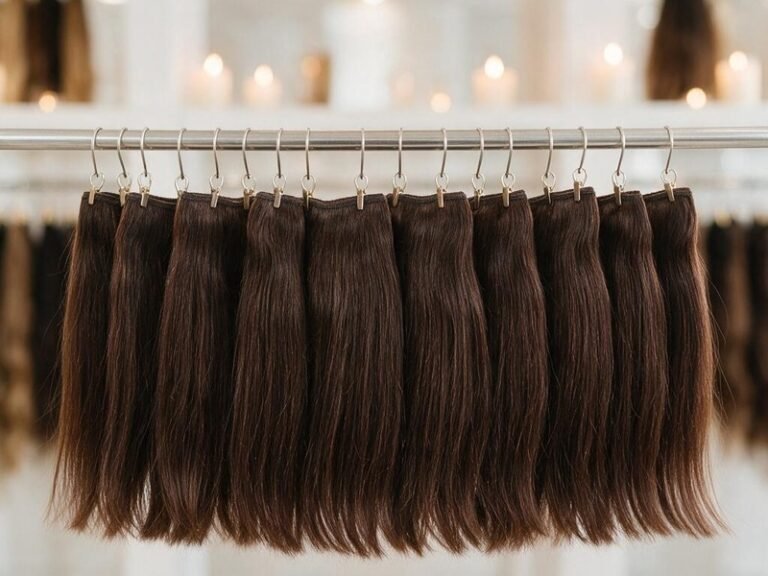
“Chocolate” usually points to a rich medium-to-dark brown, but the shade is not universal across vendors. One factory may call a #2 dark brown chocolate; another may use a warmer #4, a chestnut brown, or a custom-mixed tone. Always order by color ring, swatch, or factory shade code rather than relying on the product name alone.
For resale, this wig works well for clients who want a natural brown look without bleaching dark hair. It is especially popular in fall and winter, but it sells year-round in markets where brown tones are common. The key is keeping the color believable: not too brassy, not flat black-brown, and not uneven from roots to ends.
Is an HD Full Lace Wig Better Than a Closure or Frontal Wig?
It depends on the wearer and the budget. A closure is a smaller lace piece, usually 4×4, 5×5, or 6×6, placed at the top of the wig. A frontal is a wider lace strip, commonly 13×4 or 13×6, running from ear to ear at the front. Both can look natural, but a full lace cap gives more styling freedom because lace covers the full perimeter.
An HD chocolate full lace wig is usually the right choice for salons serving clients who want versatile parting, high buns, ponytails, or realistic scalp exposure around the whole head. It is also a better fit for customers with hair loss concerns or those who want less leave-out and fewer styling limits.
The trade-off is price and handling. Full lace caps cost more, take longer to make, and can be more delicate than closure wigs or machine-made lace-front caps. HD lace can tear during rough bleaching, plucking, adhesive removal, or customer self-installation. If your market includes beginners, offer clear care instructions and consider stocking matching lace-front or glueless options too.
Which Hair Grade Should You Source for a Chocolate Lace Wig?
Start by understanding the terms suppliers use. Virgin hair means hair that has not been chemically processed, permmed, dyed, or bleached. Remy means the cuticles generally run in the same direction, which reduces tangling, but Remy does not automatically mean unprocessed hair. Raw hair usually describes minimally processed donor hair with no standardized steam texture, while cuticle aligned means the hair cuticles are kept pointing in one direction from root to tip.
For an HD chocolate full lace wig, be careful with claims that the hair is “100% virgin” if it is colored brown. A natural dark brown donor shade may exist, but many chocolate wigs achieve their color through dyeing. That is not a problem if the factory uses quality hair and a controlled color process, but you should ask exactly whether the shade is natural donor color or dyed.
For a dependable wholesale offer, source cuticle-aligned human hair with minimal shedding, consistent texture, and clean dye work. A premium line can use raw or virgin hair, while a mid-tier line can use high-quality Remy if the supplier is honest about the grade. Avoid grade labels like “12A” or “15A” as proof of quality; those numbers are not regulated and vary from vendor to vendor.
Ask for these details before placing a bulk order:
- Hair origin: such as Chinese, Indian, Burmese, or another documented source, without accepting vague “top donor hair” claims.
- Process: natural color, direct dye, bleached and dyed, or steam-textured curl pattern.
- Cuticle direction: ask whether the hair is cuticle aligned and how the factory controls reversal and tangling.
- Hair composition: 100% human hair versus blended hair, and whether any synthetic fibers or animal hair are present.
- Processing limits: whether the wig can safely be re-dyed, heat-styled, or chemically treated by a stylist.
- Shedding test: request a video showing brushing, shaking, and inspection of the weft or hand-tied knots.
- Sample policy: confirm sample cost, refund rules, production time, and whether sample orders can be deducted from bulk orders.
How Do You Choose Cap Size, Density, and Lace Color?
Cap fit is one of the most common reasons a beautiful wig gets returned. Most adult wigs come in small, medium, and large, with medium considered the standard average size. Ask the factory for exact circumference, ear-to-ear, front-to-nape, and temple measurements. Adjustable straps, elastic bands, combs, and silicone strips can improve fit, but they cannot fix a cap that is fundamentally too small or too large.
Density describes how full the hair looks, measured as the percentage of hair knots tied into the cap. For a natural chocolate wig, 150% density is a safe everyday range for straight and body wave styles, while 180% gives more volume and better camera presence. Many clients like 200% for curly textures or a fuller glam look, but higher density costs more, adds weight, and can make the cap feel hotter.
HD lace should be chosen with the customer’s skin tone in mind. Even translucent lace may need tinting because “one shade invisible” does not work across fair, medium, tan, and deep complexions. Chocolate hair can create a strong contrast if the lace is too light or the knots are overly bleached, so include tinted spray, powder, or professional tinting in your service recommendation.
Pay attention to knot work too. Single knots are smaller and more natural but can be less durable; double knots are stronger but more visible unless bleached or concealed carefully. A realistic wholesale wig should have careful bleaching only where needed, natural baby hairs, and a lightly plucked hairline rather than an over-plucked “gappy” edge.
What Texture and Length Options Sell Best?
Straight, body wave, loose wave, deep wave, and curly are common options for an HD chocolate full lace wig. Straight hair shows color reflection clearly, which makes uneven dye jobs easier to spot. Body wave is forgiving and broadly popular, while deep wave and curly textures need more moisture and more careful detangling education at the point of sale.
Lengths from 16 to 24 inches usually move well for everyday buyers. Longer hair, especially 28 inches and above, looks premium but costs more and can develop dry ends if the color process was rushed. For resellers testing the chocolate shade, start with 18, 20, 22, and 24 inches in one or two textures before expanding into a full custom program.
Weight matters more than some new buyers expect. Longer wigs need more hair to keep density consistent, so compare grams, not just inches. A 20-inch 180% wig should contain more hair than a 20-inch 150% wig. Ask the factory for gram weights by length and density so you can compare quotes fairly.
Remember that curly hair shrinks visually. A 22-inch deep wave may look much shorter than a 22-inch straight wig when dry and styled. Measure curly and wavy hair straight for factory specifications, then show customers both stretched length and finished shrinkage so expectations stay realistic.
What Should B2B Buyers Check Before Placing a Wholesale Order?
Always buy a sample before committing to a large purchase. Inspect the lace under natural light, check the elasticity of the cap, run your fingers through the hair, and examine the knots around the perimeter and crown. Wash the sample once or twice, let it air dry, and note shedding, tangling, dryness, color bleeding, and whether the curls return cleanly.
MOQ, or minimum order quantity, varies by supplier. Stock wigs may have a low MOQ, such as 1 to 10 pieces, while custom chocolate shades, custom labels, special cap sizes, or custom packaging may require 30, 50, or more pieces. Lead times often range from 2 to 5 days for stock items and 2 to 6 weeks for custom production, depending on complexity and order volume.
Do not choose a vendor from a single photo. Request factory videos, recent batch photos, color charts, and close-ups of the hairline, crown, parting, nape, wefts, and adjustable features. A weft is the stitched track where hair is secured; in full lace wigs, most hair is hand-tied to lace, but reinforced areas may still use wefting or elastic support.
Your quality checklist should cover lace thickness, knot bleaching, color consistency from root to end, hair smell after washing, shedding at the tie points, cap stretch, stitching around combs and straps, and curl pattern consistency. Also ask whether the factory can replace defective units, handle size exchanges, and keep shade consistency across repeat orders.
How Do Clients Care for an HD Chocolate Full Lace Wig?
HD lace is delicate, so installation and removal matter as much as hair quality. Clients should avoid pulling the lace, applying too much adhesive, scratching the hairline, or using harsh glue remover without saturating the edge first. Stylists should protect the lace during tinting and avoid soaking bleaching products directly onto fragile knots for too long.
For maintenance, detangle gently from the ends upward with a wide-tooth comb or wig brush. Wash with sulfate-free shampoo and moisturizing conditioner, using lukewarm rather than hot water. Let the wig air dry on a wig stand when possible, and avoid sleeping in it without a satin or silk covering if the client wants longer lace life.
Chocolate brown color can fade or turn brassy after repeated washing, heat styling, chlorine exposure, or sun exposure. Recommend color-safe products, minimal high heat, and a heat protectant during styling. Deep conditioning the ends helps, especially on long wigs, but heavy conditioner should stay away from the knots and lace to prevent slipping or buildup.
When clients remove the wig, they should clean adhesive from the lace slowly and store it on a satin bag or wig form. Proper care reduces friction, prevents matting at the nape, and keeps the brown shade looking richer between salon visits.
FAQ
Can You Color an HD Chocolate Full Lace Wig Again?
Often yes, if the wig is made from quality human hair, but going darker is usually safer than lifting it lighter. Because many chocolate wigs have already been dyed, a stylist should do a strand test first and avoid harsh bleach baths near the HD lace or knots.
What Is the Difference Between HD Lace and Regular Swiss Lace?
HD lace is thinner, sheerer, and softer, which helps it blend more naturally into the skin. Regular Swiss lace is usually more durable and easier for beginners to handle, but it may need more tinting or concealing to match the scalp.
Before your next wholesale purchase, compare samples from at least two production runs and confirm shade, density, cap measurements, MOQ, and lead time in writing. Send us your target market and preferred texture, and we can help you build a chocolate full lace wig assortment that fits both your clients and your margins.
If you want the full background before you order, our guide on Blonde 613 Full Lace Wig: Vendor Selection Checklist for Buyers walks through it in plain terms.
Send Us Your Hair Inquiry
Need bulk pricing, samples, or a private-label quote? Fill in the form and our team will get back to you within one business day.