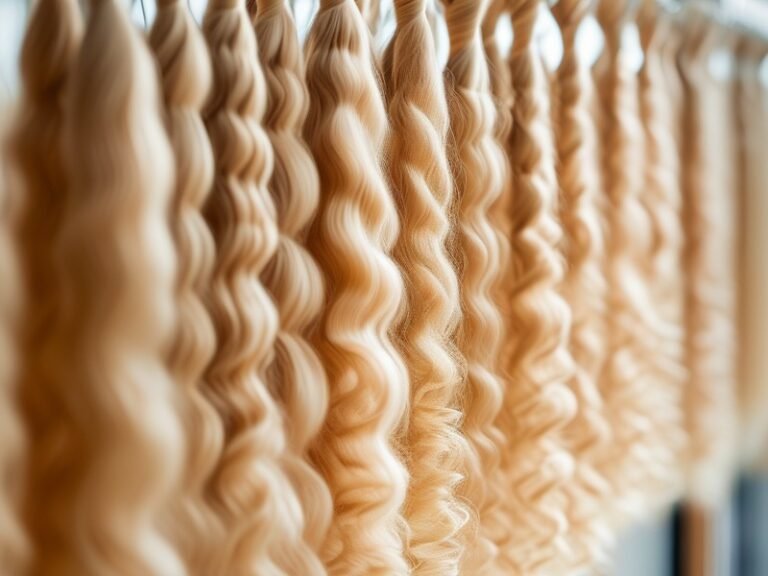
Hair Color 613 Wig for Resale: What Salon Owners Should Know
A hair color 613 wig can be a strong resale item if you buy the right quality, density, and cap construction for your client base. The short version: 613 is a pale blonde shade, usually created by bleaching darker donor hair, so price, shedding, tangling, and overprocessing risk matter more than they do with natural-color wigs.
For salon owners, this category can move well, but it also creates more returns if buyers expect untouched blonde hair. Here is what to check before placing a wholesale order.
What Is a 613 Wig, and Why Do Clients Buy It?
A 613 wig is a wig made in a light blonde shade often described as honey blonde, platinum blonde, or pale blonde. Most 613 hair is not naturally that color. Factories usually take dark donor hair, lift it in stages, tone it, and then make it into a wig using a weft, closure, frontal, or full lace construction.
A weft is a stitched track of hair sewn onto the cap. A closure is a small lace piece, usually 4×4, 5×5, or 6×6 inches, used to cover the parting area. A frontal is a larger ear-to-ear lace piece, commonly 13×4 or 13×6 inches, that allows more parting and hairstyling room.
Clients buy 613 wigs because they want an instant blonde look without chemically processing their own hair. The shade is popular for birthdays, weddings, vacations, summer styling, and protective styles. It also gives stylists a lighter base for custom pastel, ash, beige, champagne, or dimensional color work.
The main trade-off is that bleached hair has already gone through serious chemical processing. Even a well-made 613 wig may need more moisture, gentler brushing, lower heat, and better nighttime care than a natural black or brown wig. Your product descriptions and consultations should say that plainly.
Which Hair Quality Should Salons Stock?
You will usually see terms such as virgin hair, Remy, raw hair, and cuticle aligned. These words get mixed around online, so ask suppliers exactly what they mean and request videos before ordering.
Virgin hair generally means hair that has not been perm, dyed, bleached, or otherwise chemically treated before collection. Since true 613 is bleached, a finished 613 wig is no longer virgin even if it began with virgin donor hair. Remy means the hair strands are kept with roots and ends oriented in the same general direction, which can reduce tangling. Raw hair usually refers to minimally processed donor hair, but raw 613 still requires lifting to become blonde.
Cuticle aligned means the cuticles are kept running in one direction. This is the feature I would focus on most for resale, especially with blonde hair. If the cuticles are mixed, the wig can tangle quickly after washing, even if the hair looks soft in the factory photos.
For salon resale, I would not chase the cheapest 613 wig on the market. Very cheap blonde units often use thinner donor hair, aggressive bleaching, excessive silicone coating, or mixed cuticles. They may feel silky on arrival and become dry or matted after the first wash.
A practical salon assortment can include one entry-level but dependable line for occasional wear, one premium line for clients who want longevity, and a small custom-color option using higher-quality 613 units. Do not stock too many premium units until you know your local demand.
What Cap Constructions Sell Best for Salon Clients?
The cap construction determines price, install time, styling options, and who the wig fits. An install is the method used to apply the wig, such as gluing, sewing, clipping, adjusting straps, or using an elastic band.
Beginner clients often prefer a glueless wig with adjustable straps, combs, elastic bands, and pre-cut lace because they can manage more of the upkeep at home. Clients who want a very natural hairline and flexible partings may prefer a 13×4 or 13×6 lace frontal wig. Clients who mainly wear a middle or side part may be happy with a closure wig and pay less.
Full lace wigs allow more updo and styling freedom, but they usually cost more and can be more delicate. A 5×5 or 6×6 closure wig is often a good middle ground: natural parting space, easier maintenance, and less lace to care for than a frontal.
For 613 specifically, also inspect the knots and lace. Bleached knots create a more realistic scalp appearance, but over-bleached knots can weaken hair at the root and contribute to shedding. Natural knots with light makeup or tinted lace can sometimes be safer, especially on premium units you plan to keep in stock.
Lace color matters too. Transparent or light brown lace can work across many skin tones, but “HD” is used loosely and does not always mean better quality. Ask for close-up videos of the lace, knots, part, hairline, and crown under normal indoor light before committing.
How to Compare 613 Wig Density, Length, and Curl Pattern
Density describes how full the wig is, usually measured as a percentage such as 150%, 180%, or 200%. Higher density uses more hair, raises the price, and can make the unit look fuller, but it does not automatically mean better quality.
For 613 straight or body wave units, many salon clients like 180% density because it looks full but still moves naturally. A 13×4 straight wig at 24 to 28 inches may need 200% density if the client wants a very thick finish from roots to ends. Clients who want a natural everyday look often prefer 150% to 180%.
Length also changes perceived fullness. A 20-inch wig at 180% density can look thick, while the same density at 30 inches may look thinner toward the ends because the hair is spread over a longer area. Curly and wavy hair also measures shorter when pulled straight, so list that in your product page or consultation notes.
Common textures for 613 include straight, body wave, loose wave, deep wave, water wave, and curly. Straight and body wave are usually easier for first-time buyers and easier for you to inspect. Tight curly blonde units can be more prone to dryness and tangling if poorly processed, so sample those before buying in quantity.
Keep in mind that long blonde units weigh more. A wholesale unit may range from around 150 grams for a shorter, lower-density closure wig to 300 grams or more for a long, high-density frontal wig. Ask for actual hair weight by length and density, not just a photo, because weight helps you compare quotes fairly.
What MOQ, Pricing, and Lead Time Realistically Look Like
MOQ means minimum order quantity. Some suppliers advertise very low MOQs, but those may be stocked catalog units rather than made-to-order salon quality. Factory direct orders often start around 10 to 50 pieces depending on customization, while stock programs may allow one to five pieces per style at higher unit cost.
For salon owners, a safer first order is a small sample set: one short closure wig, one long frontal wig, and one texture you know your clients request. Test washing, styling, coloring, and fit before buying ten identical units. This costs more upfront per piece but helps avoid a shelf full of 613 wigs that shed or tangle.
Pricing can vary widely based on hair origin, length, density, lace size, bleached knots, pre-plucking, cap size, and whether the unit is stock or custom. Long 613 frontal wigs will cost noticeably more than natural black units because the lifting process uses time, chemicals, and higher-quality donor hair to avoid damage.
Stock units may ship in a few days, while custom caps, custom labels, special densities, or bulk orders can take two to six weeks or longer during peak seasons. Give yourself buffer time around prom, wedding season, and major holidays. Do not promise clients a Friday install if the supplier has only given a loose shipping estimate.
Ask whether the quoted price includes the wig cap, bleached knots, baby hairs, elastic band, combs, packaging, and shipping. A low quoted price can become less attractive after every detail is added separately.
What Quality Checks Prevent Returns and Bad Reviews
Every 613 wig should be checked before it reaches your client. Blonde hair reveals gaps, short hairs, dry ends, factory overprocessing, and uneven tone more clearly than dark hair.
- Check color under natural light: Look for brassy patches, uneven lifting, grayish or purple toner stains, and significant color differences between top, ends, and wefts.
- Run a shedding test: Gently brush from ends upward and inspect the ventilation around the lace and stitching on the wefts. A few loose hairs are normal; clumps are not.
- Check cuticle direction: Run fingers along the hair with light pressure. Smooth one way and rough the other can indicate direction, though a full wash test is more reliable.
- Inspect the lace and knots: Look for large holes, shiny plastic-like lace, over-bleached knots, thinning at the hairline, and uneven plucking.
- Inspect the cap: Confirm cap size, straps, combs, bands, ear tabs, and sewing quality. Try the cap on a mannequin or adjustable wig stand.
- Wash a sample first: Use sulfate-free shampoo and moisturizing conditioner, then air dry. Tangling, matting, excessive dryness, or a big color change after one wash is a warning.
- Test heat and color on a small section: If you offer custom toning or pastel coloring, test the hair before promising a result. Over-bleached hair may not tolerate another chemical service well.
Keep a supplier scorecard for each batch: length, density, weight, shedding, softness after washing, lace quality, delivery time, and client feedback. Human hair is a natural product, so some batch variation is normal. Consistent problems, however, mean you should renegotiate or move suppliers.
How to Set Resale Prices Without Overpromising
Salon owners can price 613 wigs based on product cost, custom work, install labor, and aftercare service. A wig sale and an install should be calculated separately when possible, because gluing, cutting lace, customizing the hairline, styling, and take-down maintenance all take professional time.
Clients usually understand paying more when they see the value: genuine human hair, a breathable cap, clean bleached knots, custom toning, a professional install, and clear care instructions. What they do not understand is a premium price for a wig that tangles after one wash or sheds heavily at the frontal.
Avoid describing 613 as “ maintenance-free ” or promising that every blonde wig can be recolored repeatedly. Better wording is: “This 613 unit can be toned by a professional, but because it is pre-lightened, we recommend a strand test and limited additional lightening.” That protects both your client and your reputation.
You can also bundle care products with the wig. A wide-tooth comb, satin bonnet, sulfate-free shampoo, moisturizing conditioner, leave-in conditioner, heat protectant, and lace glue or holding product can increase the sale while reducing misuse. Educated clients usually have better results and fewer complaints.
What Care Instructions Should Clients Receive?
613 hair needs hydration and gentle handling. Clients should detangle from the ends upward before washing, use a sulfate-free shampoo, follow with moisturizing conditioner, and avoid scrubbing or twisting the hair roughly. A deep conditioner or hydrating mask can help, but heavy products can cause buildup if used too often.
Clients should let the wig air dry when possible and use lower heat settings when blow-drying or curling. Heat protectant matters with blonde hair because dry, processed strands are more prone to split ends and frizz. Purple or blue shampoo can help control brass, but overuse can make the hair look dull, ashy, or faintly purple.
At night, clients should braid or loosely pin the hair, place a scarf over the lace area, and sleep on a satin pillowcase or in a satin bonnet. They should not swim in the unit without protecting it, and they should wash it promptly after sweating heavily or using styling products.
Lace care is separate from hair care. Clients should avoid ripping glue off the frontal, applying alcohol heavily, scratching the lace, or sleeping on a wet glued hairline. If you offer wig removal and reinstall services, mention that during the sale because it can protect the unit and create repeat appointments.
Common Buyer Questions About a Hair Color 613 Wig
Is a 613 wig good for resale in a salon?
Yes, if your clients already ask for blonde units, custom color, protective styles, or special-event looks. Start with a small sample order instead of buying many identical pieces, because 613 quality can vary greatly between suppliers and batches.
Can a 613 human hair wig be dyed again?
Many 613 wigs can be toned or darkened by a professional, but additional bleaching is riskier because the hair has already been lifted. Always do a strand test, inspect how the hair reacts after washing, and avoid promising repeated lightening on a pre-blonde unit.
What density is best for a blonde wig?
For most salon clients, 180% density is a balanced starting point for straight or body wave units. Choose 150% for a natural look and 200% or higher for long lengths or clients who want a very full style.
Should salons stock closure or frontal 613 wigs?
Closure wigs are easier to maintain and usually cost less, so they work well for everyday clients. Frontal wigs give more parting space and a more versatile hairline, but they require more careful installation and lace maintenance.
If you want help building a salon-ready 613 assortment, send us your target lengths, cap types, density, and first-order quantity. We can help you compare realistic wholesale options and choose sample units worth testing before your next buying season.
If you want the full background before you order, our guide on Closure Wig for Resale: What Salon Owners Should Know walks through it in plain terms.
Send Us Your Hair Inquiry
Need bulk pricing, samples, or a private-label quote? Fill in the form and our team will get back to you within one business day.