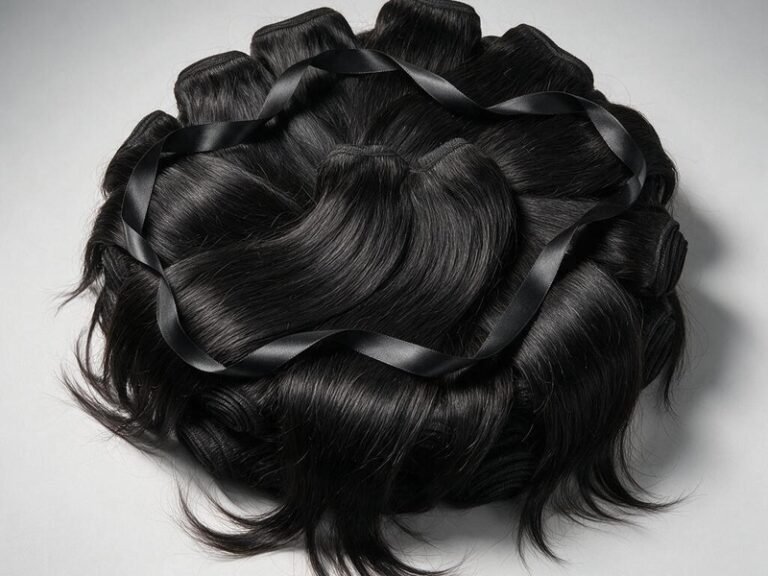
Full Wig Long Black Curly Explained: A Practical Guide
A full wig long black curly is a complete cap with long black curly hair already attached, so your client needs no leave-out or separate bundles. Most stock runs 18–30 inches and 150–200% density, meaning how much hair is in the cap and how full it looks. Here’s what we check in the warehouse before these units ship.
What is a full wig long black curly, actually?
It’s a one-piece cap with hair ventilated or sewn in, unlike a sew-in that uses separate weft hair and leave-out. Long usually starts at 18 inches; curly length is measured pulled straight, so a labeled 24-inch curl looks shorter worn. Natural 1B is a soft off-black, while #1 is a darker, usually processed solid black. Ask for factory videos because deep wave, water wave, and kinky curly look very different after washing.
How dense is too dense?
Density describes the percentage of hair knotted into the cap, not the length. For curly stock, 150% looks natural, and 180% is safer at 24 inches or longer because curly ends thin out. A 20-inch 180% unit often weighs 220–280 grams; a 28-inch can reach 320–380 grams. Skip 200% unless clients want a heavy, dramatic style—it gets hot and can strain the neck.
Lace front or full lace?
A lace front has sheer lace at the hairline and wefts in back, so it’s cheaper and still gives a natural part. Full lace uses lace across the whole cap for updos, but it’s pricier and more delicate. A frontal runs ear to ear; a closure is a smaller 4×4 or 5×5 patch at the crown. Our closure vs frontal guide explains those caps, and 13×4 lace fronts usually sell faster for black curly inventory.
What hair quality should you expect?
Virgin hair is unprocessed human hair from one donor; Remy hair has cuticles aligned one way but may be lightly processed. Cuticle aligned means the hair’s outer scales run root to tip, which reduces tangling. Natural 1B is usually easier to dye than solid #1, which is often processed even if labeled virgin. Entry human-hair lace fronts run about $60–$130 wholesale in 18–22 inches; full lace virgin units often cost $180–$350. Cheaper mixed fibers frizz, can’t take heat, and come back as returns; this full lace wig longevity guide explains how construction affects lifespan.
How do MOQs and lead times really work?
MOQ means minimum order quantity; stock units often ship in 3–7 days and can be ordered one piece at a time for curl tests. Custom labels, boxes, or adjusted cap sizes usually require 50–100 pieces per style and add 15–30 days. Always wash a sample first to check shedding, lace shade, and curl bounce. Because one mismatched curl batch is obvious on reorders, don’t approve a full run from a photo alone. Our FAQ page covers stock orders and processing times if you need those details.
How long does a black curly wig last?
With washes, conditioning, and a bonnet, a human-hair curly unit usually lasts 8–18 months. Synthetic or blended units may only survive a few wears or one heat-styling session. Lifespan drops quickly if clients sleep in the wig or use high heat on the ends.
What length sells best for a first order?
Start with 18, 20, 22, and 24 inches in 1B instead of stocking every length to 30. Long units cost more, tangle at the nape, and sell slower unless your market wants drama. A 6–10 piece test order gives you real sell-through data without tying up cash.
Once two or three specs start repurchasing, reorder those instead of chasing every trend. Browse current cap and curl options on our shop all hair extensions page, or send us a client photo and we’ll help match the texture.
Send Us Your Hair Inquiry
Need bulk pricing, samples, or a private-label quote? Fill in the form and our team will get back to you within one business day.