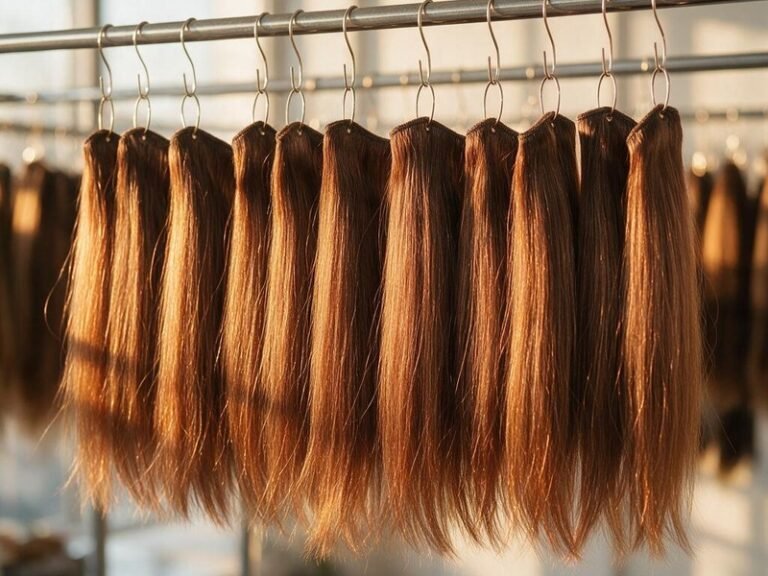
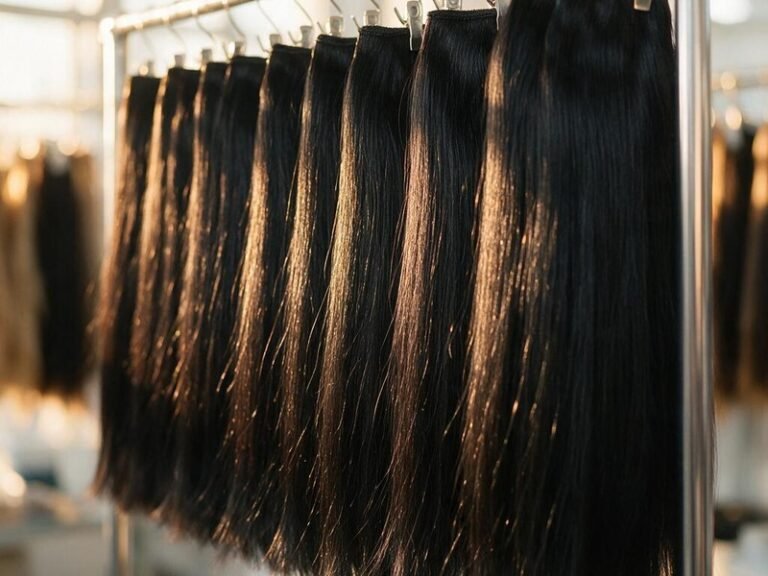
Buying Hd Lace Wigs Human Hair Closure in Bulk: Quality Checks That Matter
For bulk orders, an HD lace wig with a human hair closure should be checked as a finished product, not just by hair grade or length. The biggest avoidable losses usually come from thin lace that tears, knot work that sheds, mismatched density, or caps that do not fit your customer base.
A closure is a small lace or silk piece, usually 4×4, 5×5, or 6×6 inches, used to close the top or crown area without leaving out the client’s natural hair. In this guide, we cover the checks that matter before you commit money to inventory.
What Should You Inspect First on Wholesale HD Lace Closure Wigs?
Start with the lace, because it controls both the look and the return rate. HD lace is a very fine, light-colored lace made to blend closely with the scalp; it can look more realistic than regular transparent lace, but it is also more fragile. Ask your supplier whether the lace is true HD thin lace, regular Swiss lace marketed as HD, or a thicker blended lace sold at a lower price.
Hold the closure against your hand or a mannequin cap under natural light. You should see a clean grid, uniform holes, and no thick plastic-like shine. Run a dry cotton swab lightly along the edge and part line. Excess shedding, loose knots, or visible black dots in the part usually mean weak ventilation or rushed bleached knots.
Check the edge width and stitching. A workable bulk wig should have enough lace around the perimeter for trimming and customization, usually around 1 to 1.5 inches on a closure depending on the factory style. If the lace is cut too close to the knots, stylists have little room to pluck or adjust the hairline. If it is too wide, customers may pay for unusable lace and the edge may feel floppy.
Also inspect the transition from closure to wefts. A weft is the sewn track of hair attached to the cap. The join should be flat, secure, and free of bulky folds, glue streaks, or skipped stitches. That area sits near the crown, so poor construction can create ridges that show through installed styles.
How Do You Verify the Hair Quality in Bulk Orders?
Hair claims get confusing fast, especially when every supplier uses terms differently. Virgin hair means hair that has not been chemically processed, colored, permed, or relaxed. Remy means the cuticles are kept mostly in the same direction, while raw hair usually refers to unprocessed donor hair with minimal steam treatment; the term is often overused.
For HD lace wigs human hair closure inventory, ask directly whether the closure hair and wefted hair come from the same donor pool or matched batch. Even if both are human hair, different origins or textures can react differently to water, heat, and color. Run your fingers from roots to ends, then turn a small section around and move upward. Hair should feel smoother from root to tip and should not aggressively tangle when moved against the direction.
Do a basic water and heat check on a sample before a large purchase. Human hair may still have steam-textured patterns, but it should not melt, give off a synthetic smell, or clump into plastic-like ends. After washing, note whether the curls become matted, whether the ends turn dry, and whether the closure hair matches the body wave, straight, deep wave, or curly pattern on the wefts.
Ask for measured hair length, not stretched length only. Curly and wavy hair should be measured when pulled straight, but your product listing should make that clear to buyers. Check a few units in different lengths: 10 to 14 inches are common shorter bob lengths, while 18 to 26 inches move faster in many markets. Longer hair costs more and is more prone to thin ends, so inspect bottom fullness carefully.
- Smell: A slight factory conditioner smell is normal, but strong chemical or sour odors can signal poor processing.
- Shedding: A few loose strands during brushing can happen, but clumps at the knots or wefts are not acceptable.
- Texture match: Closure strands should match the wefts in curl pattern, sheen, coarseness, and color.
- End fullness: Pull the hair into a ponytail and inspect the ends. Heavy thinning means customers will complain about short wear life.
- Color consistency: Natural black should be even from closure to tracks unless you ordered highlighted or custom color.
- Bleach response: If you sell custom color, test one sample first and ask for realistic lift expectations.
- Reusability: After washing and air drying, the wig should remain manageable rather than drying into a tangled mat.
Are Bleached Knots, Plucking, and Baby Hair Worth the Extra Wholesale Cost?
They can be worth it if the work is controlled, but badly done customization creates more problems than it solves. Knots are the tiny points where individual hairs are tied into the lace. Bleached knots make the roots less visible, but over-bleaching weakens the hair, creates gray dots, or causes early shedding around the closure.
Ask for close-up videos of the knots before ordering. Good bleached knots should look subtle at the root without obvious blotches, harsh brown stains, or overprocessed frizzy strands. Many vendors prefer lightly bleached or natural knots on very light HD lace because stylists can customize safely after delivery.
Pre-plucked hairlines should mimic natural density, not create a thin, bald-looking strip. A realistic closure hairline has gradual spacing, a natural part, and enough density to hide the lace without looking bushy. Over-plucking cannot easily be fixed, and customers may interpret sparse areas as a defective closure.
Baby hair are short, fine hairs around the perimeter used to soften the hairline. In bulk, choose a moderate style unless your brand sells a dramatic laid-edge look. Heavy baby hair can look dated quickly, may require more maintenance, and can make resale harder if your market includes salon professionals who prefer customizing each unit themselves.
What Cap, Density, and Size Checks Reduce Returns?
Density means how much hair is packed into the wig, usually shown as percentages such as 130%, 150%, 180%, or 200%. Do not buy based on the percentage alone; factories calculate it differently. A practical check is visual and measured: the wig should look full enough for the style, have a clean part, and not show obvious gaps through the closure or wefts.
For most everyday closure wigs, 150% to 180% density gives a balance between fullness, cost, and comfort. Straight hair can look less full than curly hair at the same density, and longer lengths need more grams to keep the ends from looking thin. Ask for gram weight by length and density, then compare units from the same product line instead of trusting percentages across suppliers.
Cap size is another major return driver. Average-size caps, often around 21.5 to 22.5 inches in circumference, fit many wearers, but measurements vary by factory. Check the circumference, ear-to-ear stretch, front-to-nape depth, adjustable strap range, comb placement, and band quality. If you serve braiders and salons, elastic bands should be sewn securely, not attached with weak glue that lifts after a few wears.
Inspect the cap construction under the hair. Common options include glueless caps with adjustable straps, combs, elastic bands, breathable rose net, and thicker dome-style caps. A glueless cap does not mean no product can ever be used; it means the wearer has enough adjustment to secure the unit without relying only on adhesive. For HD lace closure wigs, the cap should stretch but not distort the lace or pull the part crooked.
Check left-right symmetry, ear tab placement, and where the closure ends. A 4×4 closure gives a limited parting area and is usually more affordable. A 5×5 or 6×6 closure gives more parting room but costs more and can feel thicker at the crown if attached poorly. Pick closure size based on what your customers actually style, not just the largest size available.
How Do You Test an HD Lace Wig Before Reordering?
Buy samples from two or three factories before placing a bulk order. The sample should go through the same handling your customers will use: unboxing, shaking, brushing, washing, air drying, plucking, heat styling, and at least one install. An install is the process of attaching or positioning the wig, whether by sew-in, clips, elastic grip, adhesive, or a combination.
During the trial install, look for lace rolling, unrealistic tracks, bulky crown seams, and pressure points near the ears or nape. Trim a small section of the lace as a stylist would. If it tears along the knots with normal handling, the lace may be too thin for your audience. True HD lace should be delicate, but it should not disintegrate during routine customization.
Wash the unit gently in lukewarm water with sulfate-free shampoo, follow with conditioner from mid-length to ends, rinse thoroughly, and air dry on a wig stand. Brush from ends upward using a wide-tooth comb or wig brush, especially on curly textures. Record shedding before washing, while wet, after drying, and after a light straightening or curling test.
Packaging matters for wholesale, too. Each wig should be dry, clean, shaped correctly, and protected so the lace does not fold directly against hard plastic or sharp combs. Ask whether units come individually labeled with length, texture, density, cap size, and SKU. Clear labeling saves warehouse time and reduces the chance that your team ships the wrong curl pattern or cap size.
When comparing quotes, request the full specification sheet: hair type, closure size, lace type, knot treatment, density, cap size, gram weight, elastic band, combs, strap length, packaging, MOQ, sample cost, production lead time, and defect policy. MOQ means minimum order quantity, and lead times can range from a few days for stocked styles to several weeks for custom caps or colored units. A slightly higher unit price is often cheaper than receiving 100 pieces with weak lace or mismatched curls.
Frequently Asked Questions
How many HD lace closure wigs should I order for a first bulk purchase?
Start with samples, then place a small test order in your fastest lengths and textures rather than buying every option. For many new vendors, 10 to 30 units across natural black straight, body wave, and one curly texture gives enough variety without tying up too much cash. Reorder only after checking return reasons, stylist feedback, washing performance, and customer fit.
What is the main difference between a closure wig and a frontal wig?
A closure covers a smaller crown or top area, usually 4×4 to 6×6 inches, while a frontal runs across the front hairline, commonly 13×4 or 13×6 inches. Closure wigs usually cost less, have less lace to maintain, and are easier for everyday wear, while frontal wigs allow more versatile styling and deeper parting. For lower return risk, closure wigs are often the safer bulk starting point if your customers want natural looks with less customization.
If you are sourcing HD lace wigs human hair closure styles for your store or salon, send us your target specs and ask for sample photos or videos under natural light. We can help you compare lace thickness, density, cap construction, and realistic wholesale lead times before you place a larger order.
If you want the full background before you order, our guide on Buying Human Hair Wigs Brown in Bulk: Quality Checks That Matter walks through it in plain terms.
Send Us Your Hair Inquiry
Need bulk pricing, samples, or a private-label quote? Fill in the form and our team will get back to you within one business day.