Human Hair Wigs Brown: Pricing, Quality & Red Flags Explained
Brown human hair wigs usually cost more because the shade has to look natural after processing, and poor brown dye work is easy to spot once the hair is in sunlight. For B2B buyers, the safest approach is to compare hair origin, cap construction, lace type, density, return policy and actual factory photos before placing a bulk order.
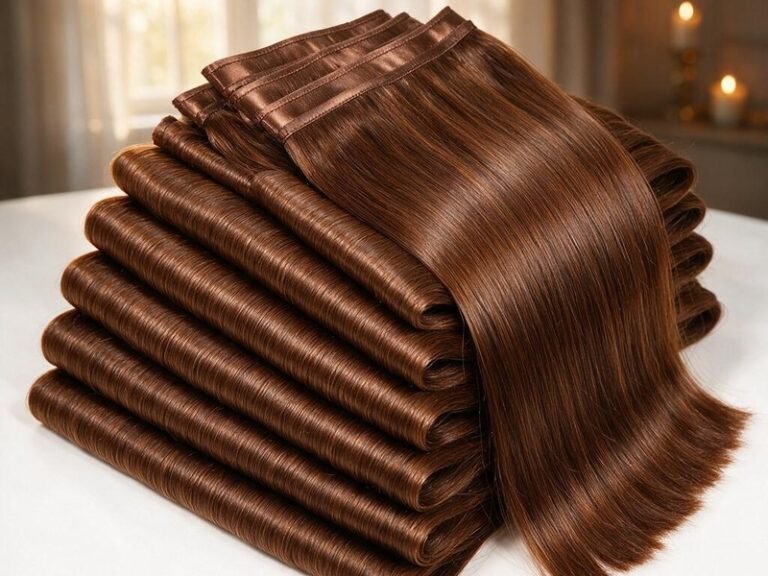
Brown is not one color. It can mean warm chestnut, cool ash brown, chocolate, honey brown, auburn brown, highlighted brown or almost-black espresso. Buyers who order only from a color name often receive the wrong undertone, so use a numbered color chart or physical color ring whenever possible.
What is a realistic wholesale price for human hair wigs in brown?
There is no single wholesale price because length, hair quality, lace size, density and cap construction change the cost quickly. As a practical B2B range, short brown human hair wigs with basic machine-made caps may start around $55 to $120, while glueless lace front brown wigs commonly run $110 to $280. Long, high-density, raw or cuticle-aligned brown wigs can cost $250 to well over $500 wholesale.
Density means the amount of hair sewn into the cap, usually shown as 130%, 150%, 180%, 200% or higher. A 22-inch 180% wig uses substantially more hair than a 14-inch 130% wig, so comparing those two by price alone is misleading. Brown color can also add cost because bleaching, dyeing, rinsing and drying may weaken hair if the factory rushes the process.
Be cautious of listings advertising “100% virgin raw brown hair” at very low prices. Virgin hair means hair that has not been chemically processed, while raw hair usually refers to minimally processed donor hair with intact cuticles. Most fashion brown shades, especially light brown and highlighted brown, require dyeing or bleaching, so calling every brown wig “virgin raw” is often a marketing stretch.
Which brown wig quality tier should your business stock?
The right tier depends on your customers and price point. A salon serving clients who wear wigs daily needs better hair and more durable caps than a boutique selling occasional fashion styles. A reseller targeting first-time wig buyers may do well with affordable Remy human hair, but should not market it as premium raw hair.
Remy means the hair strands are kept with roots and ends running in the same general direction, which reduces tangling. Cuticle aligned means the cuticles lie in one direction more consistently and usually gives a smoother wash-and-wear result. Remy can still be processed, dyed or coated, so the term alone does not prove top quality.
- Entry human hair: Better than synthetic heat-resistant fiber, but may be thinner, drier after washing or mixed with shorter strands. Good for budget styles, short runs and occasional wear.
- Remy human hair: The common mid-tier choice for brown lace wigs. It can offer softness and fewer tangles if the factory controls sorting and dyeing well.
- Cuticle-aligned hair: A stronger choice for daily wear, repeated washing and higher-price retail. Expect fewer matting problems, but inspect donor consistency and shedding.
- Raw or donor hair: Premium pricing and more variation in texture and color. True raw brown stock is limited, and light brown versions may still be processed.
- Blended or misleading “human hair”: May contain animal hair, synthetic fibers, heavy silicone or low-quality processed hair. This is the tier most likely to cause complaints after the first wash.
How do cap and lace choices affect the value of a brown wig?
A closure is a smaller lace piece, usually 4×4, 5×5 or 6×6 inches, placed at the top or crown of the wig. A frontal is a larger lace piece running from ear to ear, commonly 13×4 or 13×6 inches, and allows more parting and hairstyle options. Brown wigs with frontals usually cost more because they use more lace and take longer to construct.
Glueless caps are popular because they use bands, combs, adjustable straps and sometimes silicone grips to reduce the need for glue. Install means attaching the wig, whether by glue, tape, sewing, clips or a glueless band. If your customers do their own hair at home, glueless HD lace, pre-plucked hairlines and breathable dome caps may be worth the extra wholesale cost.
Lace color matters with brown wigs. A lace tint that is too light can look ashy around the hairline, while lace that is too dark can create a visible border. For US buyers, ask whether the supplier offers transparent, HD, light brown, medium brown or dark brown lace and whether the knots are lightly bleached. Over-bleached knots make the hairline look unnatural and can also cause shedding.
Cap size is another common wholesale mistake. Many factories default to medium caps, but US customers may need small or large options. Ask for exact cap measurements, elastic band width, strap type and comb placement before ordering private-label styles.
How can buyers check brown color quality before ordering MOQs?
Always order samples before committing to an MOQ, or minimum order quantity. A color ring is useful, but the best check is a physical sample wig or bundle in the exact brown shade, length and hair quality you plan to stock. View the hair indoors, in daylight and under phone flash, because warm brown can turn brassy and ash brown can turn gray under different lighting.
Ask the supplier for unfiltered photos and short videos of the same batch. Request wet hair, dry hair, underside weft views, parting space, crown density and hairline close-ups. A weft is the stitched track where hair is secured, and loose stitching, uneven hair return or visible short hairs can signal weak construction.
Wash the sample once or twice using sulfate-free shampoo and lukewarm water, then let it air dry. Some low-quality brown wigs look soft initially because of silicone coating, then become dry, tangled or faded after washing. Check whether the water releases excessive dye, whether the shade turns orange or ash-gray, and whether the knots shed more after combing.
For highlighted or balayage brown wigs, inspect the placement carefully. Cheap highlights often look like striped bands instead of soft dimension. Salon clients tend to prefer blended face-framing pieces and gradual depth, while costume or fast-fashion buyers may accept bolder contrast at a lower price.
What are the biggest red flags in brown human hair wig suppliers?
The first red flag is evasive language around processing. If a supplier calls every light brown wig “100% unprocessed virgin raw hair” but cannot explain donor sourcing, dyeing or cuticle handling, assume the description is unreliable. Ask direct questions: Is the hair dyed? Are cuticles intact? What percentage may be gray or reversed strands? What happens if the wig tangles after washing?
Another warning is refusal to show factory stock or sample details. A dependable supplier should be able to show cap labels, knot work, weft stitching, lace edge and batch color consistency. Catalog-only photos that look like they came from many different brands are risky, especially if the supplier cannot produce matching videos.
Pricing that seems too cheap for long lengths is also a concern. A 28-inch brown glueless frontal wig with 200% density cannot logically sell for the same price as a 12-inch basic cap. The factory may be using mixed hair, thin wefts, short filler hair, low-grade lace or inconsistent donor hair to hit the price.
Poor return and quality-claim rules create real B2B risk. Ask whether manufacturing defects are covered, how many days you have to report issues, whether washed or styled wigs qualify, and who pays return shipping. Also confirm lead times: stock wigs may ship in days, while custom brown shades, private labels or custom caps often take 7 to 25 days or longer during peak seasons.
What product details should be confirmed on every purchase order?
Your purchase order should remove ambiguity. Do not write only “brown human hair wig.” Include the color code, color name, undertone, length, density, cap size, lace size, lace color, knot style, hair grade, texture and packaging requirements. This matters because brown #4, brown #2, chocolate brown and honey brown are very different products.
Confirm texture after washing, not just the showroom finish. Brown wigs can be straight, body wave, loose wave, deep wave, curly or kinky curly, and processed curls may loosen after washing. Ask whether the texture is steam-processed or chemically set, and request the expected shedding range for hand-tied lace areas.
Check weight as well as length. Wholesale wigs are often described by inch and density, but actual gram weight tells you whether the cap is full enough. Ask for average weights by length and density, and compare those numbers across sample orders. Thin crowns and skimpy edges are common complaints when buyers focus only on a low unit price.
For boutique or salon resale, also confirm labeling, bag type, box size, wig comb included or not, adjustable band quality and whether custom logo tags are available. Private-label add-ons usually require higher MOQs and longer lead times, so plan inventory 4 to 8 weeks ahead for launches.
How should salons and resellers choose brown shades for inventory?
Most new buyers overstock dramatic colors and understock wearable everyday browns. A safer starting mix is natural dark brown, medium brown, chocolate brown and warm honey brown, with a smaller number of highlighted and auburn-brown styles. Darker browns generally show fewer dye imperfections and may be easier to supply consistently than light browns.
Know your customer’s ethnicity, skin undertone and styling habits, but avoid assuming one brown works for every client. Cool ash brown can look striking on some clients and dull on others, while golden brown can turn brassy if the dye batch is weak. Sample try-on bands or color rings can reduce returns and help clients choose without opening sealed inventory.
For beginners, closure wigs are often easier to sell because there is less lace to maintain. Frontals offer more styling freedom but require more education around lace care, edge protection and reinstallation. If your team offers installation services, frontal brown wigs can produce strong retail results; if customers want low-maintenance wear, glueless closures and wear-and-go caps may move faster.
Keep care expectations realistic. Human hair wigs last longer with gentle washing, sulfate-free products, moisturizing conditioner on the lengths, minimal heat and proper drying on a wig stand. Brown color can fade from sun exposure, harsh shampoo, chlorine and hot tools, so include care instructions even with good-quality units.
Frequently asked questions
Are brown human hair wigs actually unprocessed?
Natural dark brown donor hair may require little or no dye, but most fashion shades such as light brown, honey brown, ash brown and highlighted brown are processed. Ask whether “virgin” refers to the donor hair before coloring or to the finished wig. If a supplier cannot explain that difference clearly, treat the claim as marketing language.
Why do two brown wigs with the same length have different prices?
The price can differ because of hair grade, density, lace size, cap construction, hand-tying time, donor quality and dyeing method. A 20-inch 13×6 glueless frontal at 200% density will cost more than a 20-inch 4×4 closure wig at 150% density. Always compare full specifications, not just length and color name.
If you are planning a brown human hair wig order, send your target price range, shade list, cap specs and expected monthly volume so a supplier can match samples honestly. Start with a small sample batch, test wash and wear, then scale only after color, shedding and cap fit meet your customers’ standards.
If you want the full background before you order, our guide on Closure Wigs Human Hair: Pricing, Quality Red Flags Explained walks through it in plain terms.
Send Us Your Hair Inquiry
Need bulk pricing, samples, or a private-label quote? Fill in the form and our team will get back to you within one business day.