Vacuum Packing and Bulk Hair: Protecting Inventory at Sea
If you’ve ever opened a sea shipment of bulk hair only to find moldy wefts, tangled ends, or weird damp, musty smells that make entire bundles unsellable, you know how fast a 6-figure inventory order can turn into a total loss. We’ve spent 12 years shipping container loads of hair out of our Guangzhou warehouse to salon owners and vendors across the US, and vacuum packing is one of the smallest, lowest-cost choices that makes the biggest difference once your cargo hits the open ocean. It’s not a perfect solution, though — there are right and wrong ways to do it, and tradeoffs you need to plan for before you lock in your next bulk order.
What actually happens to hair in a 25-day ocean crossing?
If you’ve only ever shipped hair via air, you might be wondering why packing even matters that much. Ocean containers are wild environments, even when they’re marked “fragile” and sealed tight. Temperatures swing from below 40 degrees Fahrenheit when the ship crosses the northern Pacific to over 110 degrees when it sits docked in Southern California ports in the middle of summer. Condensation — “container rain” — drips from the ceiling of the container as temps shift, and fine salt air seeps through even well-sealed door gaskets over weeks at sea.
Most of the orders we ship via sea are bulk hair for braiding, weft hair, and k-tips, since those are high-volume, lower-margin SKUs where air freight costs don’t make financial sense. Back in 2018, before we standardized vacuum packing for all sea freight, we saw 8-12% of loose-packed orders arrive with at least partial damage. Most of that was mild mildew from trapped moisture, or severe tangling from loose bundles rubbing against each other for 3 weeks straight. Even the most durable raw virgin hair will develop that telltale musty smell if it sits in 70% humidity for 20+ days with no air flow.
How we actually pack vacuum-sealed bulk hair for sea freight
We don’t use those flimsy household food sealers you buy at the grocery store. Those pull too hard, crush hair cuticles, and their seals split after a week at sea. We use industrial heat sealers calibrated to pull exactly 80% of the air out of each 100g or 200g bundle pack — no more, no less.
Before any bundle goes in a bag, we wrap it in acid-free tissue paper to stop friction between hair and plastic, which causes static and split ends during weeks of movement. Then it goes into a 4mil thick food-grade nylon bag, gets heat sealed, labeled with length, color, and texture, and stacked into corrugated cartons lined with a 2mm moisture barrier. We toss one 10g silica gel packet in every carton, not every individual bag, because too much silica can dry out cuticles and make hair brittle over time.
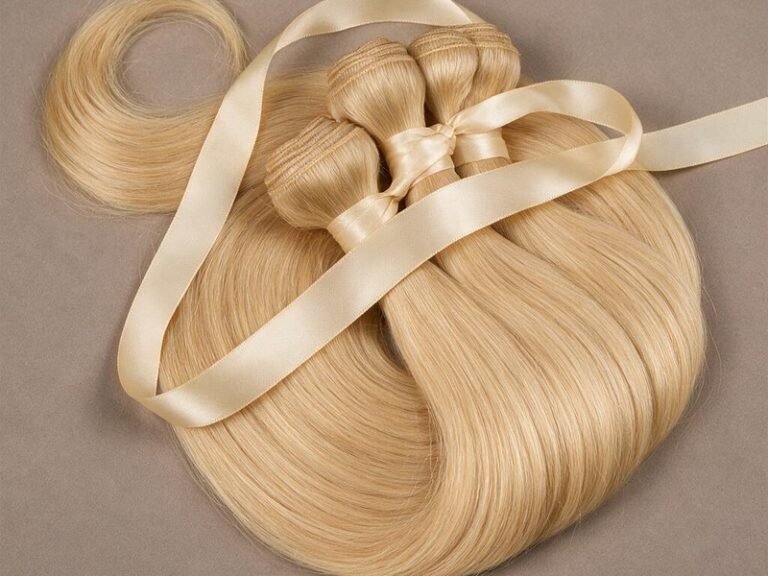
For extra light colors, we add a thin UV-protective film inside each bag. That extra step is non-negotiable for orders of blonde bulk hair, since even minor sun exposure through container gaps during a 3-week crossing can oxidize perfectly toned 613 into a brassy mess you’ll have to reprocess before you can sell it.
The real tradeoffs no supplier tells you about vacuum packing
It’s not all zero-damage perfect shipments. Vacuum packing done wrong causes its own set of problems, and we’ve made every mistake in the book figuring out the sweet spot.
If you pull 100% of the air out of a pack, especially on curly or kinky textured hair, you can set sharp, permanent creases into the hair that take a full deep condition and steam treatment to work out. We learned that the hard way back in 2019, when we tested full vacuum on a load of 3c curly bulk and 30% of the bundles arrived with flat, bent curl patterns we had to replace. That’s why we stick to 80% air removal now — enough to block moisture and cut down on friction, not enough to squish texture flat.
Seal failure is another risk. If a heat seal has even a pinprick gap, salt air and condensation will get trapped right against the hair, which is actually worse than if you’d never sealed it at all. We test every single seal with a light squeeze before it goes in a carton for that exact reason. There’s also a tiny cost add-on: right now, proper vacuum packing adds about $0.12 per bundle to your order total, which is nothing compared to losing a $75 bundle to mildew, but it’s a line item you should see clearly on your quote instead of a hidden upcharge.
Full vacuum isn’t a one-size-fits-all solution, either. It works great for straight and wavy bulk, wefts, and k-tips, but we don’t use it for more delicate installation types, like tape in hair extensions, because the pressure can squish the adhesive tabs and ruin the bond before you even get the product. For those, we use a looser heat seal with extra cardboard backing to protect tabs, no full vacuum pull.
What to ask your supplier before they load your container
Don’t just assume your supplier is vacuum packing correctly because they check a box on your order form. A lot of factories cut corners here, and you won’t know it until you open your cartons 30 days later.
First, ask what percentage of air they pull from each pack. If they say 100%, push back, especially if you’re ordering textured hair. Second, ask if they line shipping cartons with a moisture barrier, or just seal individual bundles. Individual seals are great, but if a carton gets splashed during loading or sits in a port yard during a tropical rainstorm, water can wick through cardboard and seep through bag seams even if seals are intact. Third, ask what their damage claim policy is for sea shipments. Any reputable supplier will cover damage that happens in transit if they’re handling packing, but we’ve seen plenty of factories that blame freight forwarders and leave buyers holding the bill for thousands in ruined stock.
These are the exact kinds of checks we walk new buyers through in our guide to vetting raw hair suppliers before you place a bulk order, because packing standards are a fast way to tell if a factory actually cares about your inventory arriving sellable, or if they’re just trying to move product out the door as fast as possible.
We’ve tracked damage rates across every packing method we’ve tested over the last 5 years, and the numbers are hard to argue with:
- Loose packed in thin plastic bags, no vacuum, no carton moisture barrier: 11% average damage rate per shipment, almost all mildew and severe, unsellable tangling
- Vacuum sealed individual bundles, no carton moisture barrier: 2.7% average damage rate, mostly from failed seals or rain water wicking through cardboard in port yards
- 80% vacuum sealed bundles, moisture barrier carton liners, food-grade silica gel packs: 0.3% average damage rate, almost always from cartons being crushed by heavier freight during loading
What to do when vacuum-sealed hair arrives at your warehouse
Don’t just slit every bag open and dump hair on shelves the second the delivery truck drops off your pallets. A 5-minute check upfront can save you hours of headaches later.
First, spot check 10% of cartons before you sign for delivery. If any bags are puffed up with air, that means the seal failed mid-shipment, and you need to open those bundles first to check for dampness or mildew before you accept the full load. If you catch damage at delivery, filing a claim is straightforward; wait a week to open cartons, and you’ll have a much harder time getting coverage.
Once you confirm everything is dry, you can slit the bags open, give each bundle a gentle shake to fluff cuticles back up, and move stock to your regular storage shelves. If you have questions about how long vacuum-sealed hair can stay sealed without damaging cuticles, or how to handle unpacking for specific textures, we cover those details in our shipping and ordering FAQ.
Quick answers to the questions we get most often
Can vacuum packing cause permanent damage to hair?
If it’s done wrong, yes. Pulling 100% of the air out, especially on curly, kinky, or wavy textures, can set hard creases that are tough to remove, and cheap thin plastic can leach chemicals onto light-colored hair if it sits in extreme heat for weeks. When done correctly at 80% air removal with acid-free tissue and thick nylon bags, though, there’s zero permanent damage. We’ve tested bundles sealed for 6 months in 110 degree heat, and they fluffed back up perfectly with one quick shake and a light conditioning spray.
Is vacuum packing worth the extra cost for air freight?
Honestly, no. Air freight only takes 3-5 days from our warehouse to most US hubs, and temperature swings in cargo holds are way less extreme than on a container ship. For air orders, we use light plastic bags and tissue paper, no vacuum, because the risk of moisture damage is basically zero, and you don’t have to spend time fluffing textured hair back up when it arrives. Save the vacuum packing for ocean LCL or FCL shipments where your hair is on the water for 3+ weeks.
What if my supplier doesn’t offer vacuum packing for sea orders?
You can either request they add it for the small per-bundle fee, or plan to repack and seal inventory yourself once it lands in the US — but honestly, if a supplier won’t take that basic step to protect your order, that’s a big red flag. We’ve heard too many stories of buyers cutting costs by skipping vacuum packing to save $0.10 a bundle, then losing thousands in ruined inventory when a container hits a patch of hot, humid weather crossing the Pacific.
At the end of the day, vacuum packing isn’t some fancy, high-tech innovation. It’s just a boring, reliable step that cuts down on avoidable loss when you’re moving bulk hair thousands of miles across the ocean. We’ve tested every packing method under the sun over the last decade, and for sea freight, this is the sweet spot between cost, protection, and keeping hair in the exact same condition it was in when it left our factory floor.
If you’re putting together your next bulk sea order, our team can walk you through packing options, lead times, and texture-specific adjustments to make sure your inventory shows up ready to sell, no musty surprises required.
Send Us Your Hair Inquiry
Need bulk pricing, samples, or a private-label quote? Fill in the form and our team will get back to you within one business day.