How to Store Bulk Hair Inventory in a Salon
We talk to dozens of salon owners every week who lose 10-15% of their annual hair stock to bad storage—matted bundles, sun-faded ends, weird chemical smells from cleaning products, even mouse nests in back stock shelves. Most of that damage is totally preventable, and you don’t need a fancy custom closet system to store bulk hair inventory well. If you’ve ever dug through a crammed bin 10 minutes before a braid appointment looking for 22 inch honey blonde bulk, you already know why this matters.
If you store bulk hair inventory, stop shoving it all in the back supply closet first
That closet might seem like the obvious out-of-the-way spot, but it’s usually the worst for hair. Bulk hair, especially unprocessed human hair, soaks up every strong odor and moisture fluctuation around it. We’ve had salons send back bulk hair for braiding they bought 3 weeks prior that reeked of bleach because they stored it right under a shelf where they mixed lightener, and the fumes seeped into the cuticles. That’s not a manufacturer defect—that’s storage damage, and you can’t fix that smell, no matter how many times you co-wash the bundles. Keep bulk hair at least 10 feet away from any harsh chemicals, standing water, or heat sources like your water heater or salon dryer bank.
The cheap storage supplies that actually work (no fancy gear needed)
Those $40 acrylic hair organizers Instagram influencers push are fine for retail display, but they’re a waste of money for back stock. What works? First, the original packaging each bundle comes in is designed to protect the cuticles during shipping, so don’t throw those out the second your order arrives. You can supplement with 2 mil clear poly bags (the kind you buy in bulk at the office supply store, 100 for $12) to re-seal bundles once you open a pack to pull a few ounces for a client. Grab a pack of cheap silica gel packets—100 for $8 on Amazon—and toss one in each open bag to absorb excess moisture, especially if your salon is in a humid climate like Florida or Louisiana.
Skip the scented drawer liners, fabric softener sheets, or essential oil sachets a lot of people tuck in with stock; those leave a weird, perfumed residue on hair that clients hate, and they can break down the silicone coating that keeps steamed textures smooth. If you carry both natural and processed textures, that residue hits steamed texture bulk hair extra hard, because the lifted cuticles grab onto every foreign particle they touch. For shelving, basic wire racks mounted 6 inches off the floor work way better than solid wood shelves, because air circulates under and around the bundles so you don’t get mildew growth on the ends during rainy seasons. Don’t stack bundles more than 4 high, either. The weight of the top bundles will crush the wave pattern on the ones below, and you’ll spend 10 minutes picking out tangles before every appointment.
How to sort your stock so you don’t waste 20 minutes hunting mid-appointment
I’ve seen salons sort their bulk hair every which way: by color, by length, by texture, even by which stylist bought which batch. There’s no one right way, but sort by what you grab most often first. If 70% of your braid clients ask for 20 and 22 inch natural black deep wave, keep those on the middle, easiest-to-reach shelf, not crammed on the top shelf you need a step stool to reach. Keep your less popular colors—pastels, bright reds, grey blends—on higher or lower shelves, since you only reach for those once or twice a week. You can keep your faster-moving weft hair on the same racks, but keep it on a separate labeled shelf so you don’t accidentally cut into a weft bundle when you meant to grab loose bulk for braids.
Label every shelf clearly with a piece of masking tape and a Sharpie—no fancy label maker required. Every time you use a partial bundle, write the remaining weight (we suggest noting it in grams, since that’s how most wholesale orders are packed) right on the poly bag, so you don’t open a bundle expecting 100g of hair only to find 32g left right as a client sits down. Quick note: don’t store hair in sealed plastic bins for more than a week at a time. Those bins trap moisture, and if you put even slightly damp hair back in there after showing a swatch to a client, you’ll get mildew spots you can’t get out. If you have to use bins for overflow stock, drill 10-12 ¼ inch air holes in the sides and lid, and toss an extra silica packet in each one.
There are a few non-negotiable no-no zones for bulk hair storage, no exceptions:
- Any spot within 3 feet of a window, because direct sun will fade dark and vibrant colors 2-3x faster than normal, leaving you with brassy, uneven ends you can’t use
- On the floor, even for 10 minutes, because spilled color, mop water, or even dust from foot traffic will stick to the hair the second it touches the ground
- Near your salon’s break room microwave or mini fridge, because food odors (looking at you, leftover salmon and microwave popcorn) seep into hair cuticles and linger for weeks
How often you actually need to check on back stock
You don’t need to do a full inventory count every single day, that’s overkill. We tell salon owners to do a quick spot check once a week, and a full count once a month. During the weekly check, run your hand along the bottom of each shelf to feel for damp spots, check that no silica packets are torn and spilling little beads all over the bundles, and make sure no lids are off cleaning product bottles on nearby shelves. During the monthly count, pull each bundle out, give it a quick shake to fluff the texture, check for tangles at the bundle tie, and rotate stock so the oldest bundles are up front where you’ll grab them first.
This rotation step alone cuts down on so much waste, because it stops you from forgetting about a bundle tucked in the back for 6+ months that gets dry and matted before you ever use it. It also makes reordering way easier, because you can see exactly which lengths and colors you’re running low on before you hit that panic point where you have no 18 inch natural black left for a full day of braid appointments. If you’re still dialing in your order quantities to avoid that overstock panic in the first place, our guide on buying bulk hair for a salon breaks down how much to keep on hand based on your monthly service volume.
What to do with partial bundles so they don’t go to waste
Every salon ends up with partial bundles: the 40g of 24 inch auburn left over from a client’s boho braids, the half pack of deep wave you opened for a quick fill-in, the swatch you pulled to show a client who ended up going with blonde. Don’t throw those on a random shelf and forget about them. We recommend keeping a separate clear over-the-door shoe organizer on the inside of your stock closet door for these partials, with each pocket labeled by length and color. You’ll be shocked how fast those partial bundles add up—we know one Atlanta braider who does 2-3 free accent braid appointments a month exclusively from leftover partial stock, no extra order needed. Just make sure you don’t mix hair from different wholesale batches in the same pocket. Even if two bundles are labeled the same color number, different production runs can have subtle tone differences that are super obvious once installed, and you don’t want to end up with mismatched braids on a client.
Quick answers to the storage questions we get most often
Can I hang bulk hair up on hangers to store it?
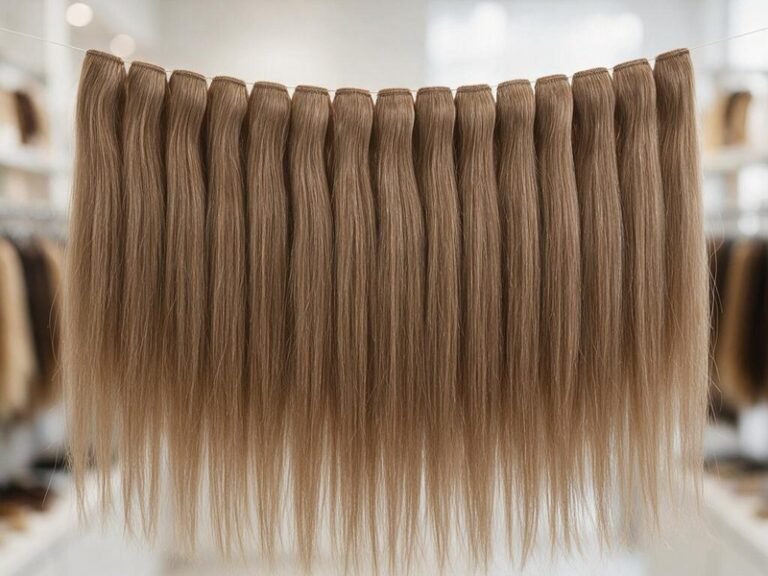
A lot of people see those viral videos of salons hanging every bundle on pant hangers for that perfect aesthetic, and honestly? It works for short-term display (like if you’re doing an open house or showing swatches to clients for a week), but it’s terrible for long-term storage. Hanging hair puts constant tension on the top tie of the bundle, and after a month or two, the hair at the top will snap and shed way more than it should when you go to use it. If you love the look of hanging bundles for your retail area, limit it to the bundles you plan to sell or use within 2 weeks, and keep the rest of your back stock flat on shelves.
What temperature should my stock room be?
You don’t need a climate-controlled wine fridge for your hair. Aim for a consistent 60-75 degrees, with 30-50% humidity. If your salon gets really dry in the winter when the heat is running, toss a small, cheap humidifier in the stock closet to keep hair from getting brittle. If you’re in a super humid area, a $15 mini dehumidifier works just as well as an expensive HVAC add-on, and it pays for itself in saved inventory in 2 months tops.
Can I store tape-in or k-tip hair with my loose bulk?
You can store them in the same general area, but keep them separated on different shelves, and make sure you never let tape in hair bundles sit loose next to bulk hair. The adhesive on the tape tabs will stick to loose bulk hair instantly, leaving you with a tangled mess you’ll have to cut apart, and you’ll ruin the tape tabs before you ever get to install them. Keep tape-ins and k-tips in their original sealed packaging, stacked flat no more than 2 high, so the tabs don’t bend or warp.
None of these steps take a ton of time or money, but they’ll cut your inventory waste by double digits if you stick to them. The last thing you want is to spend hours picking out the right textures and colors for your service menu, wait 7-10 days for your shipment to arrive, and then ruin hundreds of dollars of stock because you stored it next to a mop bucket under the sink. Once you have a simple system down, you’ll stop panicking mid-appointment, throw away way less matted, unusable hair, and get the full value out of every bundle you order.
Send Us Your Hair Inquiry
Need bulk pricing, samples, or a private-label quote? Fill in the form and our team will get back to you within one business day.