What Makes Chinese Hair Different?
If you’ve shopped for wholesale hair extensions for any length of time, you’ve seen a hundred conflicting claims about Chinese hair—some sellers swear it’s the lowest quality on the market, others mark it up as premium “virgin” hair for double the price. We’ve run our factory floor and warehouse for over a decade, so we’re not here to push hype or drag other origins. We’re just going to tell you what we see every day, no filter.
First, let’s kill the biggest myth right out the gate
The myth that all Chinese hair is cheap, tangly garbage comes from 20 years of cut-corner export goods, not the hair itself. We see new buyers all the time who got burned on $15 bundles from random online listings, then write off every supplier in the country. But here’s the hard truth: Chinese hair as a category covers everything from 30-cent synthetic blends to premium, cuticle-intact human hair that lasts 12+ months with proper care. The difference isn’t the country of origin on the shipping label. It’s how the hair is sourced, processed, and graded before it ever hits a salon shelf.
The cuticle story no one tells you straight
Actual donor hair collected from people in China has a naturally thicker fiber diameter than most other common extension origins, clocking in at 70-80 microns per strand, compared to 50-60 microns for fine South Asian hair. That thickness is a huge plus for a lot of clients: it holds curls for days, doesn’t poof up into a frizzy mess in high humidity, and stands up to regular heat styling way better than finer hair types.
There’s a catch, though. That coarser fiber will tangle far worse than finer hair if all the cuticles aren’t aligned facing the same direction during processing. A lot of cheap factory operations skip the slow, labor-intensive step of sorting strands by cuticle direction. Instead, they acid-strip every cuticle right off the hair, then douse it in a heavy silicone coating that feels soft and silky out of the bag. That coating washes out after 2-3 shampoos, and you’re left with dry, rough strands that knot up every time you run a brush through them. We test every batch in our warehouse by running a 20-inch section of machine weft hair under warm water without any product, stripped of any temporary silicone coating, to check for tangling before we ship it. If it snags or mats in the test, it doesn’t go out.
Scale isn’t a bad thing (but it does create tradeoffs)
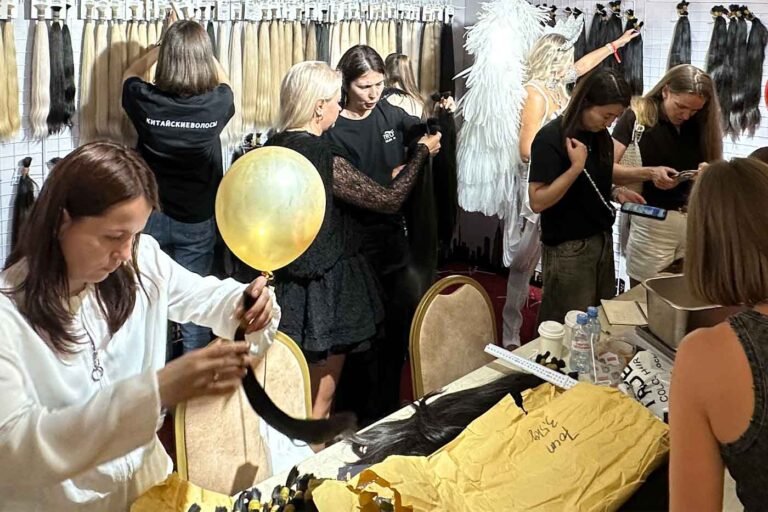
China didn’t become the global hub for hair processing by accident. The supply chain for sorting, disinfecting, coloring, and packaging human hair has been built out over 40 years there, with specialized factories making every component of extensions from weft thread to keratin bond polymer. A mid-sized operation like ours can turn around 500kg of custom colored hair in 7-10 days, compared to 4-6 weeks from smaller processing hubs in other countries. That speed and scale is a huge win for salon owners who need to restock fast, or match a custom color for a client’s wedding next week.
That same scale means there’s an enormous range of quality tiers coming out of the same industrial zones, all labeled “100% human hair” with almost no enforced grading standards. A lot of the entry-level tier gets sold through trading companies that don’t set foot in the factories they source from, which is why it’s so hard to tell what you’re getting if you don’t vet who you’re buying from. We broke down the key differences between direct suppliers and trading companies before, but the short version is: if your contact can’t send you unedited video of a water tangling test for your exact batch, you’re probably paying markup for mid-tier or entry-level hair sold as premium.
For context, these are the three real quality tiers you’ll encounter, stripped of the fancy marketing names:
- Entry-level: Acid-washed, silicone-coated non-cuticle hair, usually 80-90% human hair mixed with 10-20% heat-resistant synthetic fiber, sold for $10-$20 a bundle. Lasts 1-2 months tops, tangles immediately after the first silicone wash. This is the stuff that gives Chinese hair a bad rap.
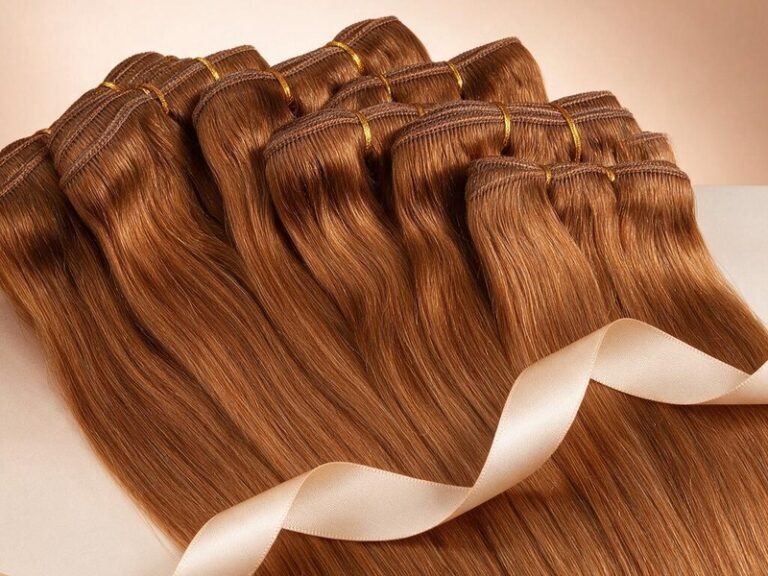
- Mid-tier: 100% cuticle-aligned human hair, lightly processed to remove excess frizz, available in natural colors and basic highlights, sold for $40-$70 a bundle. Lasts 6-8 months with regular care, minimal shedding, holds styles well. This is the workhorse stock most salons and braiders rely on for regular clients.
- Premium: Unprocessed, single-donor cuticle-intact hair, collected directly from donors with no chemical processing before custom coloring, sold for $90-$150 a bundle depending on length. Lasts 12+ months, can be bleached to #613 without major breakage if done correctly.
None of these tiers are “scams,” by the way. The entry-level stuff has a place for quick, temporary styles for photo shoots or one-time events. The problem comes when sellers buy entry-level stock and mark it up as premium virgin hair.
Why you’ve probably bought Chinese hair without knowing it
For years, sellers across the US rebranded Chinese processed hair as Brazilian, Peruvian, Malaysian, even “Mongolian virgin” because customers thought those origins sounded more exotic and premium. We’ve had buyers come to us asking for “authentic Brazilian hair” and bring in a sample they paid $150 a bundle for, only for us to test it and find it’s the exact same mid-tier cuticle-aligned Chinese hair we sell for $55 a bundle.
That doesn’t mean it’s bad hair! It just means origin labeling in this industry has been broken for decades. That mislabeling applies across every product type, too, from bulk hair for braiding to tape-ins and keratin tip extensions, because almost every global brand sends their raw hair to Chinese factories for processing, even if they market their hair as coming from somewhere else.
One key detail most sellers skip: native Chinese hair is naturally straight to soft wavy. Any tight curl patterns—kinky curly, deep wave, 4c coily—are set with either high-temperature steam or harsh chemical perms, depending on quality. Good quality steam-set curls hold for the entire life of the hair, as long as you don’t saturate them with heavy, greasy oils that break down the set. Cheap perm-set curls drop flat after 3-4 washes, no matter how carefully you care for them. If you’re selling coily texture hair marketed as “unprocessed virgin Chinese hair,” you’re being lied to. That texture doesn’t grow naturally from Chinese donor pools, full stop.
The questions we get every single week
After 10 years in this business, we hear the same handful of questions from every new buyer who’s trying to sort through the noise. We’ll cut to the chase on the most common ones.
Is Chinese hair better than Indian or Vietnamese hair?
It depends what you and your clients need. Indian hair is finer, softer, and usually cheaper, but it frizzes faster and doesn’t hold tight curls or heat styles as long, especially in the humid Southern US markets we sell to most. Vietnamese hair has a similar thick fiber to Chinese hair, but raw supply is far more limited, so prices run 20-30% higher and lead times for custom color orders stretch to 3-4 weeks minimum. Chinese hair hits the sweet spot for most buyers who need consistent, in-stock options, fast custom turnarounds, and a fiber that holds up to regular styling, as long as you don’t buy the cheapest tier you can find.
Can Chinese hair be bleached safely?
Only the premium, unprocessed cuticle-intact tier can be lifted all the way to #613 blonde without turning to mushy, breakage-prone mess, and even then you have to go slow: use 20 volume developer instead of 30 or 40, process in small increments, and deep condition heavily between sessions. The mid-tier cuticle-aligned hair can be lifted 2-3 levels max for caramel or honey blonde shades before it gets unmanageably dry. The entry-level acid-washed hair will break off the second you put bleach on it, no exceptions. If you’re ordering blonde stock for your salon, always ask for a free strand test before you place a bulk order—any legitimate supplier will send one without a fight.
At the end of the day, Chinese hair isn’t inherently good or bad. It’s a broad category that covers every quality tier imaginable, made in a supply chain that’s big enough to serve every corner of the hair industry, from discount beauty supply stores to high-end salons charging $800 for install services. The mistake most new buyers make is treating it like a monolith, either writing it off entirely because of one bad experience or jumping on the cheapest listing they can find and expecting premium results.
If you’re just getting started stocking Chinese hair for your salon or resale shop, our bulk hair wholesale guide walks through MOQs, lead times, and custom order options without the sales fluff. If you’re ready to test batches for yourself, you can browse our current in-stock lengths and textures, and our team is always available to send unedited test videos or sample strands before you place a large order. We don’t do fancy marketing names or fake origin claims—we just sell the hair we test ourselves, at prices that make sense for both you and your clients.
Send Us Your Hair Inquiry
Need bulk pricing, samples, or a private-label quote? Fill in the form and our team will get back to you within one business day.