Can Raw Hair Be Bleached?
If you’ve ever dropped a few hundred dollars on raw hair bundles only to watch them turn to mushy, cotton-candy texture mid-bleach, you’re not alone. We get this question at least 10 times a week from salon owners and resellers burned by bad online info, and most TikTok takes skip the messy, real-world tradeoffs that actually matter. There’s no one-size-fits-all yes or no here, even for hair sold as “100% raw.”
First off: What actually counts as raw hair, anyway?
If you’ve been buying extensions for more than five minutes, you know “raw” is one of the most overused words in the industry. We see suppliers mark up steam-processed, silicone-coated hair as “raw” for 30-40% more than it’s worth, all because buyers assume raw equals unbreakable. Real raw hair is cut directly from a single donor, with zero prior chemical processing, no silicone dips to fake shine, and all cuticles aligned root to tip.
Even with that strict definition, there’s massive batch-to-batch variation. A donor who regularly used heat tools or swam in chlorinated pools weekly will have more porous strands that lift faster than someone who air-dried and used minimal products. A lot of new buyers mix raw hair up with Remy hair, which is also cuticle-aligned but gets light steam processing to set uniform curl patterns, and we broke down how that impacts bleaching in our post on if Remy bulk hair bleaches well.
The short answer (with a big asterisk)
Yes, real, unadulterated raw hair can be bleached. In fact, it lifts more evenly and holds up better to lightener than any other human hair extension type when processed correctly. We’ve tested raw Vietnamese and Cambodian donor hair lifting from natural level 2 (darkest brown/near-black) to level 10 (pale buttery yellow) in 2-3 sessions with 20 or 30 volume developer, processing 25-35 minutes per session, with zero noticeable breakage when stylists used bond builder and checked lift constantly.
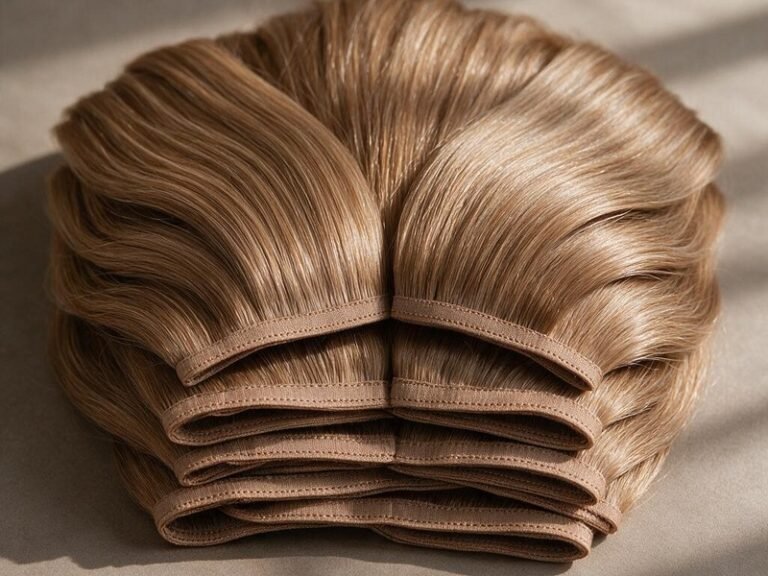
Here’s the asterisk, though: raw hair is not magic. You can’t slather 40 volume developer on it, wrap it in foil, walk away for an hour, and expect perfect platinum. Unlike mass-produced processed hair stripped and re-coated for uniform porosity root to tip, raw hair has natural variation. Strands from the donor’s nape are often more porous than crown strands, so those areas lift faster, leading to splotchy patches if you’re not checking progress every 5 minutes. This is true whether you’re working with machine weft hair for sew-ins, loose bulk for braids, or any other raw extension style.
What “can be bleached” doesn’t mean
Let’s get this straight, because tons of marketing fluff sets buyers up for failure. First, it doesn’t mean you can get raw hair to ice white in one go, no matter what a supplier’s Instagram ad claims. Any vendor that says their raw hair lifts to level 10 in a single session without damage is lying, or selling hair pre-stripped with harsh chemicals that cut the cuticle down, which will fall apart after the first post-bleach wash. If you push real raw hair past level 9 in one session, you’re looking at roughly 30% more split ends after a month of wear, even if it feels fine the second you rinse.
It also doesn’t mean you can use the same process for every donor origin. For example, thicker, coarser Chinese donor hair often needs an extra lifting session compared to finer Southeast Asian raw hair, a difference we break down in our guide to bleaching Chinese human hair blonde.
Most importantly, it doesn’t mean all hair labeled “raw” holds up to bleach at all. The biggest red flag we spot during warehouse intake? Hair that feels unnaturally slippery, like it’s coated in serum, straight out of the sealed bag. That’s a cheap silicone coating that washes out in 2-3 clarifying shampoos, and under it? The hair is often over-processed factory waste that turns gummy the second bleach hits it. We test every incoming batch before it hits inventory: we snip a 1 gram strand, wash it twice with strong clarifying shampoo to strip coatings, let it air dry, and check for tangling or roughness. If it fails, we send the whole batch back. Hair doesn’t lie, no matter what the factory sales rep says.
After testing hundreds of batches, the difference between genuine raw hair and coated fake raw is impossible to miss during bleaching:
- Real raw hair lifts evenly, slow and steady, and feels strong and elastic when you pull a wet strand post-rinse, even after lifting 5+ levels
- Coated “raw” hair lifts in splotches, turning a brassy tangerine that won’t tone out, and stretches or snaps when you tug a wet strand
- Real raw hair holds toner 4-6 weeks with proper purple shampoo; fake raw hair grabs toner unevenly and fades to brass in a week or less
The mistakes we see even experienced stylists make
We talk to dozens of salon owners and braiders every week, and we’ve seen people with 10+ years behind the chair ruin perfectly good raw hair because they treated it like cheap processed hair. The most common mistake? Using too high of a developer. I get it—time is money in the salon, and a client sitting 3 hours for a color service throws off your whole schedule. But 40 volume on raw hair blows the cuticle open so fast it fries the hair’s inner cortex before you hit the pale yellow lift needed for a clean blonde. We tell every stylist we work with to stick to 20 volume for dark blonde shades and root melts, 30 volume max for bright level 9 or 10, and never process longer than 40 minutes per session.
The second big mistake is skipping the strand test. I don’t care if you’ve ordered from the same supplier 20 times, with perfect lift every time. Every raw hair batch comes from a different donor, so a 10-minute strand test on a tiny snip from the back of the weft will save you from ruining a $400 client install. Braiders who work with bulk hair for braiding often skip strand tests when processing large batches at once, and we’ve heard dozens of stories of whole 100g bundles turning gummy because a batch had slightly higher porosity than their last order.
The third common mistake is over-toning. Once you lift raw hair past level 7, it’s more porous than its natural state, so leaving purple or ash toner on for 20 minutes like you would with cheap processed hair turns it a dull, muddy gray, forcing you to clarify again and dry strands out even more.
How to set yourself up for zero-melt bleaching
You don’t need a fancy salon degree or expensive specialty products to bleach raw hair well, but you do need to slow down and follow a few basic rules we’ve tested across hundreds of batches. First, always clarify hair first with a cheap, sulfate-heavy clarifying shampoo before applying bleach. No conditioner, no leave-in sprays, no heat protectant—any product left on strands creates a barrier that makes bleach lift splotchy and uneven.
Second, add a bond builder to your bleach mix, every single time. We don’t care what brand you use; it’s non-negotiable if you’re lifting more than 3 levels. No exceptions. It adds roughly $2 per application in cost, and cuts post-bleach breakage by about 70% in our side-by-side tests.
Third, work in thin, 1/8 inch sections, and don’t glob bleach on thick. You want every strand coated evenly, but not sopping wet, because over-saturating over-processes outer layers before inner strands lift. This is extra important for pre-bonded styles like k-tips or tape in hair, where missed spots mean obvious dark streaks right at the client’s root after install. Process at room temperature, no heat caps, no hooded dryer. Heat speeds up processing way too fast on raw hair, and you’ll end up with fried ends before mid-lengths even start to lift.
If you need to lift past level 8, plan for two sessions 7-10 days apart, with a deep conditioning mask between sessions, instead of cranking developer or adding heat to rush. It takes a little extra planning, but the end result is soft, tangle-free hair that lasts for months of wear.
Quick answers to the questions we get most
Will bleaching raw hair make it tangle or shed?
If you follow the process we outlined above, no. We’ve seen raw hair correctly bleached to level 10 last 18-24 months with regular deep conditioning, the exact same lifespan as unbleached raw hair. If you rush the process, fry the cuticle with too-strong developer, or leave bleach on past pale yellow, absolutely. We’ve had stylists send photos of hair that started matting after the first post-bleach wash, and every time, they used 40 volume and processed for an hour or more to “save time.” That hair sheds so much you’ll replace the bundles in 2 months flat.
Can I bleach raw hair that’s already been colored?
It depends. If the hair was colored with semi-permanent or demi-permanent dye, you can lift it, but you’ll need a color remover first to strip existing pigment, otherwise you’ll get weird, uneven tones (think green ends, random orange patches). If the hair was dyed with permanent black box dye? We don’t recommend trying it. Many over-the-counter box dyes have metallic salts that react badly with bleach, and can make hair literally dissolve mid-process, no matter how high-quality the raw hair was to start.
Do I have to tone raw hair after bleaching?
Almost always. Even when you lift raw hair to that perfect pale yellow base, it pulls warm, just like natural growing hair. Use 10 volume developer with your toner, and leave it on for 5-10 minutes max, checking constantly. Raw hair grabs cool tones really fast once lifted, and you don’t want accidental lavender ends.
We know it’s tempting to cut corners to get that bright blonde shade fast, especially when clients are begging for it and you’re juggling a full book. But raw hair is an investment—for you as a business owner, and for the client paying a premium for that natural, soft, long-lasting look cheap processed hair can’t match. Slow down, do the strand test, reach for the lower volume developer, and you’ll get that perfect bright blonde without wasting product or ruining a good bundle. All of our hair is tested for bleach resilience before it hits shelves, with clear origin and porosity notes for every SKU so you know exactly what you’re working with before you mix your first batch of lightener.
Send Us Your Hair Inquiry
Need bulk pricing, samples, or a private-label quote? Fill in the form and our team will get back to you within one business day.