How Hair Extensions Are Professionally Colored
If you’ve ever ordered a batch of “ash blonde” extensions only to open the box and find brassy, straw-like hair that falls apart after two washes, you already know bad coloring work sinks your reputation fast. We’ve watched hundreds of salon owners and resellers lose repeat clients over cut corners in the coloring process, most of which happen long before the hair lands on your shelf. If you’ve ever wondered how hair extensions are professionally colored to get consistent, long-lasting results without damage, know this: it’s nothing like the box dye you grab at the drugstore. It’s a precise, multi-step process that changes depending on hair type, desired shade, and the extension style you’re ordering.
It starts with raw hair sorting, not dye
You can’t dump a random pile of raw hair into a dye vat and expect consistent, long-lasting color. We learned that lesson the hard way in our first year of operation, when a batch of mixed-donor hair came out 3 different shades of brown after an identical dye process. These days, we sort every single batch before any product touches it. First, we check for full cuticle alignment—if cuticles are stripped or running in opposite directions, dye will take unevenly no matter how careful you are, so those pieces get pulled for lower-grade stock instead of premium colored lines. Next, we sort by porosity level and natural base shade.
For context, 100g of raw Indian hair that’s naturally a level 3 dark brown will process way differently than equally dark Chinese hair that’s lower porosity. Skip that sorting step, and you’ll end up with 20% of your order coming out a full shade lighter or darker than the rest. A lot of cheap suppliers skip this step entirely to cut 2-3 days off lead time, which is why their color is so consistently hit or miss. No shortcuts.
The pre-color prep you never see
After sorting, we give every bundle a gentle clarifying wash, free of silicones and heavy conditioners. Those ingredients make raw hair feel soft to the touch right out of the bundle, but they coat the hair shaft and block dye from bonding properly to the cortex. The result? Color that washes out in 3-4 shampoos, splotchy ends, that weird grayish cast you see on cheap blonde extensions. We don’t use any filler products on hair slated for coloring, period.
We also snip a 1g test strand from every bundle to run a porosity check before mixing dye. If a section is overly porous, usually from rough handling during donor collection, it will grab too much cool tone and turn muddy if we don’t pre-treat it with a protein filler first. That prep step adds 24 hours to lead time, but it cuts color rejection rates by over 70% for us, so it’s non-negotiable.
Why deposit color is way easier than lift
If you’re ordering a shade darker than the hair’s natural level, that’s deposit-only color. It’s gentler, takes faster, has almost zero risk of damage, and fades evenly over 3-6 months of regular wear. Lift? That’s when you’re going lighter, pulling natural pigment out of the hair shaft before depositing the target tone. That’s where 90% of bad coloring jobs happen. For example, lifting from natural level 2 black to a level 10 platinum takes three separate lift sessions, each spaced 24 hours apart with a deep protein treatment in between, to avoid turning the hair into mushy, breakage-prone straw.
We see so many new suppliers advertise platinum hair for 30% below market rate, and we know exactly what they’re doing: they’re using 40 volume developer with no buffer, lifting the hair in one 90-minute session, then dousing it in silicone to make it feel soft until the first wash. That hair will be falling out in clumps by the third shampoo, no exceptions.
As a general rule, here’s what realistic lead times look like for professionally colored hair, no cutting corners:
- Deposit-only shades (darker than natural level, no lift): 2-3 business days, 0-5% expected damage rate
- 1-3 levels of lift (dark to light brown, soft honey blonde): 4-5 business days, 5-10% expected trim loss at the ends
- 4+ levels of lift (ash blonde, platinum, pastel tones): 7-10 business days, 10-15% expected trim loss to remove dry, over-processed ends
These timelines apply across every extension style we process, from bulk hair for braiding to keratin tips, because the hair shaft reacts the same way to lift no matter what attachment method it’s made into.
Coloring isn’t one-size-fits-all for every extension type
You can’t use the exact same dye process for every product style, and a lot of newer factories learn that the hard way. For weft hair extensions, we have to be extra careful to keep dye off the stitching thread, because cotton or nylon thread will grab dye darker than the hair itself, leaving obvious dark lines across the weft that are visible when a client pulls their hair up. That means we seal weft edges first, apply dye with a brush 1mm away from the stitch line, and do a targeted spot clean on any thread that gets color on it before it sets.
For tape-in hair, we can’t get any dye or processing product on the tape adhesive tabs, because that breaks down the glue bond and makes tabs slip out 1-2 weeks after application, way earlier than the standard 4-6 week wear time most stylists expect.
That leads to frustrating last-minute fix appointments that no one wants, even if you know proper tape-in removal techniques to avoid damaging client hair. That’s why we cover every tape tab with a protective plastic strip before any color touches the hair, and re-press tabs after the final wash to make sure the seal is intact.
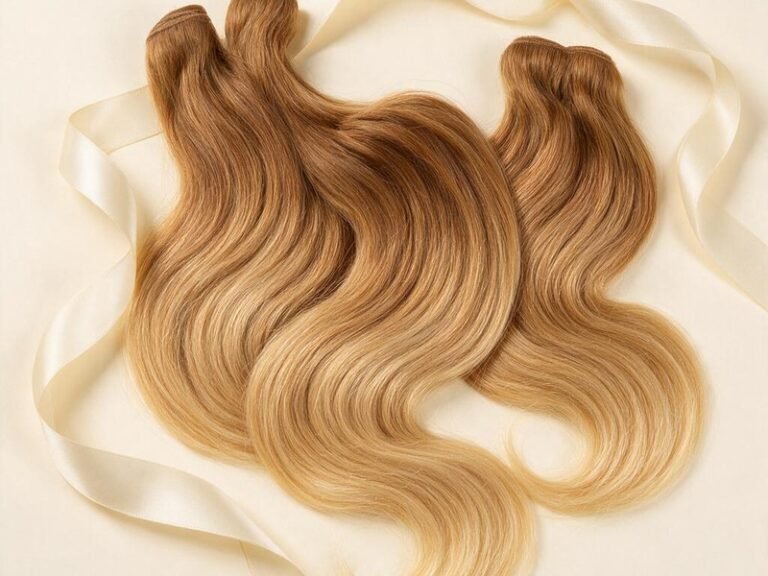
If you’re requesting non-standard shades—like rooted looks, balayage, or fashion pastels—that’s all covered under standard custom hair extension orders, but those take an extra 2-3 days because we hand-paint every weft or bundle instead of dipping it in a bulk dye vat. Hand-painted color costs 20-25% more than solid color because of the labor, and there will always be slight variation between bundles, since it’s done by hand instead of a uniform vat dip. If a supplier promises 100% identical balayage across 50 bundles for rock-bottom pricing, they’re printing the pattern on with an inkjet, which flakes off after a few washes.
The post-color steps that make or break longevity
After the dye processes to the exact target shade—we check every bundle against a standardized color ring in natural daylight, not under harsh warehouse LEDs, because LED light makes cool tones look way more muted than they are in real sun—we do a cool water rinse to lock the cuticle down. No hot water. Hot water swells the cuticle and lets dye molecules leach out fast. Then we do a two-part treatment: first an acidic pH balancer to bring the hair back to its natural 4.5-5.5 pH level, then a deep conditioning mask with hydrolyzed keratin to fill in any gaps in the hair shaft left by the lift process.
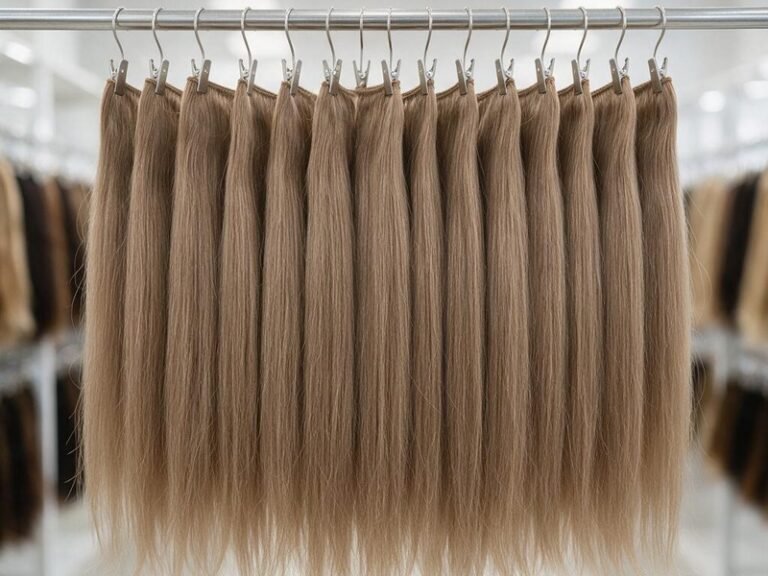
We let that mask sit for 45 minutes under low heat, then rinse again and hang the hair to air dry in a temperature-controlled room, no high-heat blow dryers right after processing. That step cuts down on post-install fading by about 40%, in our experience. We also do a pull test on every 100g bundle after drying to make sure the hair’s tensile strength is still intact—if more than 3 strands pull out with light tension, the batch didn’t process correctly, and we re-do it instead of shipping it out.
Common questions about how hair extensions are professionally colored
Can I re-color professionally colored extensions after I get them?
Yes, but only go darker, never lighter. Once the hair leaves the factory, you don’t know exactly how much lift it’s already been through, so trying to lift it again will almost always cause breakage or uneven tone. If you need a darker match for a client, use a deposit-only demi-permanent dye with 10 volume developer max, and do a strand test on a small 1g snip first to make sure it takes evenly. Don’t use permanent dye with higher developer, and don’t leave it on longer than the recommended processing time—you don’t need to open the cuticle that wide for deposit color, and you’ll just dry the hair out.
Why does my colored hair feel drier than the raw natural black stock?
Because any amount of lift changes the hair structure, full stop. Even if we do every protein treatment and deep condition correctly, hair that’s been lifted 2+ levels will never feel exactly as silky as unprocessed natural level 2 or 3 hair. It will still last 6-12 months with proper care, but it’s not identical to raw unprocessed hair, and any supplier who tells you otherwise is lying. If you want the softest possible colored hair, stick to deposit-only shades that don’t require lift—those feel almost identical to raw stock, because we’re not opening the cuticle to pull pigment out.
How do I make sure the color matches what I ordered?
Always ask for a physical color swatch before placing a bulk order if you’re matching a specific shade. Photos on websites are shot under studio lighting, and every phone or computer screen displays color a little differently. We send free swatches to all wholesale buyers for exactly that reason—there’s no substitute for holding the hair up to your client’s natural hair in natural daylight to confirm a match.
At the end of the day, good professional coloring isn’t rocket science, but it does take time, attention to detail, and a willingness to skip shortcuts that save a few bucks but ruin your end product. We don’t cut processing time to rush orders out the door, and we’re always upfront about lead times, expected texture changes, and slight variation on hand-painted shades because we know your reputation depends on the hair you sell. If you’re ready to browse in-stock colored shades or talk through a custom order, our team is here to help—just reach out with your target shade, quantity, and extension style, and we’ll walk you through realistic timelines and pricing with no sales fluff.
Send Us Your Hair Inquiry
Need bulk pricing, samples, or a private-label quote? Fill in the form and our team will get back to you within one business day.